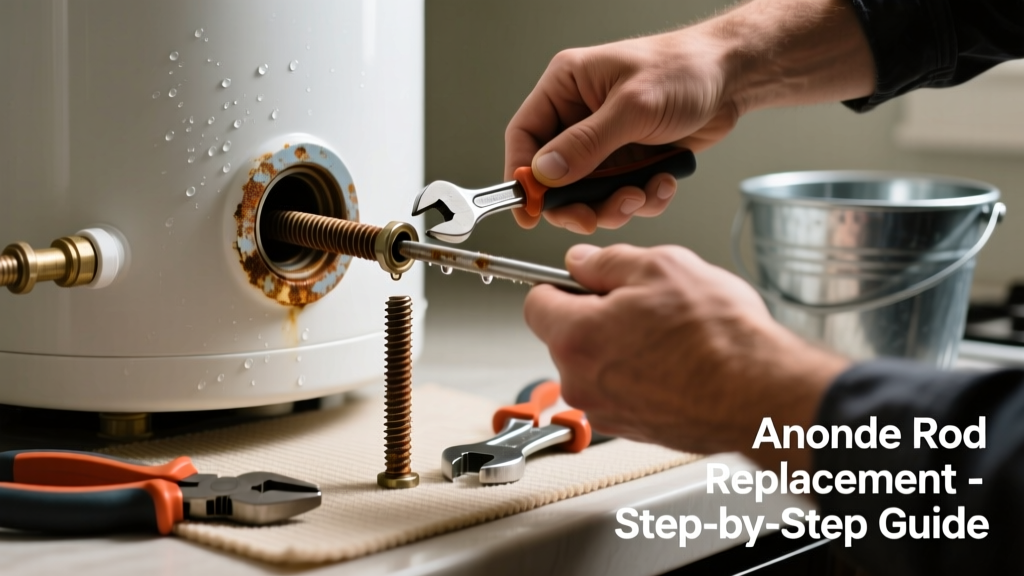
If you're noticing metallic-tasting water, rust-colored stains near your kitchen sink, or a sulfur-like odor when running hot water, your water heater’s anode rod may be fully depleted — especially problematic when the unit is located under or adjacent to kitchen cabinets where space and access are tight.
Quick Diagnosis
Before assuming the anode rod is gone, rule out other signs of depletion:
- Rust-colored or cloudy hot water from the kitchen faucet
- Unusual metallic or rotten-egg smell only from hot water taps
- Visible corrosion or pitting on the hex head of the anode rod (if accessible)
- Water heater age over 5 years with no prior rod inspection or replacement
- Increased sediment buildup in kettle or coffee maker used with kitchen hot water
Tools & Materials Needed
| Item | Purpose | Estimated Cost |
|---|---|---|
| 3/4-inch socket wrench or breaker bar | Provides torque to loosen corroded anode rod nut in tight cabinet spaces | $18–$45 |
| Zinc-aluminum alloy anode rod (3/4" NPT, 36" or 42") | Replaces depleted sacrificial rod; aluminum-zinc resists sulfate bacteria better than magnesium in chlorinated or well water | $24–$38 |
| Dielectric union or flexible anode rod adapter | Allows installation in cramped kitchen locations where straight rod insertion isn’t possible | $12–$22 |
| Plumber’s tape (PTFE) | Seals threaded connections without contaminating potable water lines | $3–$7 |
| Shop vacuum with wet/dry filter | Removes sediment stirred up during rod removal near cabinetry and flooring | $40–$85 |
Step-by-Step Fix
Replacing the anode rod in a kitchen-installed water heater requires extra care due to limited clearance and proximity to countertops, plumbing, and electrical lines. Follow these verified methods:
- Shut off power and water: Turn off the circuit breaker (for electric) or gas valve (for gas units), then close the cold-water inlet valve. Open the kitchen hot faucet to relieve pressure.
- Drain 2–3 gallons: Attach a garden hose to the drain valve (usually at the tank’s base), route it away from cabinets, and open the valve just enough to lower water level 6–8 inches below the anode port — prevents spillage when removing the rod.
- Remove the old rod: Locate the anode rod plug (typically on top of tank, sometimes hidden behind an access panel under the sink). Use the breaker bar and socket — not a ratchet — to break loose the 3/4" hex head. Expect resistance; apply penetrating oil if seized.
- Install the new rod: Wrap threads with 3–4 layers of PTFE tape, hand-thread fully, then tighten with the breaker bar (don’t overtighten — ½ turn past hand-tight is sufficient). If space is too tight for a full-length rod, use a flexible anode rod or a dielectric union to angle the connection.
- Refill and test: Close the drain valve, open the cold-water inlet, let air purge through the kitchen hot faucet, then restore power/gas. Check for leaks at the anode port and nearby connections after 15 minutes.
When to Call a Pro
DIY replacement becomes unsafe or impractical in these kitchen-specific scenarios:
- The water heater is mounted inside a sealed cabinet with less than 12" of vertical clearance above the tank
- You detect gas leaks (rotten egg smell near gas valve) or frayed wiring behind the unit
- The anode port is stripped or the tank shows bulging, dents, or active rust bleeding at seams
- Your home uses polybutylene piping connected to the heater — disturbing joints risks sudden failure
- You’ve attempted removal twice and the rod won’t budge despite heat application and impact tools
According to the Insurance Institute for Business & Home Safety's 2023 report, 68% of premature water heater failures in residential kitchens stem from delayed anode maintenance — yet nearly half of homeowners wait until leaks or complete failure occur before seeking help.
Prevention Tips
Anode rods in kitchen water heaters degrade faster due to higher usage frequency and shorter hot-water run times that limit full circulation. Extend service life with these field-tested habits:
- Inspect the rod every 2 years — not every 5 — if your kitchen is the primary hot water source
- Flush the tank annually using the cold-water flush method to remove sediment that accelerates corrosion
- Install a whole-house water softener if TDS exceeds 150 ppm — softened water increases anode consumption by up to 40% (ASSE International Standard 1084, 2022)
- Label the anode replacement date on the tank’s side with a permanent marker — easy to spot during routine checks
Can I reuse the old anode rod after cleaning it?
No. Once the magnesium or aluminum core is exposed or reduced to less than 1/2 its original diameter, it’s electrochemically spent. Cleaning surface corrosion doesn’t restore sacrificial capacity — and reinstallation risks thread damage or incomplete sealing.
Does water hardness affect anode rod lifespan in kitchen units?
Yes — hard water (above 7 gpg) shortens rod life by 30–50% because calcium carbonate deposits insulate the rod, reducing ion exchange efficiency. In kitchens, where small-volume draws dominate, this effect is amplified. Test your tap water with a hardness test kit before choosing rod material.
Is it safe to install a powered anode rod in a kitchen water heater?
Only if the unit has dedicated GFCI-protected 120V outlet within 3 feet and manufacturer approval. Powered anodes eliminate hydrogen sulfide odors but introduce electrical risk near sinks and countertops. Most kitchen installations lack proper grounding paths — consult NEC Article 422.13 before proceeding.
Why does my kitchen hot water smell like rotten eggs only in summer?
Sulfate-reducing bacteria thrive in warm, stagnant conditions. Kitchen water heaters often sit idle longer between uses in warmer months, letting bacteria colonize depleted anode surfaces. Replacing the rod *and* raising the thermostat to 140°F for 2 hours (then flushing) kills most colonies — but lower it back to 120°F afterward for safety.
Can I replace just the anode without draining the tank?
You can — but only if you lower the water level at least 6 inches below the anode port using the drain valve. Full drainage isn’t required, but skipping this step guarantees a 2–3 gallon spill into kitchen cabinets or flooring. Never attempt removal with water above the port.
What’s the best anode rod type for a kitchen water heater fed by municipal water?
A zinc-aluminum alloy rod offers the best balance: zinc suppresses sulfur odors common in treated city water, while aluminum provides robust protection in moderate-to-high pH environments. Avoid pure magnesium rods unless your water pH is below 7.0 — they accelerate corrosion in alkaline municipal supplies.
Replacing a depleted anode rod in a kitchen water heater isn’t glamorous work, but it’s one of the highest-ROI maintenance tasks you’ll do all year — extending tank life by 3–5 years and preserving water quality at the sink where you prepare food and drinks. Keep a spare rod in your utility drawer, and set a biannual calendar reminder tied to daylight saving time changes — it’s easier than replacing a flooded cabinet or buying a new 40-gallon unit.