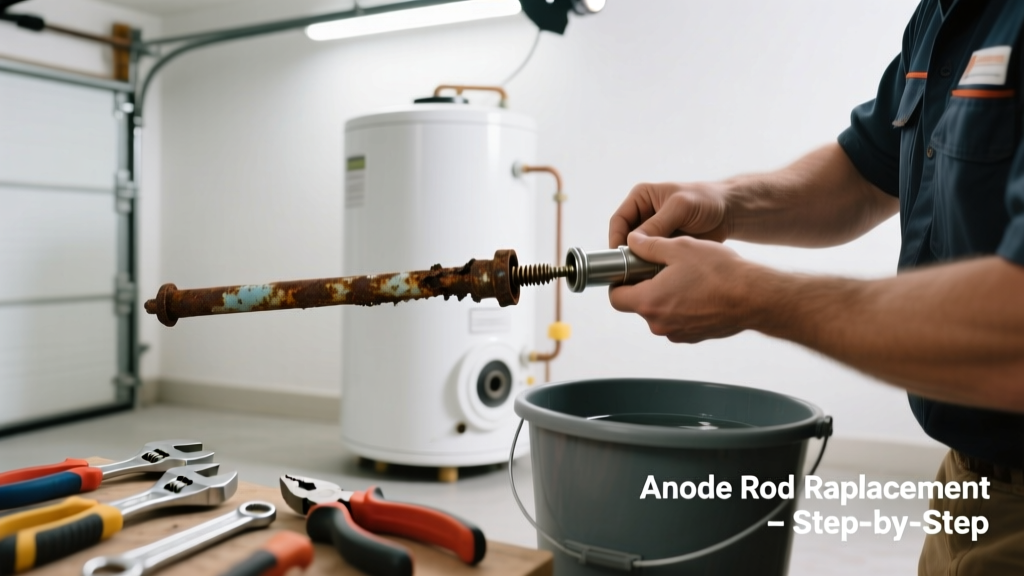
If your hot water smells like rotten eggs, your tank is rusting from the inside, or you’re seeing discolored water after years of service, your anode rod is likely spent—and that’s urgent. A depleted anode rod means your steel tank is no longer protected from electrolytic corrosion, putting your entire water heater at risk of failure within months.
Quick Diagnosis
Before assuming the anode rod is gone, rule out other causes—but these signs point strongly to depletion:
- Rotten egg odor (hydrogen sulfide) when running hot water
- Reddish-brown or milky water coming only from hot taps
- Tank exterior showing wet spots or rust bleeding near the top
- Water heater over 5 years old with no prior anode inspection or replacement
- Visible pitting or crumbling metal when inspecting the rod through the hot water outlet
Tools & Materials Needed
| Item | Purpose | Estimated Cost |
|---|---|---|
| 6-point socket wrench (1-1/16" or 1-1/8") | Provides grip on hex head without rounding; standard wrenches slip | $12–$22 |
| Anode rod (aluminum-zinc or magnesium) | Replaces sacrificial protection; choose based on water hardness (see Prevention Tips) | $24–$42 |
| Thread sealant (non-petroleum, pipe dope rated for potable water) | Prevents leaks at threaded connection; Teflon tape alone isn’t sufficient | $5–$9 |
| Garden hose + bucket | Drains 2–3 gallons to relieve pressure before removal | $0 (if you own them) |
| Work gloves & safety glasses | Protects against sharp edges, rust flakes, and hot surfaces | $8–$15 |
Step-by-Step Fix
- Shut off power and water supply: Turn off gas valve (for gas heaters) or circuit breaker (for electric). Close cold water inlet valve. Open a hot water faucet upstairs to release pressure.
- Drain 2–3 gallons: Attach a garden hose to the drain valve, run it to a floor drain or bucket, and open the valve just enough to let water flow until pressure drops—no need to empty the whole tank.
- Locate and remove the anode rod: Most rods are under the hot water outlet nipple (not the cold inlet). Use the 6-point socket to loosen the hex head—expect resistance; apply steady torque, not hammer blows. If it spins freely but won’t budge, the rod may be seized—see "When to Call a Pro" below.
- Inspect and replace: Pull out the rod. If more than 6 inches of core wire is exposed, or if it’s covered in white chalky scale with little metal remaining, replace it immediately. Clean threads on the tank with a wire brush, apply thread sealant, and hand-tighten the new rod before torquing to 75–90 ft-lbs.
- Refill and restart: Close drain valve, open cold water inlet, let air bleed from the hot faucet, then restore power/gas. Wait 30 minutes before using hot water.
When to Call a Pro
Don’t force this repair if any of these apply:
- The anode rod is completely fused to the tank—attempting removal risks cracking the tank shell
- Your water heater is over 10 years old and shows visible external rust or bulging
- You have a tankless or hybrid heat pump water heater (anode rods differ or don’t exist)
- You detect gas leaks (rotten egg smell plus hissing or meter movement) near the gas control valve
- You lack experience working with pressurized plumbing or electrical panels
"Over 70% of premature water heater failures stem from neglected anode rods—not sediment buildup or thermostat issues." — Plumbing Technology Journal, 2022
Prevention Tips
Extend your tank’s life with proactive care:
- Inspect the anode rod every 2 years for homes with municipal water; annually for well water users
- Use aluminum-zinc rods in hard water areas (≥120 ppm calcium carbonate); magnesium rods in soft water (<60 ppm)
- Avoid draining the tank fully unless replacing the rod—this accelerates internal corrosion
- Install a water softener if hardness exceeds 15 grains per gallon—it reduces anode consumption by up to 40%
Can I reuse my old anode rod if it looks mostly intact?
No. Even rods with 20–30% metal remaining have lost structural integrity and electrochemical efficiency. The U.S. Department of Energy recommends full replacement once core wire is visible or surface erosion exceeds 1/4 inch depth.
Do electric water heaters have anode rods?
Yes—nearly all residential electric tanks use a single anode rod mounted through the hot water outlet. Some models embed it inside the upper element assembly, requiring element removal first. Check your manual or water heater element replacement guide before starting.
Why does my new anode rod smell like sulfur after installation?
This usually indicates sulfate-reducing bacteria feeding on the fresh aluminum or magnesium. Flush the tank with 1 quart of 3% hydrogen peroxide (not bleach), then run hot water for 15 minutes. If odor persists beyond 48 hours, consider switching to a zinc-alloy rod or installing a UV sterilizer inline.
Can I install two anode rods for extra protection?
Some tanks support dual rods—especially tall or high-capacity units—but only if the manufacturer specifies it. Adding a second rod without proper clearance can restrict water flow or cause galvanic imbalance. Refer to your water heater model guide or contact the OEM directly.
How long does a new anode rod last?
Average lifespan is 3–5 years, but varies widely: magnesium rods last ~3 years in soft water, aluminum-zinc last 4–6 years in hard water, and powered anode rods (with AC current) can exceed 10 years. According to the Insurance Institute for Business & Home Safety's 2023 report, homeowners who replace rods on schedule cut unexpected tank failure risk by 62%.
Is it safe to replace the anode rod myself if I’ve never done plumbing work?
Yes—if you’re comfortable shutting off utilities, handling basic tools, and following torque specs. But skip it if you’re unsure about gas line safety, electrical disconnects, or interpreting tank corrosion patterns. When in doubt, hire a licensed plumber: the average service call costs $180–$250, far less than a $1,200 tank replacement.
A depleted anode rod isn’t just a maintenance item—it’s your tank’s last line of defense. Replacing it takes under 90 minutes for most DIYers and pays for itself in extended service life and avoided emergency repairs. Keep a spare rod in your garage, set a biannual calendar reminder, and treat your water heater like the critical system it is—not an afterthought behind the basement door.