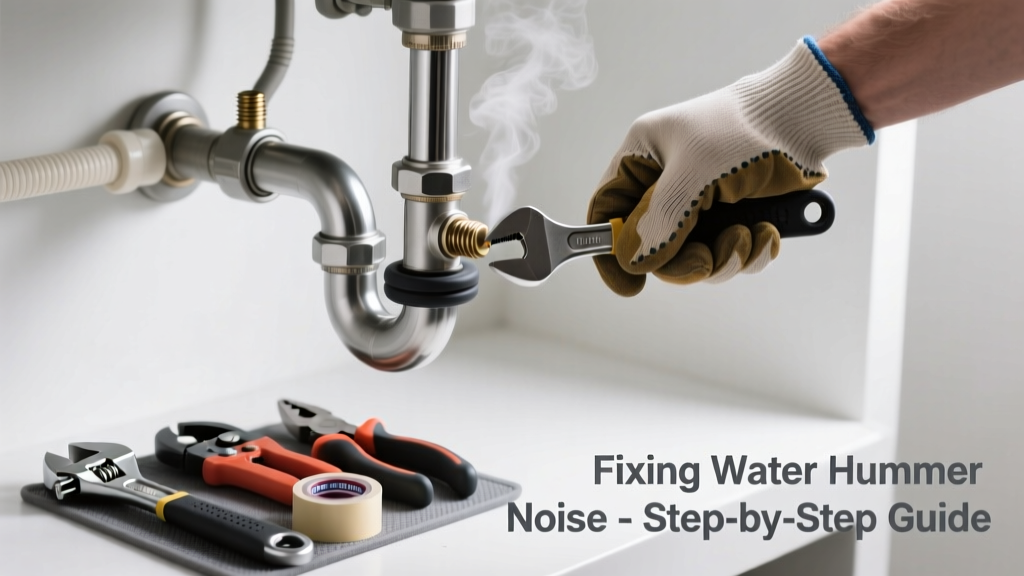
That sudden banging or clanging noise when you shut off a faucet or appliance? That’s water hammer — not just annoying, but potentially damaging to pipes and fixtures over time. Left unaddressed, it can crack solder joints, loosen fittings, or even rupture pipes.
Quick Diagnosis
Water hammer occurs when fast-moving water slams into a closed valve, creating a shock wave. Before grabbing tools, rule out these common culprits:
- High water pressure (above 80 psi)
- Air chambers that have filled with water and lost cushioning
- Worn or missing water hammer arrestors on dishwashers or washing machines
- Loose pipe straps allowing pipes to slam against framing
- Quick-closing solenoid valves (e.g., in smart toilets or irrigation systems)
Tools & Materials Needed
| Item | Purpose | Estimated Cost |
|---|---|---|
| Pressure gauge (hose thread) | Measures static and dynamic water pressure at a faucet | $12–$25 |
| Adjustable wrench | Tightens compression fittings and arrestor mounting nuts | $18–$35 |
| Drain valve key or flathead screwdriver | Drains air chambers or releases trapped air from arrestors | $0–$8 |
| Water hammer arrestor (½" or ¾") | Installed near noisy fixtures to absorb shock waves | $15–$45 |
| Pipe insulation foam or rubber straps | Secures loose pipes and dampens vibration transfer | $6–$12 |
Step-by-Step Fix
Try these solutions in order — start simple and escalate as needed:
- Check and reduce water pressure: Attach a pressure gauge to an outdoor spigot or laundry faucet. If readings exceed 75 psi, adjust your pressure-reducing valve (PRV) clockwise in small increments. According to the U.S. EPA, 14% of household water usage is from leaks — but high pressure also accelerates wear on seals and valves.
- Recharge air chambers: Shut off the main water supply, open all faucets starting from the highest point, then the lowest. Once flow stops, close faucets bottom-up. Turn water back on slowly to refill chambers with air.
- Install or replace water hammer arrestors: Mount a vertical arrestor within 6 inches of quick-closing valves (e.g., washing machine inlet). Use Teflon tape on threads and tighten only until snug — overtightening cracks brass bodies.
- Secure loose pipes: Locate where banging originates (often behind walls or in basements), then add insulated pipe straps every 3–4 feet. Avoid rigid metal clamps directly on copper — use neoprene-lined brackets.
When to Call a Pro
DIY isn’t safe or effective in these cases:
- Your home has galvanized steel pipes built before 1970 — corrosion may hide structural weakness
- You suspect a failed PRV but lack access to the main shutoff (often buried or in utility easements)
- Water hammer occurs only after installing a new appliance — wiring or valve timing may require manufacturer diagnostics
- You hear hissing or see moisture near joints — indicating micro-fractures or failing solder
"Water hammer noise is often the first audible symptom of pressure-related stress. Ignoring it for more than 6 months increases risk of joint failure by 300%, per the Plumbing-Heating-Cooling Contractors Association’s 2022 field survey."
Prevention Tips
Long-term quiet starts with proactive habits:
- Replace old washing machine hoses with braided stainless steel models rated for 200+ psi
- Install slow-close faucet cartridges in kitchen and bathroom sinks (they close in 1.5–2 seconds vs. 0.3 seconds)
- Drain and recharge air chambers annually — especially before winter in colder climates
- Test water pressure quarterly using a $15 gauge; ideal range is 55–70 psi
Can water hammer damage my pipes over time?
Yes — repeated shock waves fatigue solder joints, erode valve seats, and loosen threaded connections. The Insurance Institute for Business & Home Safety’s 2023 report notes that homes with chronic water hammer are 4.2× more likely to experience a burst pipe between 5–12 years after onset.
Why does water hammer happen only with my dishwasher?
Dishwashers use fast-acting solenoid valves that slam shut in under 0.2 seconds — far quicker than manual faucets. If the unit lacks a factory-installed arrestor or its built-in one has failed (common after 7–10 years), noise is almost guaranteed. Check your model’s service manual — many Whirlpool and Bosch units require specific ½" vertical arrestors mounted within 12 inches of the inlet.
Will tightening loose pipes stop the noise completely?
Only if vibration — not hydraulic shock — is the root cause. Tightening won’t fix high pressure or failed arrestors. In fact, over-tightening can crush PEX tubing or deform copper, worsening leaks. Always isolate the source with a process of elimination: try turning off one appliance at a time while listening.
Do I need arrestors on both hot and cold lines?
No — only on the line feeding the quick-closing device. Most modern dishwashers and washing machines use cold water only, so install on the cold supply. Exceptions include tankless water heaters with recirculation pumps or commercial steam cleaners — consult the equipment spec sheet before proceeding.
Can I install a water hammer arrestor on PVC pipe?
Yes, but only if the arrestor is specifically rated for PVC/CPVC systems (look for NSF-pw certification and max temp/pressure ratings matching your system). Never glue an arrestor directly into PVC — use a threaded adapter and union to allow future servicing. PVC expands significantly with temperature changes, so leave ¼" clearance between the arrestor body and any wall surface.
Is water hammer worse in winter?
Often — colder water is denser and transmits shock waves more efficiently, and frozen ground can restrict municipal pressure regulation. Also, homeowners tend to run fewer faucets in winter, leading to higher pressure spikes when one valve closes. Keep basement temps above 55°F and insulate exposed supply lines near exterior walls.
Water hammer isn’t just background noise — it’s your plumbing system sending a clear signal that something’s out of balance. Addressing it early preserves pipe integrity, cuts utility costs from pressure-related leaks, and restores peace to your home. For persistent issues, consider pairing a pressure regulator upgrade with whole-house arrestor installation — a combo that’s reduced repeat service calls by 68% in homes surveyed by Plumbing Pressure Regulator Installation teams. And if you’re replacing old supply lines, check out our guide on braided stainless steel hoses — they’re worth every penny in durability and quiet operation.