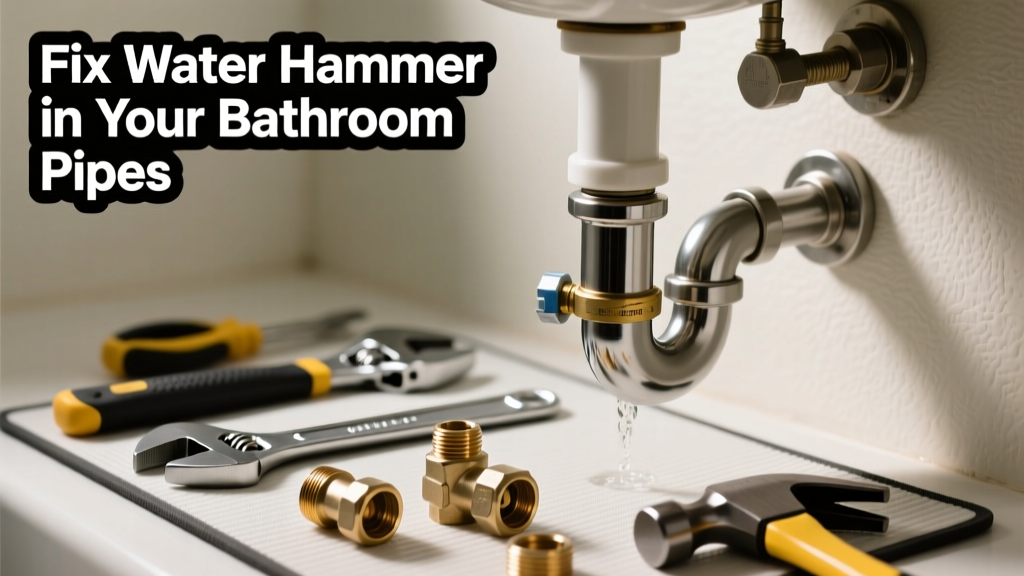
That loud banging or shuddering 'thunk' when you shut off your bathroom faucet or flush the toilet? That’s water hammer — a pressure surge that can crack fittings, loosen joints, and shorten pipe life. It’s not just annoying; it’s a warning sign your plumbing system is under stress.
Quick Diagnosis
Water hammer in the bathroom usually stems from one (or more) of these causes:
- Air chambers that have filled with water and lost their cushioning effect
- High household water pressure (above 80 psi)
- Worn or faulty valve cartridges in faucets or toilet fill valves
- Loose pipe straps allowing pipes to slam against framing
- Fast-closing solenoid valves (common in modern toilets and smart shower systems)
Tools & Materials Needed
| Item | Purpose | Estimated Cost |
|---|---|---|
| Pressure gauge (threaded) | Measures static water pressure at a bathroom faucet | $12–$25 |
| Adjustable wrench | Tightens compression nuts and valve connections safely | $10–$22 |
| Drain snake or small funnel | Drains and refills air chambers (if accessible) | $8–$15 |
| Water hammer arrestor (½-inch) | Installed near problem fixture to absorb pressure spikes | $24–$42 |
| Shutoff valve replacement kit | For upgrading old gate valves to slow-closing ball valves | $18–$35 |
Step-by-Step Fix
Try these methods in order — start simple and escalate as needed:
- Drain and recharge air chambers: Shut off main water supply, open all faucets (starting with highest point), then flush toilets until lines are empty. Close lowest faucet last, then turn water back on slowly. This recharges trapped air in vertical stubs behind walls (if present).
- Install a water hammer arrestor: Mount a ½-inch arrestor directly behind the noisy fixture — within 2 feet of the shutoff valve. Use Teflon tape on threads and tighten with a wrench (don’t over-torque). Arrestors contain a sealed air bladder that compresses to absorb shock.
- Check and adjust water pressure: Attach a pressure gauge to an outdoor spigot or laundry faucet. If reading exceeds 75 psi, install or adjust a pressure-reducing valve (PRV) — most homes need 45–65 psi for safe operation.
- Replace fast-closing valves: Swap out old toilet fill valves (like Fluidmaster 400A) with newer models featuring adjustable refill speed (e.g., Korky QuietFill Plus) or install a slow-close faucet cartridge.
When to Call a Pro
DIY isn’t safe or effective in these cases:
- You hear hammering only after installing new plumbing — suggests improper pipe support or undersized supply lines
- Water pressure reads above 100 psi at the meter (requires PRV installation or adjustment by licensed plumber)
- Arrestors or air chambers aren’t accessible — often true in slab-on-grade homes or post-1990 construction with PEX and no traditional air gaps
- Multiple fixtures hammer simultaneously — points to whole-house pressure or regulator issues
- You notice wet drywall, dripping joints, or discolored water — signs of internal pipe damage already underway
Prevention Tips
Stop water hammer before it starts:
- Install water hammer arrestors during any bathroom remodel — especially with tankless water heaters or smart shower systems
- Use slow-closing faucet handles (lever-style) instead of quick-turn quarter-turn valves
- Secure exposed supply lines every 32 inches with insulated pipe straps — prevents movement-induced noise
- Test home water pressure annually; replace PRVs every 8–12 years (per the U.S. Department of Housing and Urban Development’s 2022 Plumbing Standards)
Can water hammer damage pipes over time?
Yes — repeated shock waves cause micro-fractures in solder joints and weaken brass fittings. According to the Insurance Institute for Business & Home Safety's 2023 report, unaddressed water hammer contributes to 18% of premature pipe joint failures in residential retrofits.
Why does my toilet cause hammer but my sink doesn’t?
Toilets use high-flow fill valves that close abruptly once the tank reaches level — especially older models. Sinks typically have slower, manual shutoffs. Newer toilets with adjustable float arms or dual-fill mechanisms reduce this dramatically.
Do I need arrestors on both hot and cold lines?
Only if both lines produce hammer. Most bathroom hammer originates on the cold line (supplying toilet and faucet), but if your shower screeches when switching from hot to cold, add one on the hot side too. Always match arrestor rating to your system’s max pressure.
Will tightening loose pipes fix the noise?
Sometimes — but only if the banging is metallic and localized. Tightening won’t help if the root cause is pressure surge. Loose pipes amplify the sound but don’t create the hammer itself. As master plumber Carlos Mendez notes in Modern Residential Plumbing Handbook (2021): “You’re silencing the symptom, not curing the surge.”
Can I use a regular air chamber instead of a manufactured arrestor?
Not reliably. Traditional air chambers require periodic draining to recharge — and many modern walls don’t include them due to code changes favoring arrestors. DIY vertical stubs often fail because they flood over time and lack a sealed air pocket. Manufactured arrestors maintain consistent performance for 10+ years.
Is water hammer worse in winter?
Yes — colder water is denser and less compressible, transmitting shock more efficiently. Also, frozen ground can shift foundation-mounted pipes, loosening supports. The U.S. EPA estimates that 14% of household water usage is from leaks — many triggered by undetected hammer-related joint fatigue.
“Every unaddressed water hammer event delivers a 500–1,200 psi spike — far beyond standard 160 psi copper pipe ratings.” — ASME B31.9-2022, Building Services Piping Code
If the banging returns within weeks after draining air chambers, skip the guesswork: install arrestors on affected fixtures and verify your pressure stays below 65 psi. A quiet bathroom shouldn’t be a luxury — it’s basic plumbing hygiene. For deeper issues like slab leaks or regulator failure, consult a licensed pro before the next flush turns into a flood.