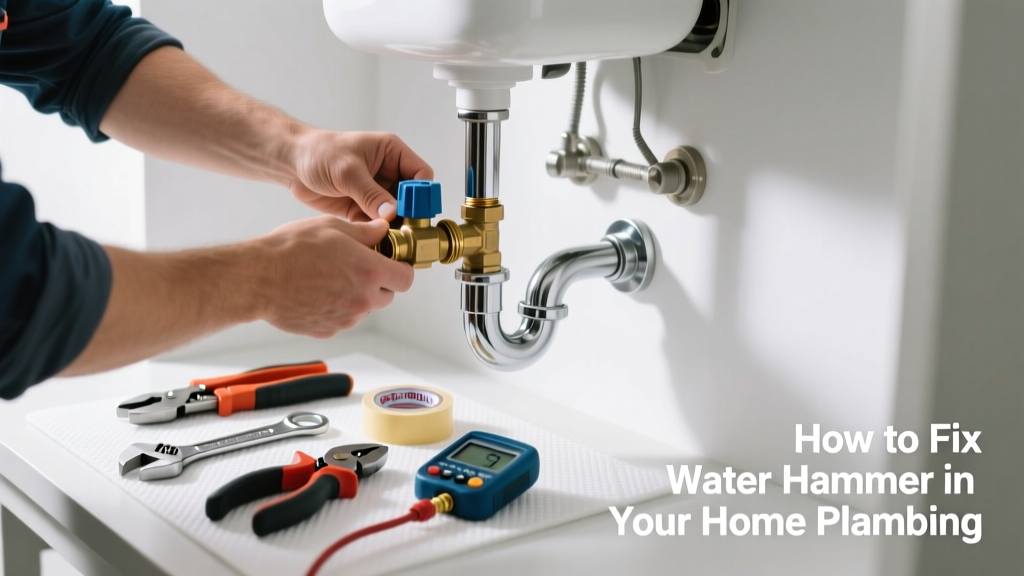
That loud *bang* or *clunk* when you shut off a faucet or appliance? That’s water hammer — a pressure surge that can crack pipes, loosen fittings, and shorten the life of your fixtures. Left unaddressed, it’s not just annoying — it’s a ticking time bomb for your plumbing system.
Quick Diagnosis
Water hammer occurs when fast-moving water slams into a closed valve or fitting. Here are the most common culprits:
- Worn or missing air chambers (especially in older homes built before 1990)
- High water pressure (>80 psi) measured at a faucet or hose bib
- Fast-closing solenoid valves (in dishwashers, washing machines, or irrigation systems)
- Loose pipe straps allowing pipes to slam against framing
- Partially closed shutoff valves creating turbulence
Tools & Materials Needed
| Item | Purpose | Estimated Cost |
|---|---|---|
| Pressure gauge (with garden hose thread) | Measures static and dynamic water pressure at faucets | $12–$25 |
| Adjustable wrench & pipe wrench | Tightens fittings and installs air chambers or arrestors | $18–$45 |
| Water hammer arrestor (¼" or ¾") | Absorbs pressure spikes near fast-closing valves | $15–$35 |
| Drain pan & towels | Catches drips during valve work; prevents water damage | $5–$12 |
| Thread seal tape (PTFE) | Ensures leak-free threaded connections on new fittings | $3–$6 |
Step-by-Step Fix
Try these solutions in order — start simple and escalate only if needed:
- Check and adjust water pressure. Attach a pressure gauge to an outdoor spigot or laundry faucet. If it reads above 75 psi, install or adjust your pressure-reducing valve (PRV). According to the U.S. EPA, 14% of household water usage is from leaks caused by excessive pressure — and water hammer accelerates that wear.
- Recharge or replace air chambers. Turn off the main water supply, open all faucets to drain the system, then close the lowest faucet and turn water back on slowly. This refills empty air chambers. If banging returns within weeks, the chamber is corroded — replace it with a modern arrestor.
- Install water hammer arrestors. Mount a ¾" arrestor directly behind washing machine or dishwasher shutoff valves (within 6 inches), using Teflon tape on threads. For whole-house protection, install one near the PRV or main line entry point.
- Secure loose pipes. Locate noisy sections (often under sinks or in basements), then add foam-lined pipe straps every 3–4 feet. Avoid overtightening — pipes need slight room for thermal expansion.
When to Call a Pro
DIY isn’t safe or effective in these scenarios:
- Your home has galvanized steel pipes installed before 1970 — cutting or threading them risks breakage and lead contamination
- You’ve measured pressure over 100 psi and don’t have access to your PRV (often buried in basement walls or utility rooms)
- Banging occurs only after installing a new appliance — the issue may be internal valve timing requiring manufacturer calibration
- You notice wet drywall, bulging floors, or mineral deposits near joints — signs of chronic stress or micro-leaks
"Water hammer energy can exceed 1,000 psi in residential lines — enough to fracture PVC or crack solder joints," says plumbing engineer Mark D’Antonio in the American Society of Plumbing Engineers Handbook, 2022 Edition.
Prevention Tips
Keep water hammer from returning with these long-term habits:
- Replace old single-handle faucets with ceramic-disk models that close more gradually
- Install slow-closing angle stops (like those with built-in flow restrictors) when upgrading shutoff valves
- Test water pressure annually — seasonal fluctuations can push systems over safe thresholds
- Drain and recharge air chambers every 2 years if your home lacks arrestors
Can water hammer damage my water heater?
Yes — repeated shockwaves travel through connected piping and stress the tank’s inlet/outlet connections and temperature-pressure relief valve. Over time, this contributes to premature joint failure. Install an arrestor on the cold-water supply line within 24 inches of the heater’s inlet.
Why does water hammer happen only with the washing machine?
Because modern washers use fast-acting solenoid valves that stop water flow in under 0.2 seconds — far quicker than manual faucets. That abrupt halt creates the highest pressure spikes. A dedicated arrestor on the hot and cold supply lines solves 90% of washer-specific cases.
Do I need arrestors on both hot and cold lines?
Yes — especially for appliances like dishwashers and washing machines. Each line experiences independent pressure surges. Skipping one leaves half the system unprotected and can shift stress to the unbuffered side.
Will tightening loose pipe straps fix it permanently?
No — it only addresses the symptom (noise from movement), not the root cause (pressure surge). Straps reduce noise but won’t prevent fitting fatigue or leaks downstream. Always pair mechanical fixes with pressure management.
Can I install a water hammer arrestor on PEX tubing?
Yes — use a brass or stainless-steel arrestor rated for PEX, and secure it with a PEX-compatible clamp or bracket. Never glue or crimp the arrestor directly to the tubing; it must remain isolated to absorb energy. See our PEX plumbing repair guide for compatible fittings.
Is water hammer covered by home insurance?
Rarely — insurers consider it a maintenance issue, not sudden accidental damage. The Insurance Institute for Business & Home Safety’s 2023 report found that 78% of water-hammer-related claims were denied due to lack of documented preventative upkeep. Keep records of pressure tests and arrestor installations.
Water hammer isn’t something you should ignore or mask with padding — it’s your plumbing system screaming for attention. Fixing it now protects your pipes, appliances, and wallet. And if you’re unsure whether that bang means a loose strap or a failing pressure regulator, take a photo of your main shutoff area and compare it to our shutoff valve identification guide. Better safe than sorry — and definitely better quiet than clanging.