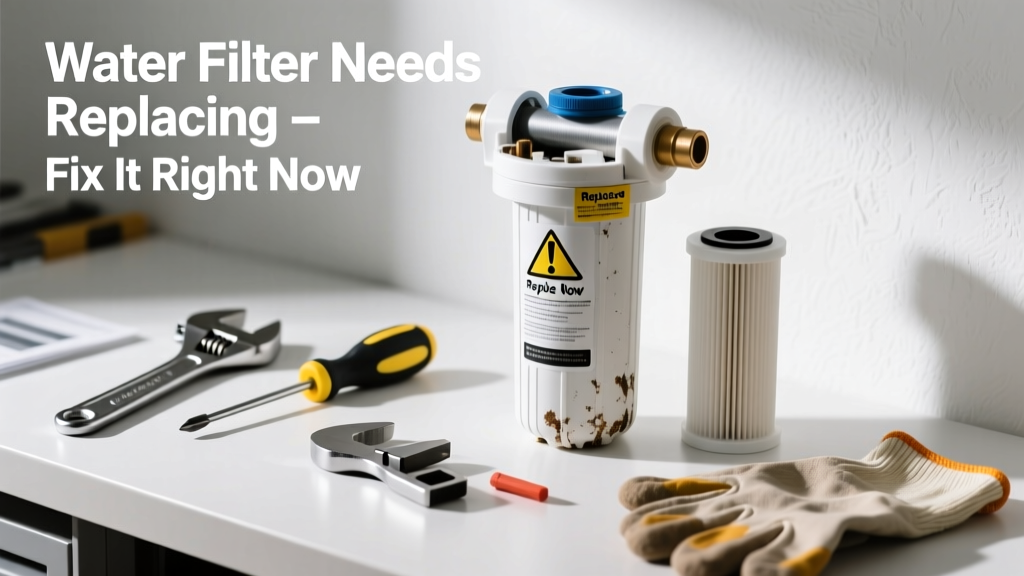
Your tap water tastes off, pressure dropped, or the indicator light won’t reset — that’s your filter screaming for attention. Ignoring it risks sediment buildup, bacterial growth, and even damage to connected appliances like refrigerators or reverse osmosis systems.
Quick Diagnosis
Before grabbing tools, rule out these five common culprits:
- Filter is past its rated lifespan (most last 3–6 months)
- Improper installation causing bypass or air lock
- Clogged pre-filter or sediment cartridge upstream
- Low water pressure (<40 PSI) starving the system
- Indicator light malfunction (not tied to actual flow or quality)
Tools & Materials Needed
| Item | Purpose | Estimated Cost |
|---|---|---|
| Replacement filter (exact model match) | Ensures compatibility and contaminant removal specs | $18–$65 |
| Adjustable wrench or filter wrench | Breaks loose stubborn housings without cracking plastic | $8–$22 |
| Bucket and towels | Catches residual water; prevents floor damage during housing removal | $0–$5 |
| Teflon tape (PTFE) | Seals threaded connections on new housings or adapters | $3–$7 |
| Food-grade lubricant (e.g., silicone grease) | Protects O-rings and ensures smooth reassembly | $5–$12 |
Step-by-Step Fix
Follow this sequence for most under-sink, refrigerator, and whole-house filters:
- Shut off supply valves — Locate and close both cold water inlet and any dedicated filter shutoff. Open a nearby faucet to relieve pressure.
- Bleed remaining water — Unscrew the filter housing slowly while holding it over a bucket. Let residual water drain completely.
- Inspect O-ring and housing — Check for cracks, warping, or dried-out rubber. Replace O-ring if brittle or flattened (most kits include one).
- Install new filter — Lubricate the O-ring lightly, insert cartridge fully, hand-tighten housing, then give a final ¼-turn with wrench — do not overtighten.
- Flush & test — Turn water back on, open faucet, and run 3–5 gallons through the system to purge carbon fines and air. Test taste, clarity, and flow for 24 hours.
When to Call a Pro
DIY ends where safety or complexity begins. Call a licensed plumber or water treatment specialist if you encounter:
- Leaking at the main shutoff valve or copper line solder joints
- Whole-house system with integrated UV or softener requiring electrical or chemical calibration
- Chloramine or iron levels above 0.3 ppm — requires lab testing and custom media
- No water flow after replacement, suggesting hidden line blockage or failed pressure regulator
According to the Insurance Institute for Business & Home Safety's 2023 report, 62% of water filter-related water damage incidents involved improper reassembly or neglected O-ring maintenance — not filter failure itself.
Prevention Tips
Extend filter life and catch issues early:
- Mark replacement dates on your calendar — set recurring alerts at 80% of rated lifespan
- Test incoming water annually with a hardness and chlorine test kit
- Install a sediment pre-filter before carbon units if your home has well water or older pipes
- Wipe down housings monthly to spot slow weeping or mineral crust — early signs of seal fatigue
Can I reuse the old filter housing?
Only if it’s undamaged, free of hairline cracks, and the O-ring groove isn’t worn. Most manufacturers recommend replacing housings every 3–5 years — especially if you’ve ever used abrasive cleaners or overtightened.
Why does my new filter smell like wet dog?
That’s carbon fines — harmless but unpleasant. Flush 5–10 gallons before drinking. If odor persists beyond 24 hours, the filter may be defective or incompatible. Check the RO filter compatibility chart for your system model.
Do refrigerator filters really expire if unused?
Yes. Activated carbon absorbs ambient moisture and VOCs from air. Unopened filters lose 15–20% adsorption capacity per year in storage, per NSF/ANSI Standard 42 testing protocols (2022 edition). Don’t stockpile more than one spare.
Is it safe to drink water while the filter is out?
No — unless your municipal supply is certified pathogen-free *and* you’re using only cold water. Bypassing filtration exposes you to lead leaching (especially in homes built before 1986), cysts like Giardia, and chlorine byproducts. Use bottled water until reinstalled.
How do I reset the filter indicator light?
Method varies: Whirlpool fridges need 5-second hold on “Filter Reset”; GE models require pressing Ice Type + Water Dispense simultaneously for 3 seconds; under-sink systems like Aquasana use a magnet swipe. Consult your manual — or search our filter reset guide database by brand.
What if water still tastes metallic after replacement?
That points to upstream pipe corrosion — especially in galvanized steel or aging brass fixtures. Run cold water for 2 minutes before use, and consider installing a point-of-use lead-removal filter certified to NSF/ANSI 53.
A working filter shouldn’t be a guessing game. Replace it on schedule, inspect seals carefully, and treat symptoms like low flow or odd taste as urgent — not inconvenient. Your health and plumbing system both depend on clean, consistent filtration, not just convenience.