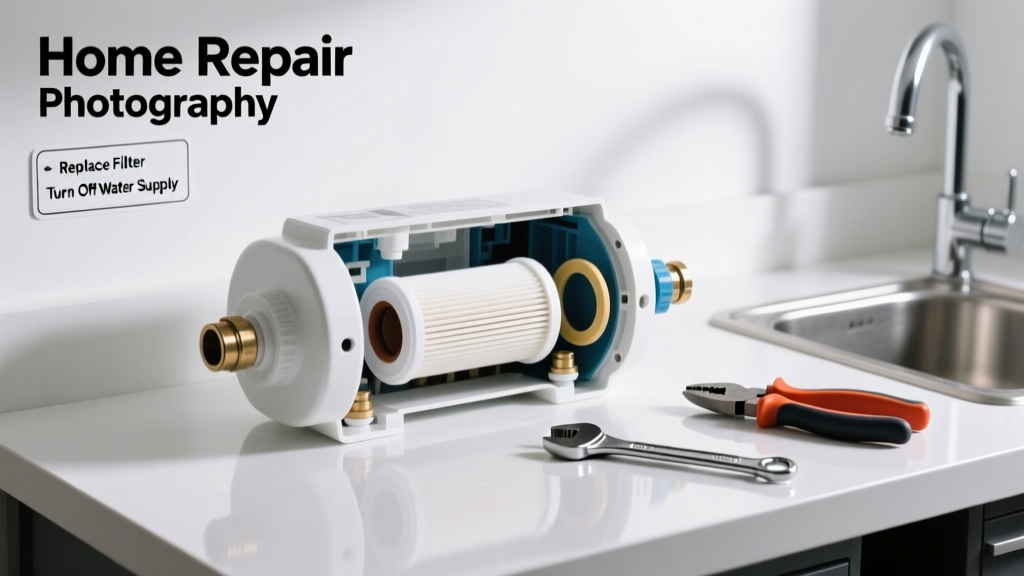
If your water filter is rattling, hissing, groaning, or making a high-pitched whine when you turn on the faucet, it’s not just annoying—it’s a warning sign. These sounds often mean trapped air, clogged media, cracked housings, or internal component failure. Ignoring them can lead to reduced flow, poor filtration, or even housing rupture.
Quick Diagnosis
Start by identifying the noise type and timing—this narrows down the root cause fast:
- Rattling or buzzing during water flow: usually air pockets or loose O-rings inside the filter housing
- Hissing or sputtering at startup: indicates air trapped in the system or a failing seal
- Groaning or grinding sound: often caused by severely clogged carbon or sediment media restricting flow
- Clicking or tapping intermittently: points to pressure fluctuations or failing automatic shut-off valves (in reverse osmosis units)
- Whining or screeching: typically worn-out pump bearings (RO systems) or incompatible filter media causing vibration
Tools & Materials Needed
| Item | Purpose | Estimated Cost |
|---|---|---|
| Replacement filter cartridge (exact model match) | Ensures proper fit, flow rate, and contaminant removal; prevents bypass or housing stress | $18–$45 |
| Adjustable wrench or filter wrench | Provides grip and torque to loosen stubborn filter housings without cracking plastic | $8–$22 |
| Teflon tape (PTFE) | Seals threaded connections on housings and inlet/outlet fittings to prevent leaks and air ingress | $3–$6 |
| Clean bucket and towels | Catches residual water and protects flooring during housing removal | $0–$5 |
| Small food-grade lubricant (e.g., silicone grease) | Lubricates O-rings to prevent twisting, drying, and premature seal failure | $5–$12 |
Step-by-Step Fix
Follow these methods in order—most noise issues resolve after Method 1 or 2:
- Bleed air from the system: Shut off main water supply. Open the nearest cold faucet to relieve pressure. Loosen the filter housing cap ¼ turn to release trapped air with a soft hiss. Retighten fully once air stops escaping.
- Replace O-rings and inspect housing: Remove the filter cartridge. Check the housing’s O-ring groove for nicks or debris. Clean with warm water and mild soap. Apply a pea-sized amount of silicone grease to a new or cleaned O-ring before reseating.
- Install fresh, compatible filter: Verify the replacement matches your unit’s specs (e.g., RO membrane vs. whole-house sediment). Insert cartridge straight—don’t twist it in sideways—and hand-tighten only (over-torquing cracks housings).
- Flush and test: Turn water back on slowly. Let water run through the new filter for 10–15 minutes (longer for carbon filters) to purge air and carbon fines. Listen closely—any persistent noise after flushing means deeper issues.
When to Call a Pro
Don’t risk injury, flooding, or contamination if you encounter any of these:
- Water pressure drops below 40 PSI at the filter inlet (requires pressure regulator diagnosis)
- Cracks, warping, or cloudiness in the filter housing—even hairline fractures compromise safety
- Noise originates from behind walls or under slabs (may indicate pipe corrosion or valve failure)
- You’re using a commercial-grade or multi-stage system with electrical components (e.g., UV lamps, smart monitors)
- The unit is under warranty and tampering voids coverage—contact the manufacturer first
Prevention Tips
Extend filter life and silence future noise with consistent habits:
- Replace cartridges every 6 months—or sooner if you notice flow reduction, taste changes, or visible sediment
- Keep a maintenance log: note install dates, water hardness levels, and observed noises (helps spot patterns)
- Install a pressure gauge before the filter to catch spikes above 80 PSI, which accelerate wear
- Use pre-filters on well water systems to reduce sediment load on primary cartridges
- Winterize outdoor or garage-mounted filters in freezing climates to prevent ice-related housing stress
Can I reuse the old O-ring with a new filter?
No—O-rings degrade over time due to chlorine exposure, heat, and compression set. Even if they look intact, reused seals fail silently and cause air leaks or slow drips. Always replace with OEM or food-grade silicone O-rings rated for potable water use.
Why does my new filter make noise right after installation?
Air trapped in the filter media or housing is the most common culprit. Carbon and ceramic filters especially hold air until flushed. Run cold water for 10–20 minutes continuously—don’t interrupt the flow—to purge it fully. If noise persists beyond 30 minutes, check for cross-threading or improper seating.
Is it safe to use vinegar to clean a noisy filter housing?
Vinegar is safe for descaling mineral buildup on stainless steel or brass housings—but never use it on polypropylene or acrylic housings, which can craze or weaken. For plastic housings, stick to warm water and a soft brush. According to the Water Quality Association’s 2022 Maintenance Guidelines, acidic cleaners increase long-term micro-fracture risk in thermoplastic filter bodies.
How do I know if the noise is coming from the filter or the water heater?
Turn off the water heater’s power or gas supply and run a cold faucet. If the noise stops, it’s likely heater-related (e.g., sediment rumble). If it continues, isolate the filter by closing its inlet/outlet valves—if noise stops, the filter is confirmed as the source. Also check if noise occurs only during hot water use: that strongly points to the heater.
Can low water pressure cause filter noise?
Yes—especially in undersized or poorly designed systems. When pressure drops below 35 PSI, some filters vibrate at resonant frequencies, creating hum or buzz. The U.S. EPA estimates that 14% of household water usage is from leaks, many tied to pressure-related component fatigue. Install a pressure regulator if inlet pressure exceeds 80 PSI or dips below 45 PSI regularly.
What’s the risk of ignoring a hissing filter?
A hiss often signals a compromised seal letting air into the drinking water line—which introduces bacteria-carrying biofilm and reduces filter efficiency. Worse, continuous air intrusion stresses housing threads and can lead to sudden rupture. As plumbing contractor Maria Chen notes in Home Water Systems Handbook (2023): “A hissing filter isn’t just noisy—it’s leaking microbiological risk, one drop at a time.”
Replacing a noisy filter isn’t just about quiet—it’s about safeguarding water quality, preventing costly downstream damage, and catching small failures before they cascade. Keep your filter schedule visible on the fridge, invest in a simple pressure gauge, and treat each replacement like a mini-system tune-up. If the noise returns within weeks of a fresh install, revisit your water chemistry—hardness, iron, or chlorine levels may be shortening cartridge life faster than expected. For help choosing the right replacement, see our guide on filters for hard water or under-sink installation tips.