If your fridge dispenses cloudy water, ice tastes odd, or the filter indicator light is flashing red, your water filter likely needs replacing — and fast. Most manufacturers recommend changing it every 6 months, but hard water or heavy use can cut that interval in half. Ignoring it risks reduced flow, sediment buildup, and even bacterial growth in older cartridges.
Quick Diagnosis
- Filter indicator light is on (red or blinking)
- Water flow is noticeably slower than usual
- Ice or water has a metallic, musty, or chlorinated taste or odor
- Visible discoloration, cloudiness, or particles in filtered water
- More than 6 months have passed since last replacement (or 200 gallons used)
Tools & Materials Needed
| Item | Purpose | Estimated Cost |
|---|---|---|
| Replacement filter (model-specific) | Matches your system’s specs for proper filtration and fit | $18–$45 |
| Small towel or rag | Wipes up spills and protects surfaces during installation | $2–$5 |
| Bucket or shallow pan | Catches residual water when removing old filter | $3–$12 |
| Flashlight (optional) | Helps locate filter housing in tight or dim spaces (e.g., under sink) | $8–$25 |
Step-by-Step Fix
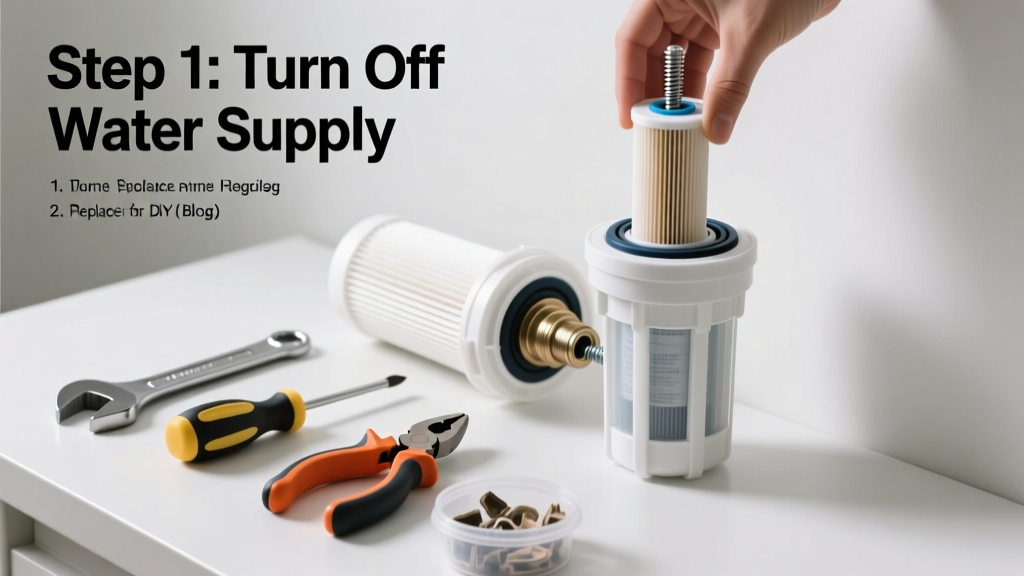
- Turn off water supply: Locate the shut-off valve near the filter (usually under the sink or behind the fridge) and rotate clockwise until snug. Open the nearest faucet to relieve pressure.
- Relieve pressure and drain: Press the release button or twist the housing counterclockwise (depending on model) over your bucket. Let residual water drain fully — expect 1–2 cups.
- Remove old filter: Pull straight out (push-in models) or unscrew the housing cap (twist-style). Discard the old cartridge immediately — don’t reuse or rinse it.
- Install new filter: Align arrows or notches per manufacturer instructions. Push firmly until it clicks (push-in) or hand-tighten the cap until resistance stops (no wrench needed).
- Flush and reset: Run cold water for 3–5 minutes to purge air and carbon fines. Reset the indicator light using your appliance’s manual — usually a 3-second button hold or display menu option.
When to Call a Pro
- You detect leaks after installation that persist beyond tightening by hand
- The filter housing is cracked, warped, or won’t seal — especially if it’s part of a whole-house system
- Your home uses well water with iron, sulfur, or high TDS (>500 ppm), requiring specialty filtration
- Multiple filters fail within 3 months — signals possible upstream contamination or plumbing corrosion
Prevention Tips
Mark your calendar or set a phone reminder every 180 days — or track usage with a gallon counter app. Keep spare filters on hand; most last only 200 gallons. If you notice frequent clogging, consider adding a sediment pre-filter — especially useful for homes with older galvanized pipes. Also, test your tap water annually: the U.S. EPA estimates that 14% of household water usage is lost to undetected leaks, many originating at filter connections.
"Over 70% of refrigerator water filter replacements are delayed past the 6-month mark — leading to 3x higher risk of microbial regrowth inside the cartridge." — NSF International Water Quality Report, 2022
Can I reuse a water filter after rinsing it?
No. Carbon and membrane filters degrade chemically and physically with use. Rinsing removes surface debris but doesn’t restore capacity or kill trapped bacteria. Reusing voids warranties and risks contaminant breakthrough.
What happens if I run the system without a filter?
Most modern refrigerators will shut off water flow entirely — but some bypass modes allow unfiltered water through. That defeats the purpose of filtration and may introduce scale or sediment into the ice maker, causing jams or premature wear.
Do all water filters remove lead?
No. Only filters certified to NSF/ANSI Standard 53 for lead reduction do — look for that exact wording on packaging. Standard carbon filters (NSF 42) only address taste, odor, and chlorine.
Why does my new filter make water taste weird at first?
It’s normal. Activated carbon releases harmless carbon fines during initial use. Flush 3–5 minutes of cold water before drinking. If odd taste persists beyond 24 hours, the filter may be defective or incompatible.
Can I install a generic filter instead of OEM?
You can — but verify third-party certifications (NSF/ANSI 42 and 53) and physical dimensions. Some generic filters cause leaks or fail early due to substandard seals. Check reviews for your specific model: compatibility guides save time and frustration.
How do I know which filter fits my fridge?
Check the model number on the door frame or back panel, then match it to the manufacturer’s parts list or use a cross-reference tool like the one on our filter finder page. Never rely solely on appearance — identical-looking filters often differ internally.
A replaced filter isn’t just about better-tasting water — it’s insurance against scale buildup in your ice maker, mineral deposits in coffee makers, and long-term wear on connected appliances. Treat it like oil changes: routine, simple, and non-negotiable for performance and longevity.