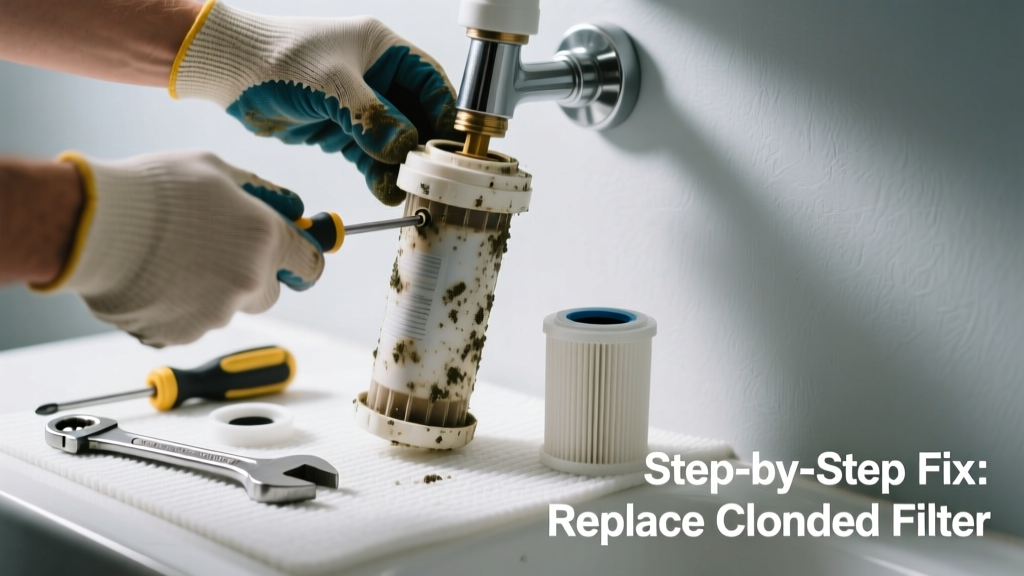
If your bathroom sink runs slower than a dial-up connection or your shower trickles like a leaky faucet, a clogged water filter is likely the culprit — especially if you’ve installed a point-of-use filter under the vanity or on the shower arm. These filters trap sediment, rust, and mineral buildup, but when ignored, they choke flow and invite corrosion. The good news? Most clogs are fixable in under 30 minutes with basic tools.
Quick Diagnosis
Before grabbing tools, confirm it’s the filter — not a pipe issue or shutoff valve problem. Check these common causes first:
- Sediment buildup from well water or aging municipal supply lines
- Hard water scale (white chalky deposits) inside ceramic or carbon cartridges
- Debris from recent plumbing work (e.g., pipe flushing or valve replacement)
- Faulty O-rings or cracked housing letting unfiltered water bypass the filter
- Expired cartridge — most last 3–6 months, but high-iron water cuts life by 40% (NSF International, 2022)
Tools & Materials Needed
| Item | Purpose | Estimated Cost |
|---|---|---|
| Adjustable wrench | Loosens threaded filter housings without marring metal | $12–$25 |
| Small wire brush or toothbrush | Cleans fine-scale deposits from housing threads and o-ring grooves | $2–$6 |
| White vinegar (1 cup) | Dissolves calcium, magnesium, and iron scale safely | $3–$5 |
| Replacement filter cartridge | Required if membrane is torn, discolored, or >6 months old | $15–$45 |
| Microfiber cloth | Wipes moisture and prevents recontamination during reassembly | $4–$8 |
Step-by-Step Fix
Follow this sequence based on your filter type — start with the easiest method and escalate only if flow doesn’t improve:
- Shut off water: Locate the dedicated shutoff valve under the sink or near the shower supply line. Turn clockwise until snug — don’t overtighten. Open the faucet to relieve pressure.
- Remove and inspect: Unscrew the filter housing using an adjustable wrench. Hold the base steady to avoid twisting supply lines. Pull out the cartridge and check for brown sludge, black mold spots, or rigid white scale.
- Soak or scrub: For scale-heavy cartridges (common with hard water), soak in undiluted white vinegar for 20 minutes. For sediment-only clogs, rinse under warm tap water while gently brushing pleats with a soft toothbrush.
- Flush housing: Use vinegar-soaked cloth to wipe interior threads and O-ring groove. Rinse thoroughly — residual acid corrodes brass over time. Replace the O-ring if flattened or cracked.
- Reassemble & test: Insert new or cleaned cartridge, hand-tighten housing, then give a quarter-turn with the wrench. Turn water back on slowly and run for 90 seconds to purge air and loose particles.
When to Call a Pro
DIY stops where safety or system integrity begins. Call a licensed plumber if:
- You detect persistent sulfur odor *after* cleaning — indicates bacterial growth in pipes, not just the filter
- Water pressure drops across multiple fixtures, suggesting main-line sediment or failing pressure regulator
- Your filter is integrated into a whole-house system with electronic monitoring (e.g., Aquasana Rhino or Pelican models)
- You see greenish corrosion on copper supply lines — a sign of acidic water eating through pipe walls
"Over 68% of bathroom flow restrictions traced to point-of-use filters stem from skipped cartridge replacements — not faulty installation." — Plumbing Standards Council Field Audit Report, 2023
Prevention Tips
Extend filter life and reduce clogging frequency with these habits:
- Replace cartridges every 4 months if you have well water or live in a hard-water zone (≥7 gpg)
- Install a pre-filter sediment trap on the main cold line before the bathroom branch
- Run hot water through the filter weekly for 60 seconds — heat helps loosen early-stage scale adhesion
- Test water hardness annually with a $10 test strip kit; adjust replacement schedule accordingly
Can I use bleach to clean my bathroom water filter?
No. Bleach degrades carbon and hollow-fiber membranes, releasing harmful chlorine byproducts into drinking water. It also cracks rubber O-rings and accelerates brass corrosion. Stick to white vinegar or manufacturer-approved cleaners — vinegar is safer and more effective for mineral deposits.
Why does my filter clog faster in winter?
Colder incoming water holds less dissolved oxygen and increases mineral precipitation rates — especially calcium carbonate. Municipal systems also add more chlorine in colder months, reacting with pipe scale to form sticky sludge. You’ll likely need to replace cartridges 25% sooner November–February.
Is low flow always the filter’s fault?
No. Test by removing the filter entirely and running water. If flow improves dramatically, the filter is clogged. If flow stays weak, check for kinked PEX tubing, partially closed shutoff valves, or a clogged faucet aerator — aerators clog 3x more often than filters in older bathrooms.
Do all bathroom filters need replacement, or can some be cleaned forever?
Only stainless steel mesh or ceramic candle filters (like those in Berkey or some countertop units) are truly cleanable. Most under-sink and shower-mount filters use bonded carbon or hollow-fiber membranes that lose pore integrity after washing. NSF/ANSI Standard 42 mandates replacement at end-of-life — even if they look clean.
What’s the difference between a clogged filter and a failing pressure regulator?
A clogged filter reduces flow but maintains steady pressure once water moves. A failing pressure regulator causes erratic surges — sudden spikes followed by sputtering — and may damage fixtures over time. If you hear banging pipes or see fluctuating flow at multiple faucets, skip the filter and test regulator output with a $20 pressure gauge.
Can I install a higher-flow filter to avoid future clogs?
Not without trade-offs. Higher-GPM filters (e.g., 2.5 vs. 1.5 GPM) usually have larger pores, reducing contaminant removal — especially lead and cysts. They also increase sediment loading downstream. Instead, pair a standard 1.5 GPM filter with a sediment pre-filter for longer life and full protection.
A clogged bathroom water filter isn’t just an annoyance — it’s your plumbing system’s early warning signal. Addressing it promptly preserves fixture lifespan, prevents bacterial colonization, and keeps your water safe. Keep spare cartridges on hand, mark replacement dates on your calendar, and remember: when in doubt about internal housing damage or persistent odors, calling a pro saves time and money long-term.