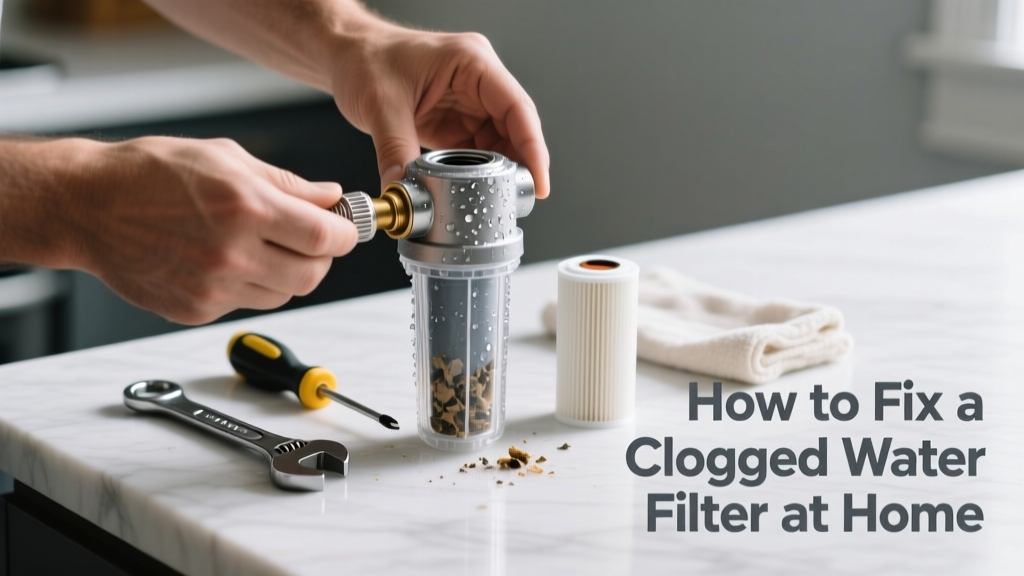
If your fridge dispenses weak or no water, ice tastes off, or the filter indicator light is flashing red, you’re likely dealing with a clogged water filter — a common but easily fixable issue in under 15 minutes. Most clogs stem from sediment buildup, hard water minerals, or simply overdue replacement. Ignoring it can strain your appliance and degrade water quality.
Quick Diagnosis
Before grabbing tools, confirm it’s actually the filter — not low water pressure, frozen lines, or a faulty valve. Here are the most frequent culprits:
- Filter hasn’t been replaced in 6 months (or per manufacturer’s schedule)
- Visible discoloration or debris inside the filter housing
- Slow flow even after flushing or resetting the system
- Hard water areas (calcium/magnesium deposits accelerate clogging)
- Well water with high iron or silt content
Tools & Materials Needed
| Item | Purpose | Estimated Cost |
|---|---|---|
| Replacement filter (exact model match) | Ensures compatibility and proper filtration; generic filters may leak or underperform | $25–$45 |
| Adjustable wrench or filter wrench | Removes stubborn, tight, or corroded filters — especially on under-sink or whole-house units | $8–$22 |
| Clean bucket & towels | Catches drips during removal and prevents water damage to cabinetry or flooring | $0–$5 |
| White vinegar (5% acetic acid) | Dissolves calcium carbonate scale without damaging plastic housings or O-rings | $3–$6 |
| Soft-bristle brush (e.g., toothbrush) | Gently dislodges surface sediment without scratching filter housing threads | $2–$4 |
Step-by-Step Fix
Follow these methods in order — start with the simplest, then escalate if flow doesn’t improve:
- Reset the filter indicator: Press and hold the reset button (usually on the fridge control panel) for 5–8 seconds. Some models require holding while opening/closing the door twice. This won’t fix clogging but eliminates false alarms.
- Flush the new filter before installing: Run 2–3 gallons of water through a brand-new filter under the sink or into a bucket. This removes loose carbon fines that mimic clogging and cause cloudy water.
- Soak the housing in vinegar: Remove the filter cartridge, then soak just the empty housing (not the filter itself) in undiluted white vinegar for 15 minutes. Rinse thoroughly before reassembly.
- Check inlet screen and shut-off valve: Turn off the main water supply, disconnect the line, and inspect the small brass screen where the line meets the filter head. Use needle-nose pliers to lift out trapped debris.
When to Call a Pro
DIY stops where safety, code compliance, or system complexity begins. Call a licensed plumber or HVAC technician if:
- You have a whole-house filter with copper pipe solder joints — heat risks and pressure testing required
- The clog persists after replacing two consecutive filters and cleaning all accessible parts
- You detect a sulfur smell or black particles (possible bacterial growth or degraded carbon media)
- Your home has well water and you suspect iron bacteria biofilm — requires shock chlorination and professional sampling
According to the U.S. EPA estimates that 14% of household water usage is from leaks — many triggered by neglected filter maintenance causing pressure spikes and seal failure.
Prevention Tips
Extend filter life and avoid repeat clogs with these habits:
- Replace refrigerator filters every 6 months — even if flow seems fine (carbon loses adsorption capacity long before flow drops)
- Install a pre-filter (5-micron sediment filter) upstream of reverse osmosis or undersink systems in homes with well or municipal turbidity issues
- Test your water hardness annually — above 7 gpg warrants a water softener to reduce scale-forming minerals
- Label your filter with installation date using a permanent marker on the housing — no more guessing
Can I use bleach to clean a clogged water filter?
No. Bleach degrades activated carbon and damages rubber O-rings and plastic housings. It also leaves residual chlorine that compromises taste and may react with organic contaminants to form harmful disinfection byproducts. Stick to white vinegar for scale or mild soap-and-water for external housing cleaning.
Why does my new filter clog within weeks?
This usually signals an upstream problem: unfiltered sediment entering the system, failing pre-filters, or high iron/manganese levels (common in well water). Test your raw water with a well water testing kit — iron above 0.3 ppm demands an iron filter, not just carbon.
Do refrigerator water filters remove lead?
Only certified NSF/ANSI Standard 53 filters do — look for the logo and ‘lead reduction’ claim on packaging. Standard NSF 42 filters only address chlorine and taste/odor. If your home has lead service lines or older plumbing, verify certification before purchase — see our NSF-certified water filters guide.
Is it safe to drink water from a clogged filter?
Not recommended. A clogged filter often means exhausted carbon media, allowing contaminants like VOCs, pesticides, or heavy metals to pass through unchecked. The CDC advises against consuming water from filters past their rated lifespan — even if flow appears normal.
Can cold weather cause filter clogging?
Yes — freezing temperatures can crack filter housings or cause internal ice crystals to block flow paths, especially in garages or outdoor installations. Insulate exposed lines and consider relocating filters indoors if temps regularly dip below 32°F. Per the Insurance Institute for Business & Home Safety's 2023 report, 22% of winter-related appliance failures involve frozen or cracked water filtration components.
What’s the difference between a clogged filter and low water pressure?
Clogging affects only filtered outlets (fridge water, RO faucet); low pressure impacts all fixtures. Test this by turning on a nearby kitchen faucet — if it flows strongly while the fridge trickles, the issue is isolated to the filter system, not your main supply.
Fixing a clogged water filter isn’t about brute force — it’s about understanding what’s blocking flow and addressing the root cause, not just swapping parts. Regular maintenance, correct filter selection, and knowing when to pause and consult a pro keeps your water safe and your appliances running smoothly for years.