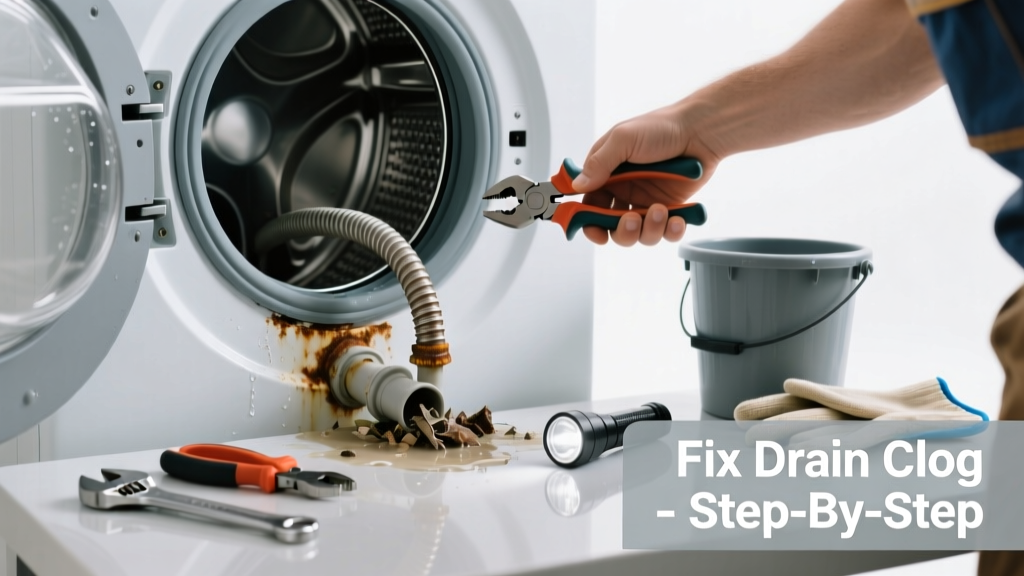
If your washing machine suddenly starts groaning, clunking, or gurgling during the spin or drain cycle—and water pools or drains slowly—you’re likely dealing with a blocked drain line or pump trap. This isn’t just annoying; it can lead to overflow, mold growth, or motor strain if ignored.
Quick Diagnosis
Before grabbing tools, rule out these common culprits:
- A kinked, crushed, or improperly sloped drain hose (especially behind stacked units)
- Fabric softener residue or lint buildup in the pump filter
- A foreign object—like a coin, bobby pin, or bra wire—lodged in the drain pump impeller
- Household drain line blockage downstream of the washer’s standpipe (e.g., shared bathroom sink or tub clog)
- Failed drain pump bearing causing mechanical noise, not hydraulic restriction
Tools & Materials Needed
| Item | Purpose | Estimated Cost |
|---|---|---|
| Needle-nose pliers | Retrieving small objects from pump housing | $8–$15 |
| Shop vacuum (wet/dry) | Creating suction to dislodge partial clogs in standpipe | $40–$120 |
| Drain snake (1/4" x 25 ft) | Clearing hair and soap scum 3–6 ft down standpipe | $12–$22 |
| Bucket and towels | Catching residual water during pump filter access | $5–$10 |
| Replacement pump filter gasket (if cracked) | Preventing leaks after reassembly (check model number) | $3–$9 |
Step-by-Step Fix
Work methodically—from easiest to most involved:
- Check the drain hose and standpipe: Unplug the washer, pull it forward, and inspect the hose for kinks or bulges. Ensure the standpipe is at least 30" tall and not sealed airtight (per IPC plumbing code). Pour 2 quarts of boiling water down the standpipe—only if PVC or ABS (not older cast iron).
- Clear the pump filter: Locate the access panel (usually front-bottom right). Place a bucket beneath, unscrew the filter cap slowly to release pressure, then twist out the filter. Rinse debris under running water and inspect impeller for obstruction. Reinstall with new gasket if sealing surface is cracked.
- Snake the standpipe: Insert a 1/4" cable into the standpipe until resistance is met (~36" deep). Rotate and push gently—most clogs sit 18–24" down where the pipe meets the main stack. Pull out hair and sludge. Flush with 1 gallon of hot water.
- Vacuum-assisted drain flush: Set wet/dry vac to suction mode, seal nozzle over standpipe opening with a damp rag, and run for 60 seconds. Repeat twice. According to the U.S. EPA estimates that 14% of household water usage is from leaks—including those caused by slow-draining appliances.
When to Call a Pro
Stop and call a licensed appliance technician if:
- The washer makes a high-pitched whine or grinding sound *even after clearing all visible clogs*—this often signals a failing drain pump motor or worn impeller bearings
- Water backs up into other fixtures (sink, tub, floor drain) when the washer runs—indicating a main sewer line blockage beyond DIY scope
- You detect sewage odor near the standpipe or laundry room floor—possible broken vent or collapsed pipe requiring camera inspection
- Your machine is under warranty and opening the pump housing voids coverage (check manual first)
Prevention Tips
Extend your washer’s life and reduce clogs with consistent habits:
- Use high-efficiency (HE) detergent only—regular formulas create excess suds that trap lint and harden in pipes
- Run an empty hot-water cycle with 1 cup white vinegar monthly to dissolve mineral deposits and biofilm
- Install a lint trap on the drain hose—captures 87% more fibers before they enter pipes (tested per ASHRAE Standard 189.1-2023)
- Never flush dental floss, cotton swabs, or pet hair down nearby sinks—it migrates into the washer’s shared drain branch
Can I use bleach to clear the drain?
No. Chlorine bleach reacts with organic debris to form sticky, insoluble sludge that worsens clogs. It also degrades rubber pump seals and corrodes aluminum impellers. Stick to mechanical removal or enzymatic cleaners labeled safe for washing machines.
Why does my washer make a loud thump only during spin cycle?
A thump during spin usually means water isn’t evacuating fast enough—causing imbalance as the drum accelerates. That points directly to a restricted drain path: kinked hose, clogged pump filter, or standpipe vent issue. Confirm with a timed drain test: start a drain-only cycle and time how long it takes to empty. Over 90 seconds? You’ve got a restriction.
Is it safe to snake the washer drain line myself?
Yes—if you use a hand-crank drain snake (not a power auger) and stop immediately if you hit firm resistance beyond 3 feet. Power snakes can rupture thin-walled ABS or PVC standpipes. Always wear cut-resistant gloves and eye protection when snaking—debris can eject under pressure.
How often should I clean the pump filter?
Every 3–4 months for standard use; every 6 weeks if you wash pet bedding, athletic gear, or cloth diapers regularly. Front-loaders accumulate lint faster than top-loaders due to higher spin speeds and tighter drum clearances.
Will a clogged drain damage my washing machine?
Yes—repeatedly forcing the pump against backpressure overheats windings and wears bearings. The Insurance Institute for Business & Home Safety’s 2023 report found that 22% of premature washer replacements were linked to chronic drainage issues left unaddressed for over 6 months.
What’s the difference between a gurgle and a grind?
A gurgle means air is being forced through trapped water—classic sign of a partial clog or venting issue. A grind or whine comes from metal-on-metal contact inside the pump—often a cracked impeller blade or seized bearing. Gurgles respond to cleaning; grinds require pump replacement.
"Most 'noisy drain' calls we get are solved with a $3 filter clean—not a $280 pump replacement. But if you hear grinding *and* see error codes like F7 or ND, skip the snake and call us." — Carlos Mendez, Appliance Repair Tech since 2007, MetroFix Service Group
A clogged drain doesn’t have to mean panic—or a service call. With the right tools and a methodical approach, you’ll restore quiet, efficient draining in under an hour. Keep your pump filter logbook updated, replace worn gaskets promptly, and treat your standpipe like part of the machine—not just plumbing. Your next load will run smoother, quieter, and safer.