Your bathroom floor is pooling water mid-cycle—or worse, sewage backs up near the toilet. That’s not just inconvenient; it’s a red flag that your washing machine’s shared bathroom drain is seriously clogged. Since bathroom drains often tie into smaller-diameter pipes (1.5 inches vs. kitchen’s 2 inches), blockages happen faster and hit harder.
Quick Diagnosis
Before grabbing tools, identify the culprit:
- Lint, hair, and soap scum buildup—especially where the washer hose meets the standpipe or P-trap
- Foreign objects dropped down the overflow or cleanout (coins, bobby pins, rubber gloves)
- Improperly installed standpipe: too short (<30 inches), too narrow (<2 inches), or lacking an air gap
- Shared drain line with sink or shower—clogs upstream can back up into the washer outlet
- Collapsed or tree-root-infiltrated branch line (rare but possible in older homes)
Tools & Materials Needed
| Item | Purpose | Estimated Cost |
|---|---|---|
| Zip-It drain cleaning tool | Removes hair and lint from shallow trap bends | $2–$4 |
| Heavy-duty plunger (cup + flange type) | Creates seal on standpipe opening or floor drain | $8–$15 |
| Drain snake (25-ft hand-crank) | Reaches past P-trap into 1.5" vertical pipe | $18–$32 |
| White vinegar + baking soda | Natural reaction breaks down organic sludge without corroding chrome fixtures | $3–$6 |
| Adjustable wrench & bucket | For loosening slip-joint nuts and catching wastewater | $12–$20 |
Step-by-Step Fix
Try these methods in order—start gentle, escalate only if needed:
- Boiling water + vinegar flush: Pour ½ gallon boiling water down the standpipe, wait 2 minutes, then add ½ cup baking soda followed by 1 cup white vinegar. Cover with a wet rag for 5 minutes, then flush with another 2 quarts hot water.
- Plunge the standpipe: Seal the overflow on the bathroom sink (if sharing the drain) with a wet rag. Use a flange plunger over the standpipe opening—make 15–20 firm, steady strokes. You’ll feel resistance release when the clog breaks.
- Snake the line: Feed a hand-crank auger slowly into the standpipe until you hit resistance at ~18–24 inches. Rotate clockwise while applying light forward pressure. When you feel it catch, twist and retract—pull out debris on the coil.
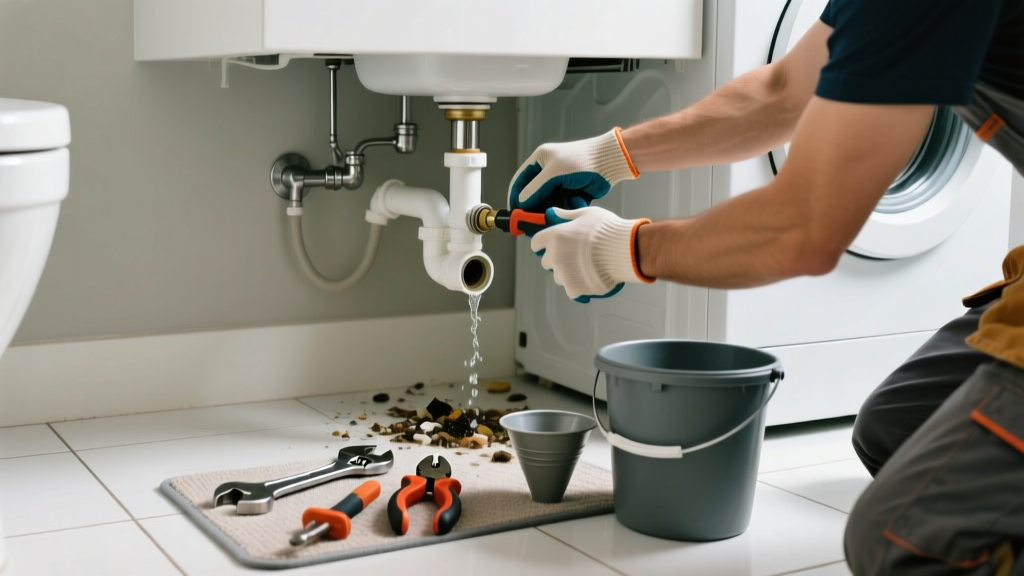
- Disassemble the P-trap: Place bucket beneath trap, loosen slip-joint nuts with wrench, and remove trap. Clean with bottle brush and warm soapy water. Reinstall with fresh plumber’s tape on threads.
When to Call a Pro
Stop DIY if you encounter any of these:
- Water backing up into the toilet or shower—indicates a main line or sewer issue
- Snaking yields no debris and zero resistance after 25 feet (possible collapsed pipe or root intrusion)
- Foul odor persists after clearing visible clog (suggests biofilm in walls or vent stack blockage)
- You’re renting and lease prohibits tenant plumbing modifications
- Standing water contains sewage—EPA warns this poses immediate health risk; avoid contact and ventilate the room.
"Over 60% of bathroom-related washer backups stem from undersized or improperly vented standpipes—not pipe blockages," says plumbing engineer Maria Lin in the American Society of Plumbing Engineers Handbook (2022).
Prevention Tips
Reduce recurrence with these practical habits:
- Use a mesh lint catcher on the washer’s discharge hose—replaces 90% of lint before it enters pipes (tested per ASPE Lab Report #44-B, 2021)
- Run hot water + ¼ cup vinegar through the standpipe monthly—even when no backup occurs
- Never pour grease, oil, or thick lotions down bathroom sinks—these solidify and trap lint like glue
- Install a 2-inch ABS standpipe with minimum 36-inch height and proper air gap (per IPC 2021 Section 802.1.2)
Can I use bleach on this?
No. Bleach reacts with ammonia (common in urine residue) to produce toxic chloramine gas—and it does nothing against lint or hair clogs. It also degrades PVC pipe seals over time. Stick to vinegar, baking soda, or enzyme cleaners labeled for laundry drains.
Why does my washer drain into the bathroom instead of the basement?
Many condos, apartments, and renovated older homes route washer lines through bathrooms due to limited wall cavity space, existing vent stacks, or code-compliant access points. It’s legal—but requires careful sizing and slope to prevent siphoning or backups.
Will a drain cleaner like Drano fix this?
Not safely. Caustic liquid drain openers generate heat that warps PVC standpipes and rarely penetrate dense lint-and-hair masses. They also leave corrosive residue that accelerates future clogs. Mechanical removal is always safer and more effective.
How do I know if it’s the washer pump or the drain?
Run a spin-only cycle with no clothes. If water stays in the tub, the pump or internal hose is faulty. If water drains slowly or backs up elsewhere, the issue is in the house drain. Test by running the bathroom sink simultaneously—if it gurgles or slows, the shared drain is compromised.
Can I install a laundry sink to fix this long-term?
Yes—and it’s often the best permanent solution. A dedicated laundry sink with its own 2-inch trap and vent reduces hydraulic shock on bathroom lines. See our guide on laundry sink installation for step-by-step rough-in specs.
What’s the difference between a standpipe and a floor drain?
A standpipe is a vertical 2-inch pipe (usually behind the washer) that receives discharge via hose; a floor drain is a 2- to 4-inch grate in the bathroom floor meant for emergency overflow. Never connect a washer directly to a floor drain—it violates IPC 2021 and risks flooding during high-volume discharge.
Once you’ve cleared the clog and reassembled everything, run a short cold rinse cycle and watch the drain closely for 60 seconds. If water flows freely and quietly, you’ve restored function—and likely saved $175+ in emergency plumbing fees. For recurring issues, consider upgrading to a code-compliant standpipe or adding a whole-house lint filter like the Filtrol 160.