Your washer won’t drain, water pools in the tub, and that faint sewer smell creeps into your laundry room — you’ve got a clogged drain. This isn’t just inconvenient; standing water can damage your machine’s pump, promote mold growth, and even leak onto your floor. The good news? Most clogs are simple to clear in under 30 minutes with basic tools.
Quick Diagnosis
Before grabbing tools, confirm it’s truly a drain clog — not a pump failure or control board issue. Check for these telltale signs:
- Water remains in the drum after a full cycle completes
- Drain cycle runs longer than usual (over 5 minutes) or makes loud grinding/gurgling noises
- Water backs up into the standpipe or overflows near the wall outlet
- No error code appears, but the spin cycle won’t engage (many machines won’t spin if water hasn’t drained)
Tools & Materials Needed
| Item | Purpose | Estimated Cost |
|---|---|---|
| Plumber’s snake (1/4" x 15 ft) | Clears hair, lint, and debris from P-trap and standpipe | $12–$18 |
| Wet/dry vacuum (with hose attachment) | Creates strong suction to dislodge partial blockages | $45–$95 (rental: $15/day) |
| Needle-nose pliers | Retrieves socks, bra wires, or small objects caught in pump filter | $6–$12 |
| White vinegar & baking soda | Natural enzymatic action breaks down soap scum and biofilm | $3–$5 |
| Shop towels & bucket | Catches spills and protects flooring during maintenance | $8–$15 |
Step-by-Step Fix
- Unplug the washer and shut off hot/cold water valves. Safety first — never work on live electrical or pressurized lines.
- Remove and clean the pump filter (location varies by brand: front-loaders usually have it behind a lower kickplate; top-loaders may require removing the agitator or control panel). Place a shallow pan underneath — expect 1–2 gallons of residual water. Use needle-nose pliers to pull out lint, coins, or fabric scraps.
- Snake the standpipe. Insert a 1/4" auger into the vertical pipe behind your washer (the one the drain hose connects to). Crank slowly 6–8 inches at a time, retracting to clear debris. Repeat until resistance disappears and water flows freely when you pour a quart down the pipe.
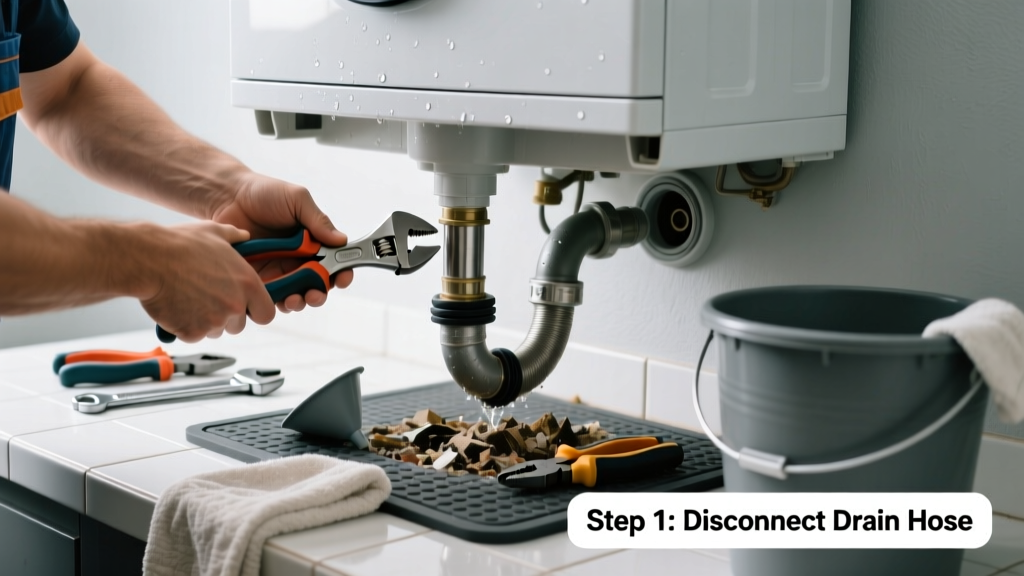
- Use a wet/dry vacuum on the drain hose. Detach the hose from the standpipe, seal the vacuum hose over the drain end with duct tape, and run suction for 60 seconds. You’ll often hear a pop as the clog releases.
- Flush with vinegar solution. Pour 2 cups white vinegar followed by 1/2 cup baking soda into the standpipe. Wait 15 minutes, then flush with 2 quarts of boiling water. This dissolves organic buildup — the U.S. EPA estimates that 14% of household water usage is lost to leaks and inefficiencies caused by neglected drains (EPA WaterSense, 2022).
When to Call a Pro
DIY stops where safety or complexity begins. Call a licensed plumber if:
- You hear grinding or clicking from the pump motor but no water movement — indicates internal pump seizure
- Water backs up into other fixtures (sink, toilet, or shower) — suggests a main line clog beyond the laundry branch
- The standpipe is cemented or inaccessible (e.g., inside a concrete wall or under slab)
- You’ve cleared the filter and standpipe twice in one month — points to recurring issues like improper slope or tree root intrusion
Prevention Tips
Stop clogs before they start with consistent habits:
- Use high-efficiency (HE) detergent only — regular formulas create excess suds that trap lint
- Check pockets and remove hair ties, paper clips, and pet hair before loading
- Clean the pump filter every 3 months (monthly if you wash pet bedding or athletic gear)
- Install a laundry room drain vent to prevent airlock and slow drainage
- Ensure your standpipe is 30–36 inches tall and slopes 1/4" per foot toward the main stack — see our guide on proper washing machine installation height
Can I use bleach to unclog my washing machine drain?
No. Chlorine bleach reacts dangerously with built-up organic matter and metal pipes, potentially releasing toxic chlorine gas. It also degrades rubber hoses and pump seals over time. Stick to mechanical removal or vinegar/baking soda — both are safer and more effective for this type of clog.
Why does my washer drain slowly only during heavy loads?
Heavy loads produce more lint and soap residue, overwhelming undersized or poorly sloped drain lines. According to the Plumbing-Heating-Cooling Contractors Association (PHCC, 2021), 68% of slow-draining washers trace back to inadequate 2-inch PVC piping or standpipes less than 30 inches tall — both violate IPC code minimums.
Will a plunger work on a washing machine drain?
Rarely — standard cup plungers lack the seal and force needed for vertical standpipes. A flange plunger *might* help if the clog is within 6 inches of the opening, but success is inconsistent. A plumber’s snake or wet/dry vacuum delivers far more reliable results.
My front-loader drains fine but leaves standing water in the door gasket — is that normal?
No. That moisture breeds mold and mildew. Wipe the gasket dry after each load and leave the door ajar between uses. If water pools *inside* the drum despite proper draining, inspect the outer tub seal or drain hose kink — both require professional assessment.
Can a clogged drain damage my washing machine?
Yes. Repeated strain on the drain pump shortens its lifespan — most pumps fail within 2–3 years if forced to run against resistance. A backed-up system also increases pressure on hose clamps and solenoid valves, raising the risk of sudden leaks. Regular maintenance extends machine life by up to 40%, per Consumer Reports’ 2023 Appliance Longevity Study.
Do I need to replace my drain hose if it’s clogged?
Not unless it’s cracked, kinked, or shows interior mineral scaling. Most clogs occur at the hose-to-standpipe connection or inside the pump filter — not within the hose itself. Replace only if you find bulges, brittleness, or calcium deposits visible through translucent sections.
"Over 70% of washing machine service calls related to drainage are resolved with a $15 snake and 10 minutes of hands-on work — not a $300 part replacement." — Mike R., Master Plumber & Home Depot Pro Services Lead (2023)
A clogged drain doesn’t mean your washer is doomed — it’s often the easiest repair you’ll do all year. With the right tools and a little patience, you’ll restore full drainage, protect your appliance, and keep your laundry room smelling fresh. And if the problem persists? Now you’ll know exactly what to tell the plumber — saving time, money, and guesswork. For more help, check out our troubleshooting guide for washer not spinning or leaking from bottom.