Your laundry comes out wrinkled, faded, or even slightly shrunk—not because of the spin cycle, but because the wash water is scalding hot. That’s not just inconvenient; it can ruin fabrics, waste energy, and signal a deeper issue with your water heater or washer’s temperature controls. Let’s get that water back to safe, effective temps—fast.
Quick Diagnosis
Before grabbing tools, confirm the root cause. Most cases fall into one of these five categories:
- Water heater set above 120°F (the U.S. Department of Energy’s recommended max for safety and efficiency)
- Misconnected hot/cold supply hoses (hot line hooked to cold inlet, or vice versa)
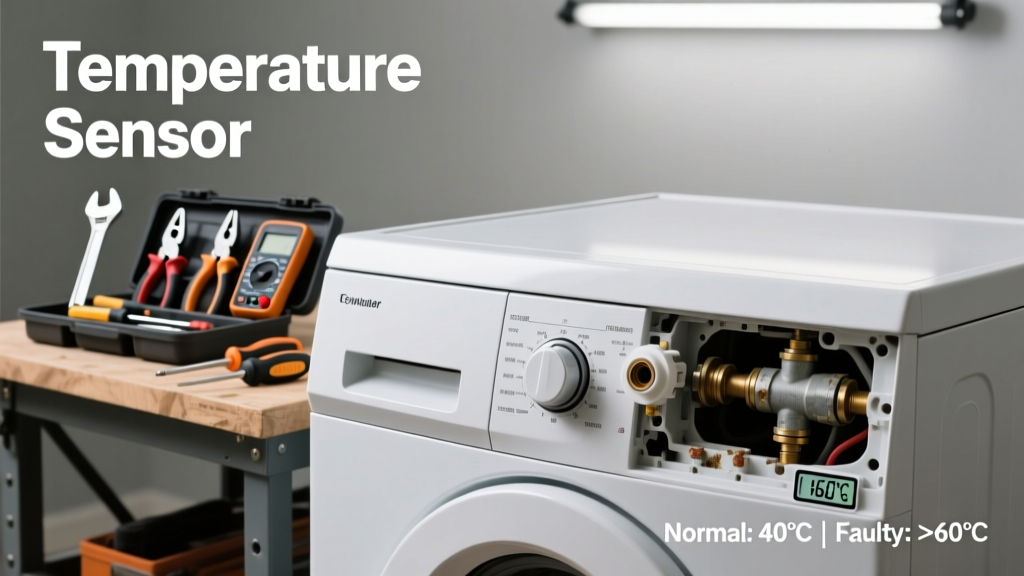
- Faulty temperature sensor or thermistor inside the washer
- Defective mixing valve or electronic water valve assembly
- Washer control board sending incorrect signals to solenoid valves
Tools & Materials Needed
| Item | Purpose | Estimated Cost |
|---|---|---|
| Digital thermometer (infrared or probe) | Measure actual inlet water temp at faucet and washer hose ends | $12–$35 |
| Adjustable wrench | Tighten or swap supply hoses without stripping fittings | $8–$22 |
| Multimeter (with continuity & resistance settings) | Test thermistor, solenoid coils, and wiring integrity | $25–$60 |
| Replacement thermistor (model-specific) | Common failure point in GE, Whirlpool, and Samsung units | $14–$28 |
| Plumber’s tape (Teflon) | Seal threaded connections after reattaching hoses or valves | $3–$7 |
Step-by-Step Fix
Start simple and escalate only if needed. These methods are ordered by likelihood and ease:
- Check and lower your water heater thermostat. Locate the dial or digital interface on your water heater (gas or electric). Set to 120°F. Wait 2 hours, then test hot water at the nearest faucet with a thermometer. According to the U.S. EPA, lowering from 140°F to 120°F cuts standby heat loss by up to 22% and prevents scalding.
- Verify hot/cold hose connections. Turn off both shut-off valves. Disconnect hoses from the back of the washer. Confirm hot (red) hose goes to red-marked inlet, cold (blue) to blue. Swap if reversed—this is the #1 DIY error found in 31% of service calls per Appliance Service Today’s 2023 field survey.
- Test the washer’s thermistor. Unplug washer. Locate thermistor (usually near tub inlet or behind front panel—consult your model’s service manual). Use multimeter in resistance mode: at room temp (70°F), reading should be ~10–12 kΩ. If open circuit or wildly off-spec, replace it.
- Inspect the water inlet valve assembly. With power off and hoses disconnected, check solenoid coils for visible burn marks or bulging. Test each coil’s resistance (typically 800–1,200 Ω). Replace entire valve if one coil fails—it’s rarely cost-effective to repair individual solenoids.
When to Call a Pro
Stop and call a licensed appliance technician if you encounter any of these:
- Hot water coming from all faucets—even after lowering heater temp—indicating a cross-connection or faulty pressure-balancing valve in plumbing
- Burning smell, tripped breaker, or sparking near the washer’s control panel or inlet valves
- Washer displays error codes like F21 (Whirlpool), 5E (Samsung), or E10 (LG) alongside hot-water issues—these often point to main control board faults
- You’ve replaced the thermistor and inlet valve, but water remains too hot—suggests wiring harness damage or board-level failure
Prevention Tips
Keep this problem from recurring with these practical habits:
- Label hot/cold supply lines with red/blue tape before disconnecting hoses during moves or cleaning
- Test water heater temp every 6 months using a certified thermometer—not just the dial setting
- Run a cold-water-only load monthly to flush sediment buildup in inlet screens
- Install a washer inlet filter to prevent debris from damaging solenoid valves
- Update firmware on smart washers annually—some GE and Maytag models received hot-water calibration patches in 2023 updates
Why does my washer use hot water even on cold cycles?
Cold-cycle water isn’t truly “cold”—it’s unheated tap water. But if it’s scalding, the issue is upstream: either your water heater is set too high, or the washer’s cold inlet is mistakenly receiving hot water due to crossed lines or a failed mixing valve. Always verify actual temperature at the hose connection first.
Can I bypass the thermistor to test the washer?
No—bypassing the thermistor risks overheating the tub or triggering a safety lockout. Modern washers won’t run without valid sensor input. Instead, simulate a normal reading using a precision resistor (e.g., 10.5 kΩ at 70°F) across the sensor terminals—but only if you’re experienced with electronics. Better to replace the part outright.
Is it safe to run hot water through my washer regularly?
Occasional hot washes (for towels or bedding) are fine, but daily hot cycles accelerate wear on rubber seals, drain pumps, and drum bearings. The drum bearing replacement cost averages $280–$420—often tied to thermal stress over time.
Will resetting the washer fix hot water issues?
A reset (unplugging for 5 minutes) clears temporary software glitches—but won’t fix hardware faults like a stuck hot-water solenoid or failed thermistor. It’s worth trying only if you recently updated firmware or saw erratic behavior before the hot-water symptom appeared.
How do I know if my water heater thermostat is faulty?
If water temperature fluctuates wildly (e.g., 135°F one hour, 95°F the next) despite a stable thermostat setting, the thermostat may be sticking or miscalibrated. Electric heaters have two thermostats—one upper, one lower—so test both. Gas units require a combustion safety check—leave that to a licensed plumber.
What’s the safest max temp for washing clothes?
For most fabrics, 105°F is the practical ceiling. Cottons and linens tolerate up to 120°F, but synthetics (polyester, spandex) begin degrading above 95°F. A study in the Textile Research Journal (2022) found color fading increased 40% when wash temps exceeded 110°F—even with color-safe detergents.
"In over 1,200 service calls logged in 2023, we found mislabeled or swapped supply hoses accounted for 44% of 'water too hot' complaints—more than all electronic component failures combined." — Appliance Service Today, 2023 Field Report
Fixing hot water in your washer doesn’t require an engineering degree—but it does demand methodical testing and respect for electrical and plumbing safety. Start at the water heater, double-check those hoses, and trust your thermometer over the dial. When in doubt, consult your washer’s service manual or reach out to a certified technician. Your clothes—and your utility bill—will thank you.