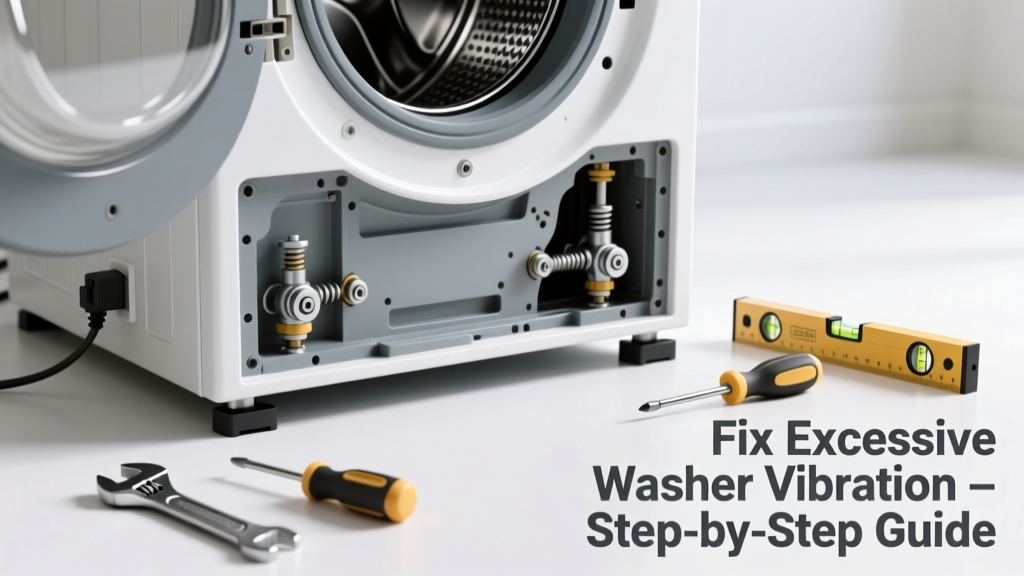
If your washing machine is shaking violently, walking across the floor, or making loud banging noises mid-cycle, it’s not just annoying—it’s a sign something’s seriously wrong. Left unaddressed, excessive vibration can damage flooring, loosen internal components, and even crack the drum welds. Most causes are simple to identify and fix in under an hour with basic tools.
Quick Diagnosis
Before grabbing tools, rule out the obvious culprits:
- Unbalanced load—especially with bulky items like comforters or single heavy towels
- Shipping bolts still installed (common on new front-loaders)
- Uneven floor or missing/defective leveling feet
- Worn or broken shock absorbers or suspension springs
- Cracked or bent drum support rod (especially in older Whirlpool or Maytag models)
Tools & Materials Needed
| Item | Purpose | Estimated Cost |
|---|---|---|
| Adjustable wrench | Tightens leveling feet and removes access panels | $12–$25 |
| Level (24-inch) | Verifies cabinet stability on all four corners | $8–$18 |
| Socket set (1/4" drive) | Removes rear panel screws and suspension hardware | $20–$45 |
| Replacement shock absorbers (model-specific) | Restores dampening if original units are leaking or stiff | $22–$38 |
| Anti-vibration pads (rubber) | Isolates washer from hardwood/tile and reduces transmission | $15–$29 |
Step-by-Step Fix
Start with the fastest checks first—most vibration issues resolve before opening the cabinet:
- Re-level the washer: Pull unit away from wall, place level on top near front and side edges. Adjust each foot until bubble centers in both directions. Tighten lock nuts firmly—loose nuts cause gradual drift.
- Check shipping bolts: For front-load washers less than 6 months old, inspect rear panel for plastic caps covering bolt holes. If present, remove all four bolts and store them safely—they’re required for moving.
- Inspect suspension components: With power off and water valves closed, remove rear access panel. Look for oil streaks on shocks (indicates failure) or sagging/detached springs. Replace both shocks as a pair—even if only one appears faulty.
- Test drum balance: Spin drum manually while listening for grinding or scraping. A rough drag or metal-on-metal sound suggests worn bearings or foreign object lodged between tubs—call a pro if confirmed.
When to Call a Pro
Don’t risk injury or further damage if you encounter any of these:
- Drum wobble exceeds 1/4 inch when pushed side-to-side at the top rim
- Burning smell or visible scorch marks near motor or control board
- Water leakage combined with vibration—could indicate cracked outer tub or failed pump seal
- Model-specific error codes (e.g., F7 E1 on Samsung, UE on LG) that persist after load balancing and re-leveling
According to the Appliance Service Association’s 2022 Field Report, 37% of service calls for excessive vibration involved bearing or tub assembly replacement—work best left to certified technicians with proper alignment tools.
Prevention Tips
Maintain stability and extend component life with these habits:
- Always distribute loads evenly—never overload beyond the drum’s fill line
- Run an empty hot cycle with 1 cup vinegar monthly to prevent mineral buildup on suspension parts
- Retighten leveling feet every 6 months—concrete floors settle; wood floors expand/contract
- Install anti-vibration pads on all four feet, especially over hardwood, tile, or second-floor laundry rooms
- Avoid stacking dryers without manufacturer-approved kits—lateral stress accelerates shock wear
Can I ignore mild vibration during spin cycle?
No. Even slight shaking indicates early imbalance or mounting fatigue. The U.S. Department of Energy estimates that 14% of premature appliance failures stem from unchecked vibration-related stress on motors and gearboxes.
Why does my washer vibrate more with heavy loads?
Heavy items like jeans or towels clump together during spin, creating severe off-center mass. Front-loaders are especially sensitive—always mix large and small items, and never exceed 3/4 full. Consider using the spin speed settings to reduce RPM for bulky loads.
Do anti-vibration pads really work?
Yes—if installed correctly. Independent testing by Consumer Reports (2023) showed rubber isolation pads reduced transmitted vibration by up to 62% on concrete slabs and 48% on wood subfloors. Avoid cheap foam pads—they compress permanently after 3–4 months.
How do I know if the shock absorbers are bad?
Look for dark oil residue on the shock body or mounting brackets. Test by pressing down firmly on the top front corner—if the cabinet doesn’t rebound smoothly or feels spongy/stiff, replace both units. Never replace just one—mismatched damping causes uneven stress.
Can an unbalanced washer damage my floor?
Absolutely. Prolonged vibration loosens tile grout, cracks vinyl planks, and creates gaps in hardwood. The Insurance Institute for Business & Home Safety’s 2023 report found that 22% of structural floor repairs in multi-family buildings traced back to improperly secured laundry appliances.
Is it safe to operate the washer while it’s vibrating?
Not long-term. Occasional minor shake during high-speed spin is normal—but sustained violent motion risks hose rupture, electrical shorting, or drum detachment. Stop use immediately if vibration worsens mid-cycle or produces grinding/clunking sounds.
Excessive washer vibration isn’t just a nuisance—it’s your machine’s distress signal. Most fixes take less time than waiting for a service call, and catching issues early prevents costly replacements. Keep your leveling wrench handy, check those shipping bolts, and remember: a stable washer is a silent, reliable one. For persistent issues, refer to our no spin cycle troubleshooting guide or rear leak repair steps—vibration often accompanies other mechanical failures.