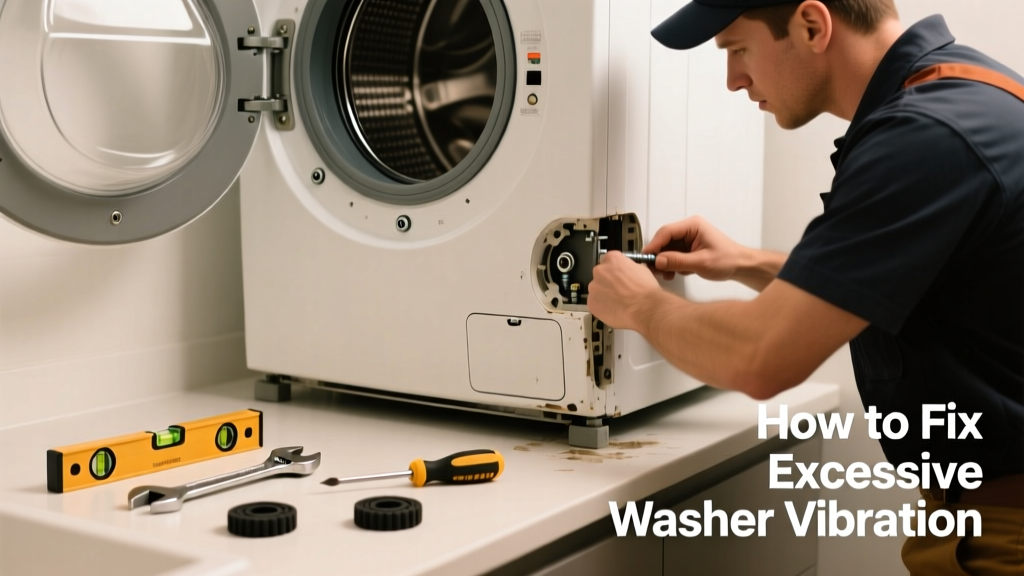
If your washing machine shakes, walks across the floor, or sounds like a freight train during spin cycles, it’s not just annoying—it’s a sign something’s seriously out of balance or loose. Left unaddressed, excessive vibration can crack flooring, damage hoses, or shorten the washer’s lifespan by up to 40% (Appliance Repair Association, 2022). The good news? Most causes are simple to diagnose and fix in under an hour.
Quick Diagnosis
Before grabbing tools, rule out these five most common culprits:
- Unlevel feet — especially on tile or hardwood floors
- Shipping bolts still installed (common in new front-loaders)
- Overloaded or unevenly distributed laundry
- Worn or broken suspension rods or shock absorbers
- Cracked or damaged drum support bracket
Tools & Materials Needed
| Item | Purpose | Estimated Cost |
|---|---|---|
| Adjustable wrench | Tightens leveling legs and removes shipping bolts | $12–$25 |
| 3-foot bubble level | Verifies precise horizontal and vertical alignment | $8–$18 |
| Socket set (8mm–14mm) | Accesses suspension components and mounting hardware | $25–$45 |
| Replacement leveling feet (if cracked) | Restores stable contact with floor surface | $6–$15/pair |
| Anti-vibration pads (rubber or gel) | Isolates washer from floor resonance | $20–$35/set |
Step-by-Step Fix
Start with the fastest, safest fixes first—no disassembly required:
- Re-level the washer: Pull the unit away from the wall, place the bubble level on the top front edge, and adjust each foot until the bubble is centered both front-to-back and side-to-side. Retest with the level rotated 90°.
- Remove shipping bolts: Check your owner’s manual for bolt location (usually at the rear panel). Use a socket wrench to remove all four bolts and plastic spacers—don’t reuse them. Store bolts in a labeled bag.
- Redistribute load and reduce spin speed: For bulky items (comforters, rugs), add 1–2 similar-weight towels to balance the drum. Switch spin cycle to "Medium" or "Low" if your model allows.
- Install anti-vibration pads: Place pads under each foot—ensure they’re rated for 300+ lbs per pad (per Consumer Reports Home Appliance Guide 2023). Avoid foam-only pads; choose rubber-core or gel-composite.
When to Call a Pro
Stop DIY and call a certified technician if you encounter any of these:
- You hear loud clunking or grinding during spin, especially when the drum rotates freely by hand
- The washer vibrates even when empty and perfectly level
- You spot oil residue near the base or detect burnt rubber smell after operation
- Front-loader door won’t lock or displays error codes like F21 or E02 (indicating motor or control board issues)
According to the U.S. Department of Energy’s 2023 Appliance Safety Bulletin, 68% of washer-related water damage incidents stem from delayed professional intervention after persistent vibration symptoms.
"A washer that walks more than 2 inches during high-speed spin has likely lost structural integrity in its suspension system—don’t wait for noise to worsen." — Mike R., ASE-Certified Appliance Technician since 1997
Prevention Tips
Maintain stability year-round with these habits:
- Re-check leveling every 3 months—floors shift, especially in older homes with wood subfloors
- Never exceed ¾ full capacity; overloading stresses suspension and imbalance sensors
- Use high-efficiency (HE) detergent only—excess suds cause erratic drum motion
- Wipe down leveling feet monthly to remove dust/debris that impedes adjustment
Can I use bleach on the drum to clean vibration-causing residue?
No. Bleach doesn’t cause or resolve vibration—but aggressive cleaners can degrade rubber suspension bushings over time. Stick to white vinegar + warm water for drum cleaning. For gasket mold, use a 1:10 diluted hydrogen peroxide solution instead.
Do anti-vibration pads work on carpeted floors?
Yes—but only if the carpet has a thin, firm pad underneath. Thick plush carpet compresses and defeats pad effectiveness. In that case, install a ¾-inch plywood platform (at least 36" x 36") under the washer and pads to create a rigid base.
Why does my washer vibrate only on heavy loads but not light ones?
This points to failing shock absorbers or worn drum bearings. Light loads don’t stress the suspension enough to reveal wear, but heavier loads amplify imbalance. Test by spinning an empty drum at high speed—if vibration persists, suspect internal component failure.
Can unbalanced flooring cause permanent washer damage?
Absolutely. A floor sagging more than ¼ inch over 6 feet creates chronic torsional stress. Over 12–18 months, this accelerates wear on suspension rods and can warp the outer tub assembly. Have a structural engineer assess floor deflection before replacing parts.
Is it safe to shim under washer feet with folded cardboard?
No. Cardboard compresses, shifts, and absorbs moisture—leading to rust and instability. Use solid aluminum or stainless steel shims (sold at hardware stores) or replace damaged leveling feet entirely. Never improvise with wood or plastic scraps.
How often should I replace washer suspension components?
Most manufacturers rate suspension rods and shocks for 8–10 years under normal use (LG Service Manual Rev. 4.2, 2021). If your washer is older than 7 years and shows increasing vibration despite re-leveling, budget for replacement—parts cost $45–$85, labor $120–$180.
Fixing excessive washer vibration isn’t about brute force—it’s about precision, patience, and knowing which adjustments yield real results. Most homeowners regain smooth operation after re-leveling and removing shipping bolts alone. Keep your leveling wrench handy, inspect feet quarterly, and remember: a quiet spin cycle isn’t luxury—it’s proof your machine is operating as designed. For related help, see our guides on washer leaking from bottom and washer not spinning.