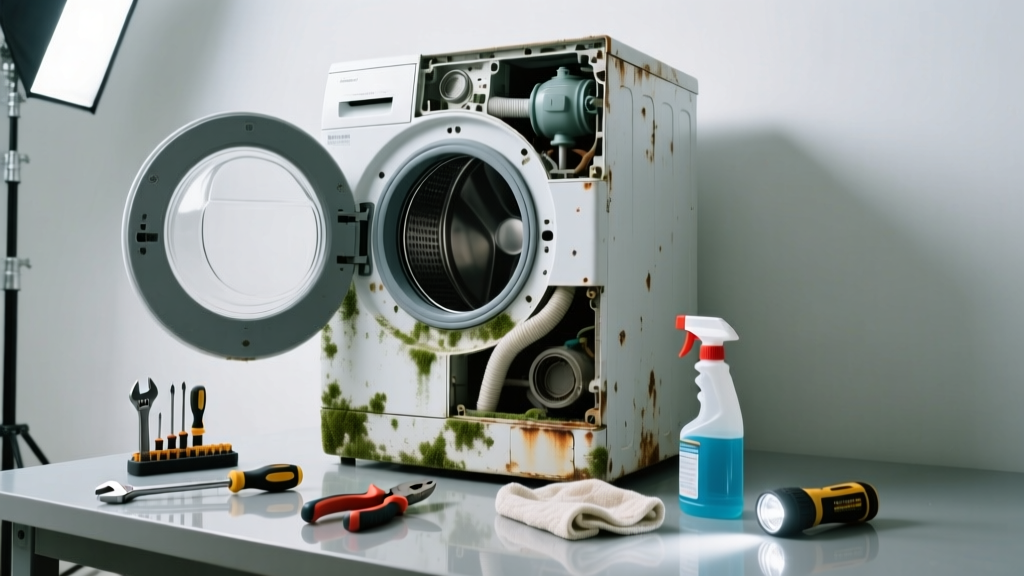
If your washer reeks of mildew and won’t spin, drain, or agitate properly, you’re likely dealing with a combo of biofilm buildup and mechanical failure — not just a dirty drum. Left unaddressed, this can corrode components, ruin clothes, and release airborne spores linked to respiratory irritation (American College of Allergy, Asthma & Immunology, 2022). Don’t ignore the smell — it’s your machine screaming for attention.
Quick Diagnosis
Start here before grabbing tools. These five issues cause both odor and function loss most often:
- Blocked or clogged drain pump filter (most common — causes standing water + rot)
- Mold and slime in the rubber door gasket (especially front-loaders)
- Faulty lid/door switch preventing cycle start
- Clogged detergent dispenser tray trapping moisture and residue
- Failed drain pump motor (no draining + stagnant water)
Tools & Materials Needed
| Item | Purpose | Estimated Cost |
|---|---|---|
| Needle-nose pliers | Remove stubborn debris from pump filter housing | $8–$15 |
| Microfiber cloths | Wipe gasket crevices without scratching rubber | $6–$12 for pack of 6 |
| White vinegar (1 gallon) | Kills mold spores and dissolves mineral deposits | $3–$5 |
| Small stiff-bristle brush | Scrub gasket folds and dispenser slots | $4–$9 |
| Multimeter (digital) | Test continuity of lid switch and pump motor windings | $15–$35 |
Step-by-Step Fix
Work through these methods in order — each addresses both odor and operation:
- Clean the drain pump filter and housing: Unplug washer, locate filter (usually bottom-front panel), place towel underneath, unscrew cap slowly to catch residual water, remove debris (socks, lint, coins), rinse filter under hot water, wipe housing with vinegar-dampened cloth.
- Deep-clean the door gasket and drum: Mix 1 cup white vinegar + 1 tbsp baking soda into paste; apply with brush into all gasket folds. Let sit 15 minutes. Wipe thoroughly. Run empty hot cycle (90°C) with 2 cups vinegar added to drum.
- Test and replace the lid/door switch: Use multimeter on continuity mode. Press switch plunger — meter should beep. If silent, replace switch (part # varies by model; see our guide).
- Inspect and clean detergent dispenser: Pull out tray fully, soak in warm vinegar solution for 30 minutes, scrub ports with pipe cleaner, dry completely before reinserting.
When to Call a Pro
Stop DIY if you encounter any of these:
- Water leaking from base during or after cleaning — could indicate cracked tub seal or damaged pump housing
- No response from control panel after power reset — points to main control board failure
- Burning smell or visible charring near motor or wiring harness
- Drain pump hums but doesn’t turn — internal impeller seized or motor shorted (requires disassembly beyond safe DIY scope)
According to the U.S. EPA, 14% of household water usage is lost to leaks and inefficiencies — many stemming from neglected maintenance like this. A certified technician can diagnose electrical faults and pressure sensor issues that multimeters alone won’t reveal.
Prevention Tips
Prevent recurrence with consistent habits:
- Leave door and detergent drawer open 2–3 hours after every load to air-dry interior
- Use only HE detergent — excess suds trap moisture and feed mold
- Run a maintenance wash monthly: 2 cups vinegar + hot water cycle, no clothes
- Wipe gasket weekly with dry microfiber cloth — focus on lower fold where water pools
- Replace rubber gasket every 5–7 years, even if no visible cracks (cost and timeline details here)
Can I use bleach on this?
No — chlorine bleach degrades rubber gaskets and damages stainless steel drums over time. It also reacts dangerously with vinegar residues. Stick to distilled white vinegar for mold removal and oxygen-based cleaners (like OxiClean) for organic stains.
Why does my washer smell moldy only after a few days?
This delay signals biofilm growth — mold spores colonize damp surfaces within 48–72 hours. The gasket, pump filter, and detergent tray are prime breeding zones. If you wait until the smell is strong, colonies have already penetrated porous rubber.
My washer spins but won’t drain — is that mold-related?
Yes — mold and sludge can clog the drain hose or pump impeller. But first check for kinked hose or lint screen blockage. If those are clear and pump hums without moving water, biofilm may be binding the impeller blades.
Will cleaning fix error codes like UE or ND?
Sometimes. UE (unbalanced) errors can stem from gasket debris throwing off drum rotation sensors. ND (no drain) often clears after pump filter cleaning. But if codes persist post-cleaning, it’s likely a failing hall sensor or pressure switch — see our full code decoder.
How long does vinegar take to kill mold in a washer?
Vinegar requires at least 10 minutes of contact time to disrupt mold cell membranes. For heavy infestations, repeat the hot vinegar cycle twice, spaced 24 hours apart. Don’t rinse — let residual acidity continue working.
Can hard water make the mold smell worse?
Absolutely. Calcium and magnesium deposits create rough surfaces where mold anchors and thrive. Install a water softener or add ½ cup citric acid to monthly maintenance cycles if your home’s hardness exceeds 7 gpg (per USGS 2023 water quality data).
A moldy-smelling washer isn’t just unpleasant — it’s a red flag for hidden damage and declining efficiency. Tackle the root causes now, not when the pump fails mid-cycle or the gasket splits. With regular cleaning and smart habits, you’ll extend your machine’s life by 3–5 years and keep laundry fresh without chemical overload.