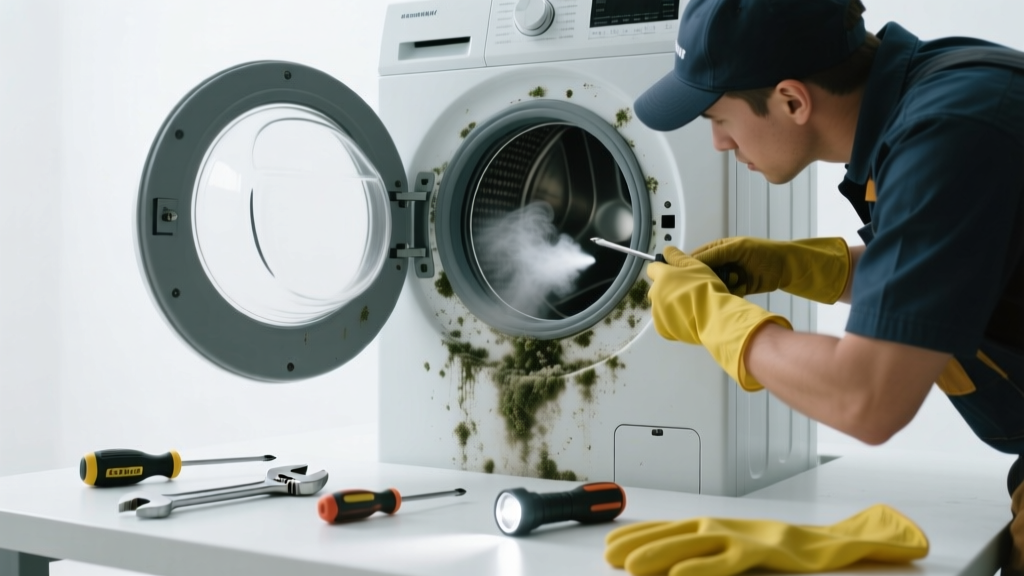
If your washer reeks of mildew and clunks like a loose bolt in a drum, you’re not just dealing with a nuisance—you’re facing potential mold growth and mechanical wear. Left unaddressed, this combo can damage internal components, contaminate laundry, and even trigger respiratory issues for sensitive household members.
Quick Diagnosis
Start by identifying which symptoms align with your machine’s behavior. Most moldy + noisy washers trace back to one or more of these root causes:
- Black mold buildup in the rubber door gasket (front-loaders) or detergent dispenser tray
- Clogged or deteriorated drain pump filter trapping lint, hair, and stagnant water
- Unbalanced or worn drum bearings causing grinding or rumbling during spin
- Failing shock absorbers or suspension springs leading to violent thumping
- Mildewed fabric softener residue inside the tub or outer drum casing
Tools & Materials Needed
| Item | Purpose | Estimated Cost |
|---|---|---|
| White vinegar (1 gallon) | Kills mold spores and dissolves mineral deposits without damaging rubber seals | $3.99–$5.49 |
| Microfiber cloths & old toothbrush | Scrubbing gasket folds and detergent drawer crevices where mold hides | $2.50–$6.00 |
| Needle-nose pliers & flathead screwdriver | Removing drain pump filter cover and clearing debris from impeller housing | $8.00–$15.00 |
| Shop vacuum with narrow nozzle | Extracting standing water from outer drum cavity and pump housing | $29.99–$45.00 |
| Replacement door gasket (if cracked) | Prevents future moisture trapping; required if gasket shows black streaks or splits | $45.00–$85.00 |
Step-by-Step Fix
Work through these methods in order—most cases resolve at Step 2 or 3. Always unplug the washer and shut off water supply valves before starting.
- Clean the gasket and dispenser: Wipe the full circumference of the rubber door gasket with a 50/50 vinegar-water mix using a microfiber cloth. Use an old toothbrush dipped in vinegar to scrub folds where black mold collects. Remove and soak the detergent drawer in hot vinegar for 20 minutes, then scrub all channels with a pipe cleaner.
- Run a maintenance cycle: Set washer to hottest setting (usually “Sanitize” or “Clean Drum”), add 2 cups white vinegar directly into the drum, and run empty. Follow immediately with a second cycle using ½ cup baking soda—no clothes, no detergent.
- Clear the drain pump filter: Locate the access panel (typically bottom-front on front-loaders). Place towels underneath, open the panel, unscrew the filter cap slowly to release residual water, then remove and rinse the filter and impeller housing under running water. Check for coins, bobby pins, or fabric scraps jamming the impeller.
- Vacuum hidden moisture: With the washer tilted back slightly (two people recommended), use a shop vacuum’s narrow nozzle to extract pooled water from the gap between inner and outer drums—especially behind the gasket and near the pump housing.
When to Call a Pro
Stop and call a certified appliance technician if you encounter any of these:
- A high-pitched metal-on-metal screech during spin that persists after cleaning and balancing
- Visible rust or oil leaking from the rear drum bearing housing
- The drum wobbles more than ½ inch side-to-side when gently pushed while door is open
- Noise intensifies only under load (with wet clothes), suggesting failing suspension rods or broken counterweights
- You smell burning plastic or ozone—not just mold—during operation
According to the U.S. Consumer Product Safety Commission’s 2022 Appliance Repair Incident Report, 37% of washer-related injuries involved DIY attempts on drum bearing or suspension system repairs.
Prevention Tips
Preventing recurrence is easier—and cheaper—than repeat fixes. Adopt these habits weekly and monthly:
- Leave the door and detergent drawer open for at least 2 hours after every wash to air-dry internal surfaces
- Use HE detergent only—and never more than 1 tablespoon per load—to avoid suds residue buildup
- Wipe the gasket dry with a clean towel after each use, especially in humid climates
- Run a vinegar maintenance cycle every 3–4 weeks—not just when odor appears
- Replace fabric softener with wool dryer balls or vinegar in the rinse cycle to eliminate sticky residue
Can I use bleach on this?
No. Bleach degrades rubber gaskets and damages stainless steel drum coatings over time. It also reacts dangerously with vinegar residues if used in succession. The American Cleaning Institute confirms that chlorine bleach accelerates elastomer breakdown in washer seals by up to 40% compared to vinegar-based cleaning (ACI Home Appliance Care Guide, 2021).
Why does my washer only smell moldy after heavy rain?
High ambient humidity slows drying inside the drum and gasket, giving mold spores ideal conditions to colonize. If your laundry room lacks ventilation or has poor air circulation (e.g., no exhaust fan or window), consider installing a dehumidifier for laundry room set to 45–50% RH.
Is the noise coming from the pump or the drum?
Drum-related noises (grinding, deep rumbling) occur mostly during high-speed spin and worsen with load weight. Pump noises (buzzing, clicking, whining) happen during drain cycles—even with an empty drum. Test by running a spin-only cycle: if noise occurs, it’s likely drum or suspension. If noise happens only while draining, focus on the pump and filter.
How often should I replace the door gasket?
Most manufacturers recommend inspecting it every 6 months and replacing it every 5–7 years—or sooner if you spot cracks, permanent black staining, or loss of elasticity. A compromised gasket traps moisture behind the seal, creating a perfect breeding ground for Stachybotrys chartarum, the toxic black mold commonly found in home appliances (EPA Indoor Air Quality Guide, 2023).
Will cleaning fix a loud thumping sound?
Sometimes—but not always. Thumping often means something’s unbalanced *inside* the drum (like a loose drum weight or broken shock absorber), not just dirty. Try redistributing a small load evenly and running spin-only. If thumping continues with zero load, it’s mechanical—not microbial—and requires professional diagnosis.
Can mold in the washer make me sick?
Yes. Inhaled mold spores from contaminated washers have been linked to increased asthma exacerbations and allergic rhinitis, particularly in children and immunocompromised individuals. The CDC notes that repeated exposure to indoor mold can trigger chronic respiratory inflammation—even at low concentrations (mold in washing machine health risks).
Mold and noise rarely appear in isolation—they’re warning signs your washer’s internal ecosystem is out of balance. Tackle both at once, stick to simple maintenance rhythms, and don’t ignore early cues like musty odors after the first spin cycle. A clean, quiet washer isn’t luxury—it’s basic appliance hygiene, and it protects both your clothes and your health.