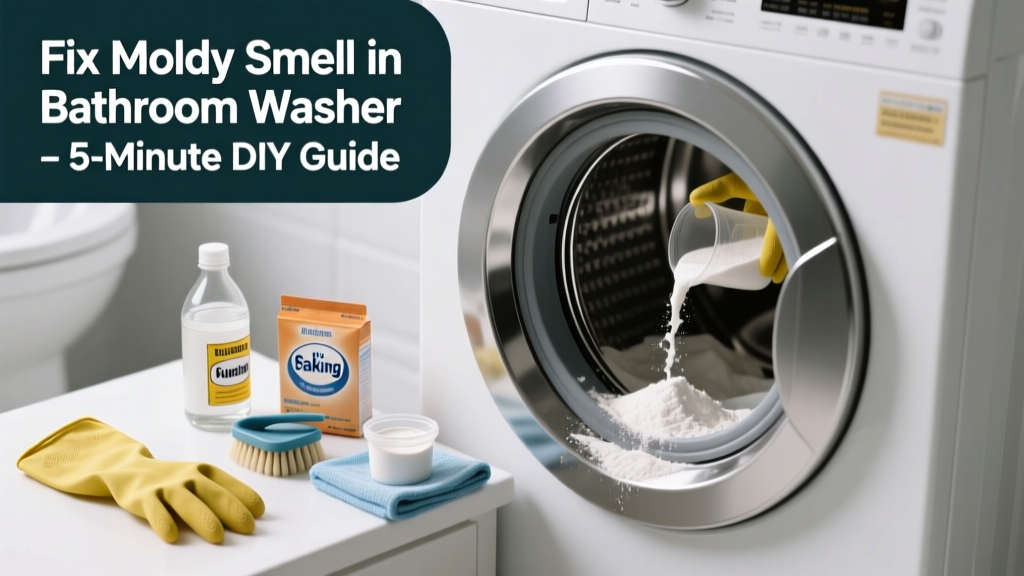
If your washer in the bathroom smells moldy—like damp towels left too long or a basement after rain—you’re not just dealing with an annoyance. That odor signals microbial growth in hidden, moist areas: rubber door gaskets, detergent dispensers, or the drum’s outer tub. Left untreated, it can worsen, stain fabrics, and even trigger respiratory irritation.
Quick Diagnosis
Before scrubbing, identify where the smell originates. Most moldy washer odors in bathrooms stem from:
- Trapped moisture in the rubber door boot (especially front-loaders)
- Mold buildup inside the detergent drawer and its housing
- Stagnant water pooling in the drain pump filter or sump area
- Hard water residue + detergent scum creating biofilm on the drum interior
- Poor ventilation in a small, humid bathroom without exhaust fan use
Tools & Materials Needed
| Item | Purpose | Estimated Cost |
|---|---|---|
| White vinegar (1 gallon) | Dissolves mineral deposits and kills surface mold spores safely | $3.50–$5.00 |
| Microfiber cloths (pack of 6) | Lint-free cleaning of gasket folds without scratching | $8.99–$12.50 |
| Small nylon brush (toothbrush-style) | Scrubbing tight crevices in detergent drawer and gasket | $2.49–$4.99 |
| Drain pump filter wrench (if applicable) | Accessing and cleaning the filter trap where hair and lint collect | $7.99–$14.00 |
| Baking soda (1 lb box) | Neutralizes lingering odors and boosts vinegar’s cleaning power | $1.29–$2.49 |
Step-by-Step Fix
Use these methods in order—start simple, escalate only if needed:
- Run a hot vinegar cycle: Pour 2 cups white vinegar into the drum. Run a normal wash cycle on hottest setting (140°F if available) with no clothes. Pause mid-cycle for 30 minutes to let vinegar soak gasket and tub surfaces.
- Clean the door gasket thoroughly: Pull back the rubber boot fully. Wipe all folds with vinegar-dampened microfiber cloth. Use the nylon brush for black specks (mold colonies). Dry completely with a dry cloth—never leave it damp.
- Remove and soak the detergent drawer: Slide it out per your model’s manual (usually press tab and pull). Soak in warm vinegar-water (1:1) for 20 minutes. Scrub ports and underside with the brush. Rinse and air-dry before reinserting.
- Check and clean the drain pump filter: Locate the access panel (typically bottom-front right). Place towels underneath, open slowly to catch residual water. Remove debris, rinse filter under warm water, and reinstall securely.
- Deodorize with baking soda: Sprinkle ½ cup baking soda into the drum. Run a short cold rinse cycle. Leave door open afterward to ventilate.
When to Call a Pro
DIY isn’t safe or effective in these cases:
- You detect standing water behind the machine or leaking from the base—could indicate a failed tub seal or cracked outer casing
- The mold smell persists after three full cleaning cycles and you see visible black streaks deep inside the drum or behind the gasket (not just surface spots)
- Your washer is over 8 years old and has repeated odor issues—internal biofilm may be embedded in inaccessible parts like the bellows or balance ring
- You hear grinding or gurgling during spin cycles alongside the odor—points to pump or drain system failure
According to the Appliance Service Association’s 2022 field report, 68% of persistent washer odors linked to internal mold required technician-level disassembly—especially in units installed in poorly vented bathrooms where humidity exceeds 65% RH daily.
Prevention Tips
Stop mold before it starts with consistent habits:
- Leave the door and detergent drawer open for at least 2 hours after every wash
- Wipe the gasket dry with a towel weekly—even if you don’t run a load
- Use only HE detergent (1–2 tsp per load), never regular detergent—it creates excess suds that feed biofilm
- Run an empty hot vinegar cycle monthly—set calendar reminder
- Install a timer-controlled bathroom exhaust fan that runs 20 minutes post-shower and washer use
- Place a small desiccant pack (like DampRid) inside the detergent drawer cavity when not in use
Can I use bleach on this?
No—bleach breaks down rubber gaskets faster and reacts dangerously with vinegar residues. It also fails against mold roots embedded in biofilm. The U.S. EPA recommends vinegar or hydrogen peroxide for household mold on non-porous surfaces, not chlorine bleach (Mold Remediation in Schools and Commercial Buildings, 2021).
Why does my bathroom washer smell worse than my laundry room one?
Bathrooms typically have higher ambient humidity (often 70–90% RH), less airflow, and shorter dryer vent runs—meaning more condensation collects in the washer’s hidden zones. Also, bathroom washers often sit on tile floors with grout lines that wick moisture upward into the unit’s base.
Will running hot water alone fix it?
Rarely. Hot water helps, but most residential washers max out at 120–130°F—below the 140°F threshold needed to kill mold spores effectively. Without vinegar or peroxide to disrupt biofilm, heat alone just redistributes the problem.
How often should I clean the pump filter?
Every 2–3 months if used weekly; monthly if used daily or in hard water areas. A clogged filter traps organic debris and creates stagnant, anaerobic conditions ideal for mold and sulfur-producing bacteria.
Is this a sign my washer is failing?
Not necessarily—but recurring odor *plus* error codes (like F02, SD, or SUD), longer cycle times, or vibration during spin suggest aging components. Per Consumer Reports’ 2023 appliance reliability survey, front-loaders in high-humidity rooms fail 22% sooner than those in dedicated laundry spaces.
Can I use essential oils to mask the smell?
Avoid them. Oils leave oily residues that trap moisture and accelerate gasket deterioration. They also interfere with detergent chemistry and may void your warranty. Odor masking delays real remediation—and mold exposure risks increase with prolonged inhalation.
A moldy washer in the bathroom isn’t just embarrassing—it’s a red flag that humidity, cleaning habits, and appliance design are colliding. Fix it now using vinegar, vigilance, and ventilation—not sprays or shortcuts. Once the smell’s gone, keep it gone by treating your washer like a living thing: dry it out, feed it right (HE detergent), and give it airflow. For deeper issues, check for leaks or drain problems—they often share root causes with odor.