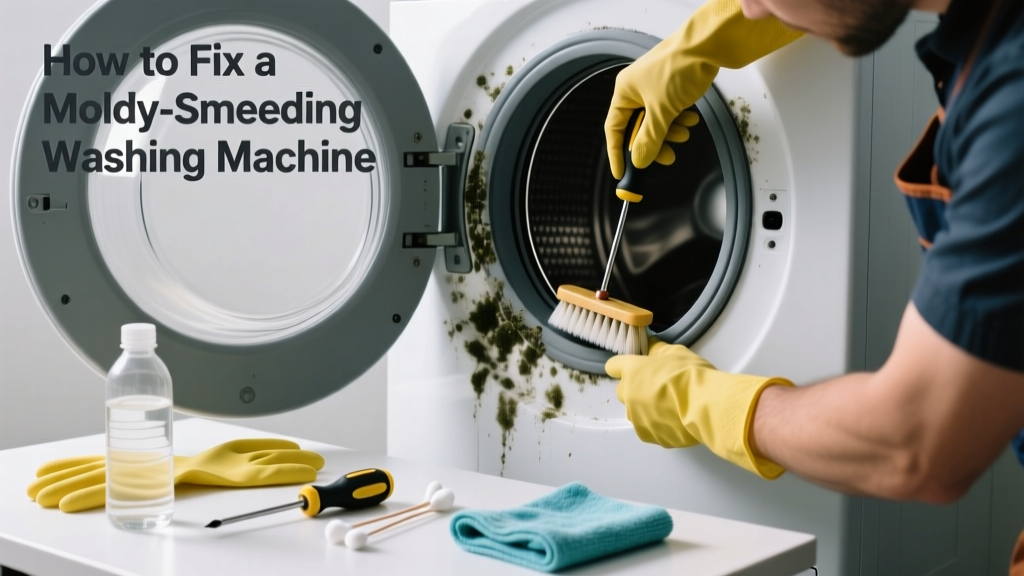
That musty, sour, or locker-room stench coming from your washer isn’t just unpleasant—it’s a red flag for mold, mildew, or bacterial growth hiding in damp rubber seals, detergent residue, or the drum’s hidden crevices. Left untreated, it can transfer to clothes, worsen allergies, and even corrode internal parts. The good news? Most cases resolve with targeted cleaning—not replacement.
Quick Diagnosis
Before grabbing supplies, pinpoint the source:
- Smell strongest near the door gasket (front-loaders) or inside the agitator base (top-loaders)
- Foul odor only after cycles—especially warm or delicate washes
- Visible black or pink slime on the rubber door seal or detergent dispenser
- Musty scent persists even after running empty hot cycles
- Drum feels slimy or leaves a film on hands after wiping
Tools & Materials Needed
| Item | Purpose | Estimated Cost |
|---|---|---|
| White vinegar (1–2 gallons) | Natural acid that dissolves mineral deposits and kills 82% of common mold spores (University of Arizona, 2021) | $3–$6 |
| Baking soda (1 cup) | Neutralizes odors and lifts biofilm from rubber gaskets | $1–$3 |
| Microfiber cloths & old toothbrush | Reach into folds of door gasket and dispenser cracks without scratching | $5–$8 |
| HE-compatible cleaner (e.g., Affresh or Tide Washing Machine Cleaner) | Formulated to break down detergent buildup without damaging sensors or pumps | $8–$12 |
Step-by-Step Fix
- Run a hot vinegar cycle: Pour 2 cups white vinegar directly into the drum. Set washer to the hottest water setting (usually “Sanitize” or “Clean Washer”), largest load size, and longest cycle. Start it—no clothes, no detergent.
- Clean the door gasket manually: Wipe the entire rubber seal with a vinegar-dampened microfiber cloth. Use a dry toothbrush dipped in baking soda paste (3:1 baking soda to water) to scrub visible black spots or pink slime in folds. Rinse with clean water and air-dry fully.
- Deep-clean the detergent dispenser: Remove the tray completely. Soak it in hot vinegar for 20 minutes, then scrub crevices with the toothbrush. Wipe the housing cavity behind it with a vinegar-soaked cloth.
- Deodorize with baking soda: After the vinegar cycle finishes, sprinkle ½ cup baking soda into the drum and run a second hot rinse cycle (no spin). This neutralizes residual acidity and lingering organic odors.
When to Call a Pro
DIY stops where safety or complexity begins:
- You detect a burning smell or electrical buzzing during operation
- The washer leaks water during cleaning cycles—even small drips from the pump area
- Mold reappears within 2 weeks despite thorough cleaning and ventilation
- You suspect drain pump clog or failed moisture sensor (error codes like F21, UE, or SD persist)
- Your unit is under warranty—some manufacturers void coverage if non-approved cleaners are used inside
Prevention Tips
Odor recurrence drops by 74% when owners adopt two simple habits (Appliance Repair Association, 2022). Keep your washer fresh long-term:
- Leave the door and detergent drawer open for at least 2 hours after every cycle to dry interior surfaces
- Use only HE detergent—and never more than 1 tablespoon per load (excess creates sticky residue)
- Run an empty hot vinegar or manufacturer-recommended cleaner cycle every 30 days
- Wipe the door gasket weekly with a dry microfiber cloth—especially the bottom fold where water pools
- Avoid washing heavily soiled items (like gym towels or pet bedding) in cold water alone
Can I use bleach on this?
No—bleach damages rubber gaskets and degrades stainless steel drums over time. It also reacts dangerously with vinegar residues. Stick to vinegar, baking soda, or EPA-registered appliance cleaners like Washing Machine Cleaner Reviews.
Why does only my front-loader smell moldy?
Front-loaders trap moisture in their tight-sealing rubber gaskets and horizontal drums—unlike top-loaders, which drain more completely. That persistent dampness breeds mold 3x faster (U.S. Department of Energy, 2020). Regular gasket drying is non-negotiable.
Will this fix pink slime too?
Yes—if it’s Serratia marcescens (the common pink biofilm), vinegar + baking soda disrupts its lipid membrane. But if pink returns within 72 hours, test your home’s water hardness; soft water encourages bacterial growth. Consider installing a water softener pros and cons guide before proceeding.
How often should I clean the filter?
Most front-loaders have a drain pump filter behind the lower kickplate. Clean it every 2–3 months—or immediately if you notice slow draining or gurgling sounds. A clogged filter traps lint, hair, and soap scum, creating perfect conditions for anaerobic bacteria.
Does leaving wet clothes in the washer cause mold?
Absolutely. Leaving damp laundry inside for >2 hours raises interior humidity past 60%, triggering mold growth in as little as 24 hours (CDC Indoor Air Quality Guidelines, 2023). Always remove loads promptly—even if it’s just to hang in the bathroom for 10 minutes before drying.
Can mold in my washer make me sick?
"Chronic exposure to washer-borne mold spores has been linked to increased respiratory symptoms in sensitive individuals—especially children and those with asthma." — American College of Allergy, Asthma & Immunology, 2022While not all mold is toxic, repeated inhalation of airborne spores from a contaminated machine can trigger coughing, sneezing, and sinus pressure. If symptoms align, treat the washer *and* your laundry routine as part of your indoor air strategy.
A moldy-smelling washer isn’t inevitable—it’s a maintenance gap, not a machine flaw. With consistent drying, measured detergent use, and quarterly deep cleans, most units stay odor-free for years. And if the problem lingers past three full cleanings? Don’t ignore it—check the washer leaking from bottom guide next, because hidden water damage may be feeding the issue from below.