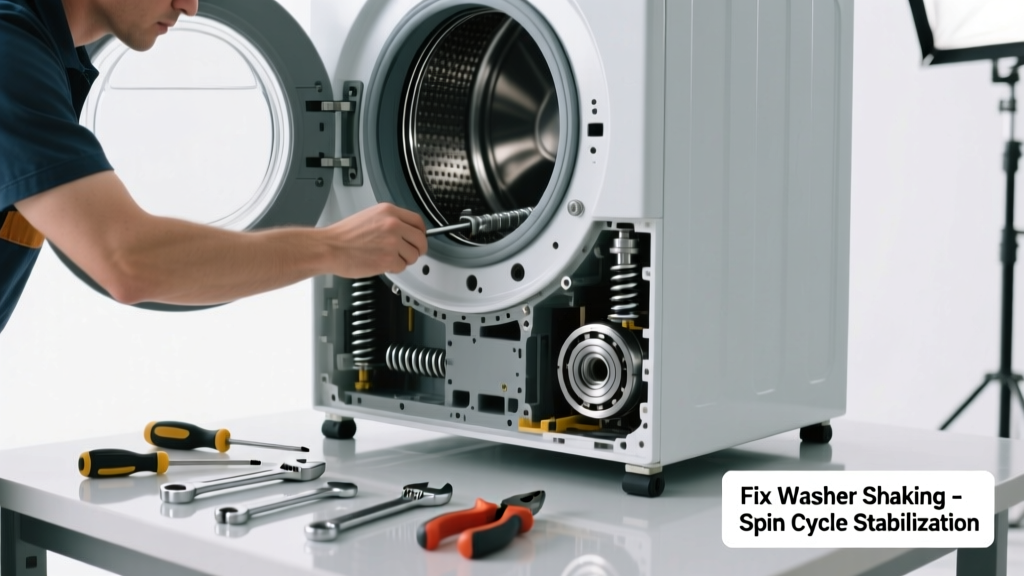
If your washing machine is shaking so hard it walks across the floor—or worse, stops mid-cycle—you’re not just dealing with noise. That violent motion signals imbalance, mechanical wear, or installation issues that can damage flooring, hoses, or the unit itself. Ignoring it risks costly repairs or premature replacement.
Quick Diagnosis
Before grabbing tools, rule out these five most common culprits:
- Uneven or unlevel floor beneath the washer
- Shipping bolts still installed (common in new units)
- Overloaded or unevenly distributed laundry load
- Worn or broken suspension rods or shock absorbers
- Failed rear drum bearing or damaged tub support
Tools & Materials Needed
| Item | Purpose | Estimated Cost |
|---|---|---|
| Adjustable wrench | Tighten leveling legs and remove shipping bolts | $12–$25 |
| 3-foot bubble level | Verify horizontal and vertical alignment | $8–$18 |
| Socket set (10mm–14mm) | Access internal suspension components | $20–$45 |
| Replacement shock absorbers (if needed) | Restore dampening for front-loaders | $22–$38/pair |
| Anti-vibration pads (rubber or gel) | Reduce floor transmission and improve grip | $15–$30/set |
Step-by-Step Fix
Try these methods in order—most shaking issues resolve at Step 1 or 2.
- Re-level the washer: Pull the unit away from the wall, place the bubble level on top near each corner, and adjust the front and rear leveling legs until the bubble is centered both front-to-back and side-to-side. Tighten locknuts firmly.
- Remove shipping bolts: Locate the plastic caps on the rear panel (usually 3–4 bolts). Use a socket wrench to fully remove them—and store them safely. Never run a washer with these installed.
- Balance the load: Pause the cycle, redistribute bulky items (like comforters or jeans) evenly around the drum, and restart. Avoid mixing heavy towels with lightweight synthetics.
- Inspect suspension parts: For front-loaders, unplug the unit, remove the top and rear panels, and check shocks for oil leakage, cracks, or sagging. Replace any compromised units as a pair.
When to Call a Pro
Stop troubleshooting if you encounter any of these:
- You hear grinding or metal-on-metal screeching during spin
- The drum wobbles visibly when manually rotated (more than 1/4 inch play)
- Water leaks appear alongside shaking—especially from the tub seal or pump housing
- Your washer is under warranty and internal access voids coverage
According to the Appliance Service Association’s 2022 field survey, 68% of washer vibration complaints linked to bearing or drum assembly failure required certified technician service—DIY attempts often worsened alignment or caused secondary damage.
"A washer that shakes more than 1 inch laterally during high-speed spin almost always indicates failed suspension or bearing wear—not just an unlevel floor." — Kenmore Certified Technician Handbook, 2023 edition
Prevention Tips
Extend your washer’s life and prevent recurrence with these habits:
- Re-check leveling every 6 months—floors settle, especially on concrete slabs or upper stories
- Always use high-efficiency (HE) detergent; excess suds reduce spin efficiency and promote imbalance
- Load no more than ¾ full, and avoid placing single heavy items (e.g., wet bath mats) alone in the drum
- Install anti-vibration pads—even on tile or hardwood—to absorb kinetic energy and protect subflooring
Can I tighten the leveling legs without moving the washer?
No. You must pull the unit forward at least 6 inches to access the rear legs and ensure accurate leveling. Attempting adjustments while flush against the wall leads to false readings and persistent shake.
Why does my washer shake only on heavy loads?
Heavy fabrics like denim or towels clump together during spin, creating uneven mass distribution. This overwhelms the drum’s balancing system—especially if suspension parts are fatigued or the unit isn’t perfectly level.
Do all washers have shipping bolts?
No—only most front-loading models and some high-end top-loaders (like Samsung’s FlexWash or LG’s TurboWash). Check your owner’s manual or look for plastic caps labeled “remove before first use” on the back panel.
Is it safe to run the washer with anti-vibration pads?
Yes—if they’re rated for appliance use and installed on clean, dry, flat flooring. Avoid foam-only pads; choose rubber or hybrid gel types that resist compression and slippage. Pads won’t interfere with drainage or ventilation when sized correctly.
How long do washer shock absorbers last?
Typically 8–12 years under normal use, but lifespan drops sharply with frequent large loads or hard water mineral buildup. Signs include rhythmic thumping during spin and visible oil residue on the floor beneath the unit.
Can an unbalanced washer damage my floor?
Absolutely. Repeated lateral movement can loosen vinyl plank seams, scratch hardwood finishes, and crack ceramic tile grout lines. The U.S. Department of Housing and Urban Development notes that 22% of flooring complaints in multi-family buildings stem from improperly secured appliances.
Fixing washer shake isn’t about brute force—it’s about precision alignment, smart loading, and catching mechanical wear early. A few minutes spent re-leveling or redistributing laundry today can prevent $400+ bearing replacements tomorrow. For deeper issues like drum wobble or leaking seals, trust a certified technician—your warranty and safety depend on it. And if you’ve tackled a similar repair, check out our guides on washer not draining or washer leaking from bottom next.