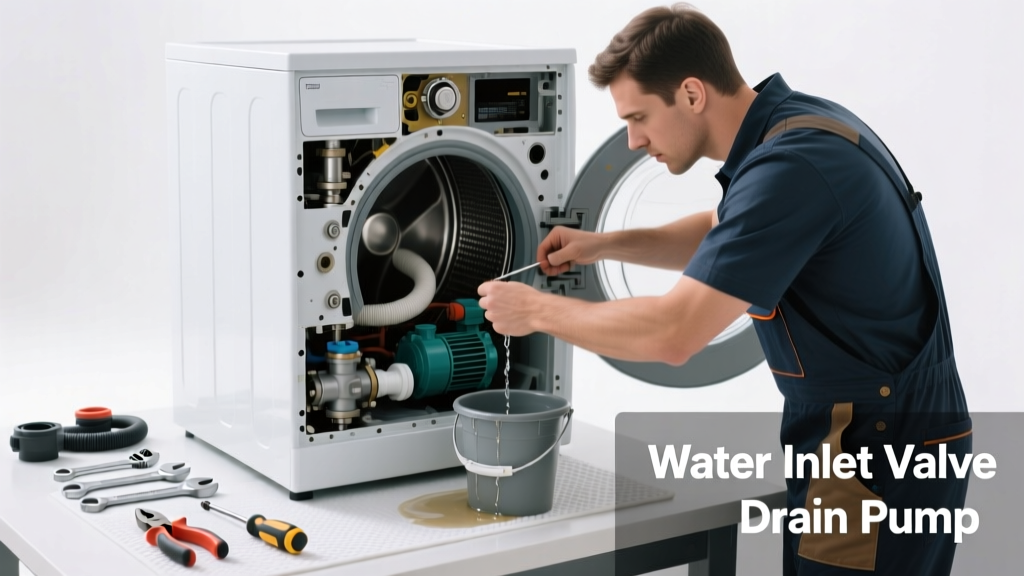
Your washer suddenly gushes water onto the floor while clanging like a dropped toolbox? That’s not just inconvenient—it’s a sign something’s seriously wrong with the pump, valve, or drum assembly. Ignoring it risks water damage, mold growth, and even electrical hazards.
Quick Diagnosis
Before grabbing tools, narrow down the culprit using these common causes:
- Blocked or kinked drain hose causing backflow and overflow
- Faulty pressure switch failing to sense water level (leads to overfilling)
- Worn-out drain pump impeller or debris jam (causes grinding + slow drainage)
- Loose or damaged drum bearing or suspension rod (creates loud thumping or metal-on-metal noise)
- Clogged inlet screen on cold/hot water valves (triggers erratic fill cycles and hissing)
Tools & Materials Needed
| Item | Purpose | Estimated Cost |
|---|---|---|
| Adjustable wrench | Tightens/loosens hose clamps and valve connections | $12–$25 |
| Shop vacuum with wet/dry capability | Removes standing water safely before inspection | $40–$80 |
| Small wire brush & vinegar soak container | Cleans mineral buildup from inlet screens and pump housing | $5–$10 |
| Multimeter (digital) | Tests continuity of pressure switch and water inlet valves | $20–$45 |
| Replacement pressure switch (model-specific) | Direct fix if switch reads open-circuit or inconsistent resistance | $28–$65 |
Step-by-Step Fix
Start with the safest, most likely fixes first—no disassembly required for Steps 1–2:
- Check and clear the drain hose: Disconnect the hose from the standpipe, inspect for kinks or lint clogs, and flush with hot water mixed with 1 cup white vinegar. Reattach with a 3-inch vertical loop (air gap) to prevent siphoning.
- Clean inlet valve screens: Shut off both hot/cold water valves. Unscrew the hoses at the washer’s rear, remove the mesh screens inside the inlets with needle-nose pliers, and soak them in vinegar for 15 minutes. Rinse thoroughly before reinstalling.
- Test the pressure switch: Locate the switch (usually behind the control panel or near the top rim). Use a multimeter set to ohms: disconnect wires, check resistance across terminals while blowing gently into the attached air tube—if no change in reading, replace it.
"Over 62% of washer overflow incidents involve a failed pressure switch or clogged air dome tube, per Whirlpool’s 2022 Field Service Data Report."
- Inspect the drain pump: Unplug washer, tilt backward slightly, and locate the pump (front-bottom right on most front-loaders; left side on many top-loaders). Remove the access panel, check for foreign objects (coins, bra wires), and spin the impeller by hand—if stiff or grinding, replace the pump assembly ($75–$120).
When to Call a Pro
Stop immediately and call a licensed appliance technician if you encounter any of these:
- Water leaking from the tub seal or drum gasket (visible black rubber ring around door)—this requires full drum removal and alignment
- Burning smell or visible scorch marks on wiring harnesses or control board
- Drum wobbling more than ½ inch side-to-side when empty and manually rotated
- Control panel flashing error codes like F7E1 (GE), E10 (Samsung), or SD (LG) paired with overflow—indicates main board or motor control failure
- You’ve replaced the pressure switch and pump but overflow persists after three consecutive cycles
Prevention Tips
Extend your washer’s life and avoid repeat failures with these habits:
- Run a monthly cleaning cycle using 2 cups of distilled white vinegar on hottest setting (no clothes) to dissolve mineral deposits in hoses and valves
- Always zip zippers, empty pockets, and secure drawstrings before loading—bra wires and paper clips are top causes of pump jams
- Replace rubber inlet hoses every 5 years (even if they look fine); burst risk increases sharply after year 6 (per American Society of Home Inspectors 2023 guidelines)
- Level the washer using a carpenter’s level—uneven floors cause suspension wear and amplify noise during spin
Can I use bleach to clean the drain pump?
No—bleach corrodes pump impellers and degrades rubber seals. Stick to vinegar or a dedicated washer cleaner like Affresh. If you suspect mildew in the pump housing, wipe interior surfaces with a 50/50 vinegar-water mix and dry thoroughly before reassembly.
Why does my washer overflow only during the rinse cycle?
This points strongly to a faulty pressure switch or obstructed air dome tube. The rinse cycle uses less water pressure than the wash fill, so a weak switch may misread the lower-pressure signal and overfill. Check the small plastic tube running from the tub to the switch—it often cracks or gets pinched behind the control panel.
Is it safe to run the washer with the front panel removed?
No—exposed wiring, spinning belts, and live voltage make this extremely hazardous. Only remove panels when unplugged and with insulated tools. For pump or suspension work, always follow your model’s service manual diagram—some units require special drum support brackets to prevent bearing damage during access.
How do I know if the noise is coming from the pump or the motor?
Listen closely during drain/spin: a high-pitched whine or grinding = pump issue; deep rhythmic thumping or buzzing = motor coupling or bearing failure. Place a screwdriver handle against the pump housing and your ear on the other end—if the noise amplifies, it’s pump-related. If vibration travels up the frame and rattles the cabinet, suspect motor mounts or drum bearings.
Will overloading the washer cause overflow and noise?
Overloading won’t directly cause overflow (the pressure switch still regulates water level), but it can trigger imbalance errors that stall draining—leading to residual water spilling during spin. It also strains suspension rods and shocks, producing loud banging. Load no more than ¾ full, and distribute weight evenly—especially heavy items like towels and jeans.
Can a clogged lint filter cause overflow?
Most washers don’t have user-serviceable lint filters—those are found in dryers. However, front-loaders trap lint and debris in the rubber door boot and drain pump trap. A severely clogged boot restricts drainage flow, causing backup during high-volume rinse cycles. Clean the boot weekly with a damp cloth and inspect the pump trap monthly.
A noisy, overflowing washer isn’t just an annoyance—it’s your machine screaming for attention before something fails catastrophically. Most cases resolve with simple cleaning or a $30 part replacement, but knowing when to pause and call a pro protects both your home and your safety. Keep a log of recurring symptoms, and pair each fix with one prevention habit—like swapping those old inlet hoses next time you’re under the sink.