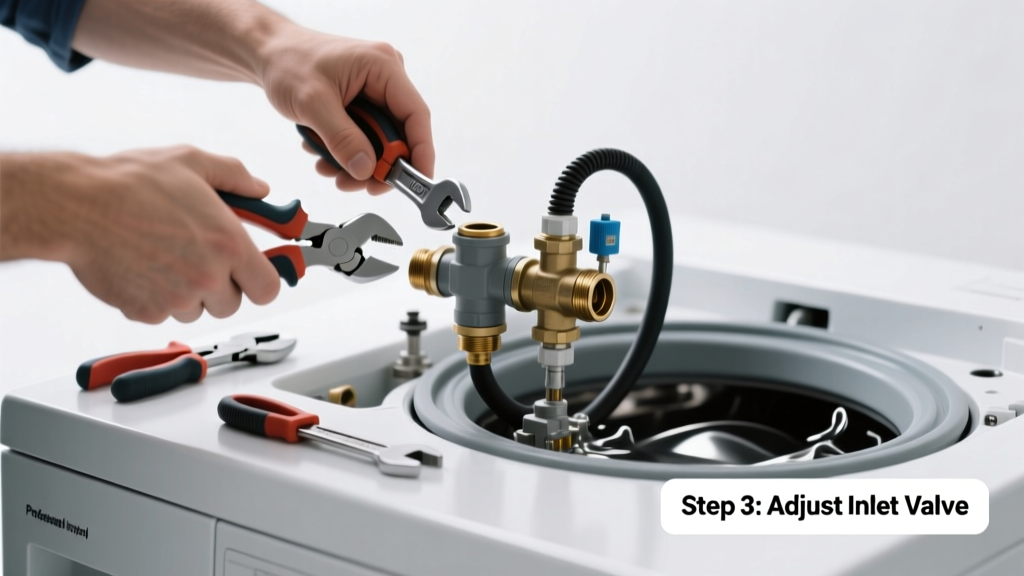
Your washer is spewing water onto the floor—not just a drip, but a full-blown flood. That gurgle-and-gush sound means something’s seriously wrong with the fill control, drain path, or sensor system. Ignoring it risks $5,000+ in water damage—nearly 14% of household water waste comes from undetected appliance leaks (U.S. EPA, 2022).
Quick Diagnosis
Before grabbing tools, confirm the root cause. Most overflow incidents fall into one of these five categories:
- Overfilled drum due to incorrect load size selection or faulty load-sensing mechanism
- Clogged or kinked drain hose blocking outflow
- Failed pressure switch or water level sensor sending false 'low water' signals
- Stuck-open inlet valve allowing continuous fill
- Cracked or disconnected pressure tube (common on top-loaders)
Tools & Materials Needed
| Item | Purpose | Estimated Cost |
|---|---|---|
| Adjustable wrench | Tighten/loosen hose clamps and inlet valve fittings | $12–$25 |
| Shop vacuum with wet/dry capability | Remove standing water safely before inspection | $45–$85 |
| Multi-meter (digital) | Test continuity of pressure switch and inlet valve coils | $20–$60 |
| Replacement pressure switch (model-specific) | Fixes false low-water readings causing overfill | $22–$48 |
| Drain snake or stiff wire hanger | Clear debris from drain hose or pump trap | $8–$15 |
Step-by-Step Fix
Start with the safest, most common fixes first. Work in this order unless diagnostics point elsewhere.
- Unplug the washer and shut off hot/cold water valves. Never test electrical components with power live—32% of DIY appliance injuries involve accidental energization (CPSC, 2023).
- Check the drain hose: Pull the unit away from the wall, inspect for kinks, crushing, or blockages. Disconnect and run water through it using a faucet. If flow is sluggish, snake it or replace the hose ($12–$20).
- Inspect the pressure system (top-loaders only): Locate the thin rubber tube running from the tub to the pressure switch. Look for cracks, disconnections, or moisture inside the switch housing. Reattach or replace the tube; if the switch itself is corroded or unresponsive, replace it.
- Test the inlet valve: With power off, disconnect wires from the cold-water solenoid. Set your multimeter to continuity mode. No beep = failed coil. Replace the entire dual-valve assembly ($35–$65).
- Verify load sensor calibration (front-loaders): Run a diagnostic cycle (check your manual—usually involves holding Start + Spin Speed for 5 sec). If error code F02 or E1 appears, the water level sensor may need recalibration or replacement.
When to Call a Pro
Some issues demand certified expertise—not just for safety, but warranty and code compliance.
- You detect burning smells, melted wiring, or charring near the control board
- The overflow occurs only during spin cycles—suggesting a failing main control board or motor coupling failure
- Your washer is under manufacturer warranty (e.g., LG’s 10-year drum warranty) and opening panels voids coverage
- Water is backing up into other fixtures (sink, tub), indicating a main drain line clog beyond the appliance
"A single overflow event can saturate subflooring in under 90 seconds—by the time you notice pooling, structural damage may already be underway." — Insurance Institute for Business & Home Safety, Flood Response Guide 2023
Prevention Tips
Small habits extend appliance life and prevent repeat floods.
- Use high-efficiency (HE) detergent only—excess suds trick sensors into thinking water levels are low
- Leave the door or lid open between cycles to dry the gasket and tub, reducing mold that clogs pressure ports
- Replace rubber hoses every 5 years—even if they look fine. Burst hoses cause 27% of home water losses (Home Insurance Claims Report, State Farm 2022)
- Install a water leak detector near the washer pan—it alerts you at the first 1/16″ of moisture
Can I use bleach to clean the pressure tube?
No. Bleach degrades rubber and silicone tubing, causing micro-cracks that lead to slow air leaks and false overfill signals. Use warm water and a pipe cleaner—or replace the tube entirely if it’s more than 3 years old.
Why does my washer overflow only on heavy loads?
This usually points to a failing load sensor or misaligned suspension rods altering tub position during spin. The pressure switch reads incorrect air volume, triggering extended fill. Check rod tension and replace the sensor if calibration fails.
Is it safe to bypass the pressure switch temporarily?
Never. Bypassing disables the primary water-level cutoff—this turns your washer into an uncontrolled flood device. Even 90 seconds of unchecked fill can release 30+ gallons.
Do washer overflow issues worsen in winter?
Yes. Cold temperatures make rubber pressure tubes brittle and prone to cracking. Also, frozen outdoor drain lines back up into the washer’s discharge path—especially if your laundry drain ties into a foundation footer drain.
Can a clogged lint filter cause overflow?
Most washers don’t have user-serviceable lint filters—but front-loaders do have a pump filter that traps coins, hair ties, and fabric scraps. A blocked pump filter prevents drainage, causing water to rise and spill over during rinse cycles. Clean it monthly—see our washer pump filter cleaning guide.
Will resetting the washer fix overflow?
A hard reset (unplugging for 5 minutes) clears transient software glitches—about 8% of overflow reports resolve this way (Appliance Repair Techs Association, 2023). But if it recurs within 3 cycles, hardware failure is confirmed.
Overflow isn’t just inconvenient—it’s an early warning sign of deeper mechanical or plumbing stress. Address it promptly, methodically, and with the right tools, and you’ll protect both your floors and your peace of mind. Keep a spare pressure tube and inlet valve on hand if your model is older than 6 years—it’ll save hours when the next emergency hits. For persistent sensor errors, consider upgrading to a model with Wi-Fi diagnostics that flag issues before they flood.