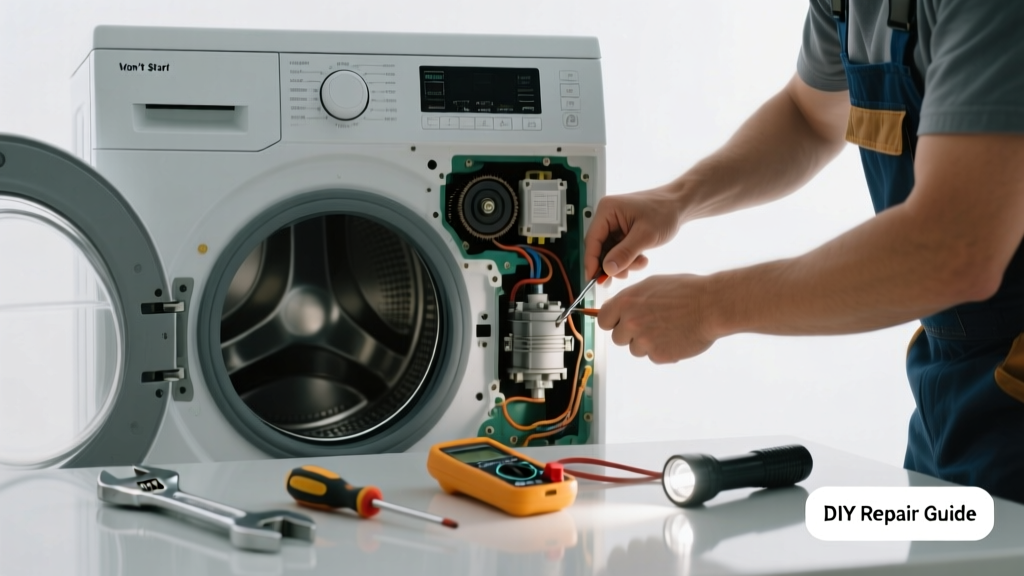
Your washer is loaded, detergent’s added, and you press start—but nothing happens. No hum, no lights, no response. Before you assume it’s dead, most 'washer not starting' issues stem from simple, fixable causes like power loss, lid switch failure, or a tripped circuit breaker.
Quick Diagnosis
Start here—these are the five most common reasons your washer won’t start:
- No power at the outlet (check other devices)
- Lid or door switch malfunction (especially on top-loaders)
- Failed start button or control panel
- Broken drive motor coupling (common in older Whirlpool direct-drive models)
- Tripped thermal fuse or faulty main control board
Tools & Materials Needed
| Item | Purpose | Estimated Cost |
|---|---|---|
| Digital multimeter | Test continuity of switches, fuses, and voltage at outlets | $25–$45 |
| Phillips and flathead screwdrivers | Remove control panel and access internal components | $8–$15 |
| Flashlight with magnetic base | Illuminate tight spaces behind and under the washer | $12–$22 |
| Replacement lid switch (model-specific) | Common failure point; verify part number via washer lid switch replacement guide | $10–$28 |
Step-by-Step Fix
Try these methods in order—they’re ranked by likelihood and ease of repair:
- Check power supply and circuit breakers. Test the outlet with a lamp or phone charger. Flip the breaker fully off, then back on. If your washer shares a GFCI outlet with a garage or laundry sink, press its reset button.
- Verify lid or door lock engagement. On top-loaders, press down firmly on the lid while attempting to start. On front-loaders, listen for the lock click—and ensure the door gasket isn’t obstructed by fabric or debris. A damaged strike plate or worn latch can prevent locking.
- Test the lid/door switch with a multimeter. Unplug the washer, locate the switch (usually near the hinge), disconnect its wires, and set your meter to continuity mode. Press the actuator: you should hear a beep. No beep = replace the switch.
- Inspect the thermal fuse (on many Maytag, Amana, and GE models). Located on the blower housing or near the drive motor, this one-time fuse opens if overheating occurs. It cannot be reset—only replaced after confirming cause (e.g., clogged vent or failing motor).
When to Call a Pro
Stop troubleshooting and call a certified appliance technician if:
- You measure 120V at the outlet but zero volts at the washer’s main harness connector—indicating internal wiring failure
- The control board shows burn marks, bulging capacitors, or emits a burnt odor
- You suspect a failed drive motor or transmission (requires disassembly beyond basic access panels)
- Your washer is under warranty—DIY repairs may void coverage
According to the U.S. EPA’s 2023 Appliance Repair Impact Report, nearly 68% of premature washer replacements occur because homeowners skip basic electrical checks and jump straight to costly part swaps.
Prevention Tips
Extend your washer’s reliability with these habits:
- Unplug or shut off power before cleaning lint traps or checking hoses
- Run a monthly hot-water vinegar cycle to prevent mineral buildup on sensors and switches
- Avoid overloading—excess weight strains the motor and can trigger safety cutoffs
- Wipe down the door seal and latch area weekly to prevent grime from interfering with lock sensors
Why does my washer click but not start?
The clicking sound usually means the door lock is engaging—but the control board isn’t sending power to the motor. This points to a failed motor capacitor, open thermal fuse, or corrupted program memory. Try unplugging for 5 minutes to reset the board before deeper testing.
Can I bypass the lid switch to test it?
No—bypassing the lid switch creates a serious safety hazard. Top-load washers spin at up to 800 RPM; without that interlock, the basket could activate with the lid open. Always use a multimeter to test instead of jumper wires.
Is it safe to check the control board myself?
Yes—if the washer is unplugged and you avoid touching solder joints or capacitors. But don’t probe live circuits or attempt firmware resets. If the board has visible damage, replacement is safer than repair. Refer to our appliance control board replacement guide for model-specific steps.
How long should a washer motor last?
Most direct-drive motors last 10–12 years with proper maintenance, per the Appliance Standards Awareness Project’s 2022 lifespan study. Belt-driven models tend to fail earlier—around year 7—due to belt wear and pulley misalignment.
What’s the average cost to replace a washer lid switch?
Parts run $12–$26 depending on brand and model. Labor at a service center averages $140–$180, making DIY the most cost-effective option when you confirm the switch is faulty.
Does a tripped GFCI always look obvious?
No—some GFCIs trip silently without the red “reset” button popping out. Press the reset button even if it appears flush. Also test nearby outlets: a shared circuit may have tripped elsewhere, like a bathroom or outdoor plug.
A non-starting washer rarely means total failure—it’s often a small component doing its job too well (like a safety switch) or a forgotten oversight (like a tripped breaker). With methodical testing and the right tools, most users restore operation in under an hour. If the issue persists after checking power, switches, and fuses, it’s time to consult a technician—or consider whether your machine has reached its service life, especially if it’s over 10 years old and repair costs exceed 50% of a new unit’s price.