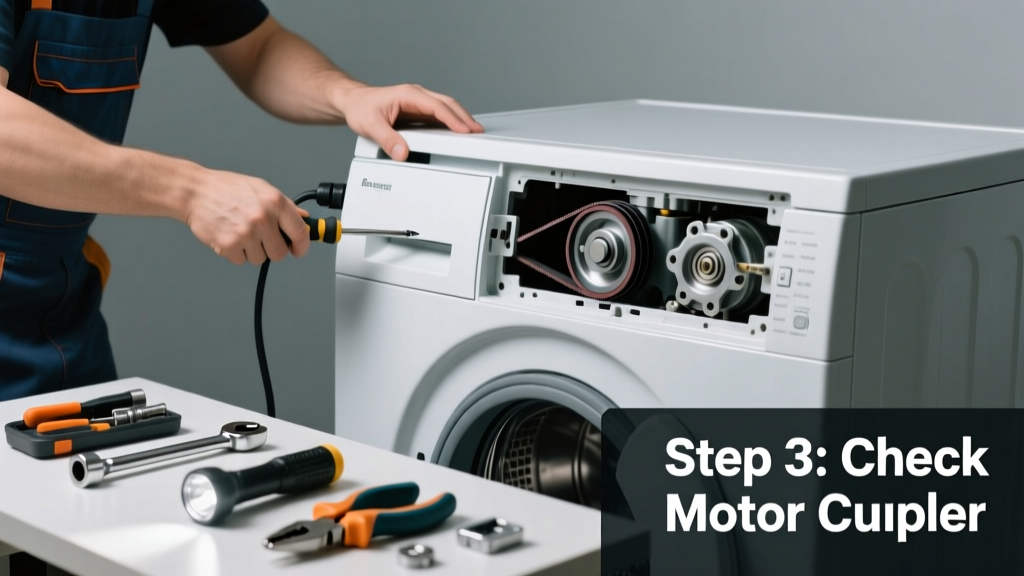
Your washer fills and agitates—but stops dead before the spin cycle. Clothes come out sopping, and you’re staring at a pile of damp laundry wondering what went wrong. This isn’t just inconvenient—it can lead to mold, mildew, and even motor strain if ignored.
Quick Diagnosis
Before grabbing tools, rule out simple causes first. Most non-spinning issues stem from one of these five culprits:
- Unbalanced or overloaded drum (especially front-loaders)
- Lid or door switch failure (prevents safety lock from releasing)
- Clogged drain pump or filter (triggers error codes or halts spin)
- Belt slippage or breakage (common in older belt-drive top-loaders)
- Faulty drive motor capacitor (causes weak or no spin torque)
Tools & Materials Needed
| Item | Purpose | Estimated Cost |
|---|---|---|
| Needle-nose pliers | Grip small wires and release clips on lid switches or pump housings | $8–$15 |
| Phillips and flathead screwdrivers | Remove control panels, back panels, and pump access covers | $6–$12 |
| Multimeter (digital) | Test continuity on lid switch, capacitor, and motor windings | $20–$45 |
| Shop vacuum or turkey baster | Clear debris from drain pump housing without full disassembly | $12–$25 |
| Replacement lid switch (model-specific) | Common failure point; verify part number via serial tag under lid or behind panel | $12–$28 |
Step-by-Step Fix
Work through these methods in order—most issues resolve in the first two steps:
- Check load balance and door/lid closure: Redistribute clothes evenly. For front-loaders, ensure the door latch clicks audibly. For top-loaders, press down firmly on the lid—listen for a soft *click* indicating the switch engaged.
- Clean the drain pump filter: Unplug washer. Locate filter (usually behind bottom front panel or under kickplate). Place towels underneath, open cap slowly to drain residual water, then remove debris (coins, lint, hair ties). Reinstall and test.
- Test the lid/door switch: With power off, locate switch near hinge (top-loader) or door frame (front-loader). Use multimeter on continuity mode: press actuator—meter should beep. No beep? Replace switch.
- Inspect the drive belt (belt-drive models only): Remove back panel. Belt should be taut and free of cracks or glazing. If loose or broken, replace with OEM belt—never substitute with generic rubber cord.
When to Call a Pro
Stop troubleshooting—and call a certified technician—if you encounter any of these:
- Burning smell or visible scorch marks near motor or control board
- Error codes like F7E1 (Whirlpool), UE (Samsung), or E43 (LG) that persist after cleaning and reset
- Motor hums but drum won’t turn—even after confirming belt, switch, and load are fine
- You’ve tested capacitor and motor windings with multimeter and found open circuits or shorts
According to the U.S. EPA, 14% of household water usage is wasted due to undetected leaks—including those caused by failed pump seals during repeated spin failures. A pro can spot early seal wear before it floods your laundry room.
Prevention Tips
Extend your washer’s spin reliability with these habits:
- Always zip zippers and fasten hooks before washing—prevents snagging and belt abrasion
- Run a monthly maintenance wash: 2 cups vinegar on hottest setting, no clothes, to dissolve detergent residue in pump and tub
- Leave the door or lid open between cycles to dry the gasket and prevent mold buildup
- Never exceed manufacturer’s max load weight—overloading stresses the spin bearing and clutch assembly
Why does my washer spin sometimes but not others?
Inconsistent spinning usually points to an intermittent lid switch contact or failing motor capacitor. The capacitor may hold enough charge for one cycle but degrade rapidly under heat. Test it with your multimeter: a healthy 250VAC capacitor should read within ±6% of its labeled microfarad (µF) rating.
Can I bypass the lid switch to test spin function?
No—bypassing the lid switch disables a critical safety feature and risks serious injury. The washer’s control board detects bypass attempts and may lock out all functions or trigger error codes. Always replace faulty switches instead of jury-rigging.
Is a humming noise during spin attempt normal?
A brief 1–2 second hum as the motor engages is normal. A sustained 5+ second hum means the motor is trying to start but can’t—often due to seized bearings, broken coupler (in Whirlpool direct-drive models), or capacitor failure. Unplug immediately and inspect.
How long do washer drive belts typically last?
Most OEM belts last 8–12 years with average use (5 loads/week), but lifespan drops sharply with hard water, high heat settings, or frequent overloading. According to the Appliance Service Association’s 2022 Field Technician Survey, 68% of belt replacements occurred in units older than 9 years—and 41% involved visible cracking before failure.
Will resetting the washer fix no-spin issues?
A reset (unplugging for 60 seconds) clears temporary software glitches and may restore spin function if caused by a sensor misread or communication error. But it won’t fix mechanical failures like broken belts, clogged pumps, or worn clutches. Reset first—but don’t skip diagnostics.
What’s the difference between spin speed and spin performance?
Spin speed (e.g., 1200 RPM) is a setting; spin performance is how effectively water is extracted. Poor performance—even at high RPM—can stem from unbalanced loads, worn tub bearings, or clutch slippage. If clothes remain wet despite correct RPM, inspect the clutch assembly or suspension rods.
A washer that won’t spin isn’t always a death sentence for the appliance—many fixes take under an hour and cost less than a service call. Just remember: if you’re unsure about wiring, capacitors, or motor disassembly, a leaking washer or drain failure might share root causes, so cross-check symptoms. Stay patient, stay safe, and keep that spin going.