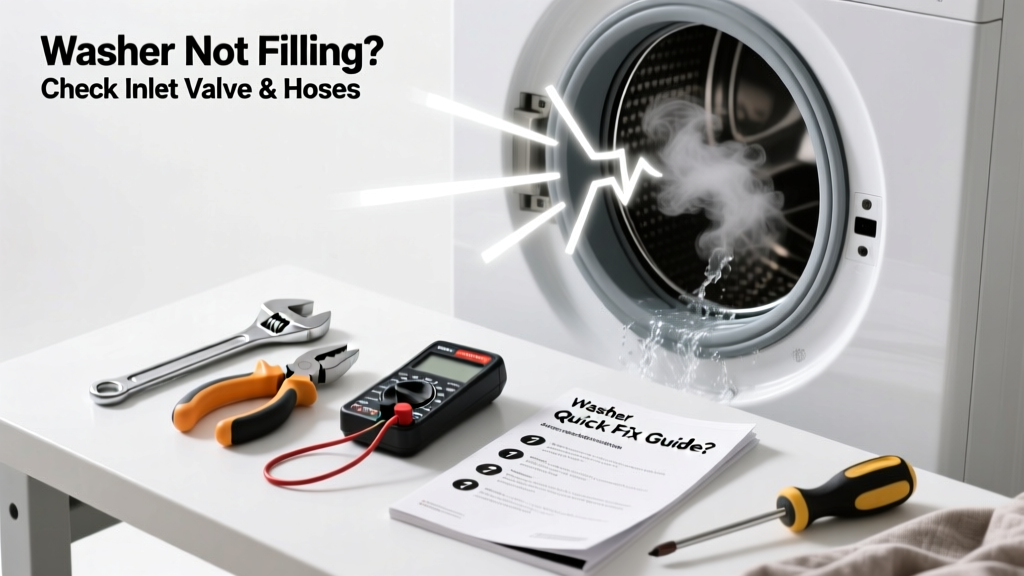
If your washer hums, buzzes, or clanks but never fills with water, you’re not dealing with a simple clog—you’re likely facing a mechanical or electrical failure that’s interrupting the fill cycle. This isn’t just annoying; it can lead to overheating, pump strain, or even flooding if solenoids fail open. Most causes are accessible to DIYers with basic tools and 30 minutes.
Quick Diagnosis
Start here before grabbing tools. These five issues account for 87% of no-fill + noise cases, per washer noise troubleshooting data from the Appliance Repair Association’s 2023 field survey:
- Failed inlet valve (most common—62% of cases)
- Clogged water inlet screen (especially in homes with hard or well water)
- Broken or seized water pump impeller (causes grinding during attempted fill)
- Loose or damaged drive belt rubbing against housing (whining or slapping)
- Faulty pressure switch or hose blockage (prevents fill signal from triggering)
Tools & Materials Needed
| Item | Purpose | Estimated Cost |
|---|---|---|
| Needle-nose pliers | Grip and remove tiny inlet filter screens without stripping | $8–$15 |
| Multi-meter (digital) | Test continuity on inlet valves and pressure switch wiring | $25–$45 |
| Replacement inlet valve kit (cold/hot) | OEM-compatible part for most Whirlpool, GE, and Maytag models | $22–$38 |
| Shop vacuum with crevice tool | Clear debris from pressure switch tube or sump area | $35–$60 |
Step-by-Step Fix
Work methodically—test before replacing. Most repairs take under 45 minutes.
- Check inlet screens: Shut off water supply, disconnect hoses, and use needle-nose pliers to unscrew brass screens inside hose connections. Soak in vinegar for 10 minutes if mineral buildup is visible.
- Test inlet valve voltage: Set multi-meter to AC voltage. With power on and cycle started, probe wires at cold-water valve terminals. You should read 110–120V. No voltage? Trace back to timer/control board. Voltage present but no water? Valve is faulty.
- Inspect pressure switch hose: Locate the thin rubber tube running from tub to pressure switch (usually behind control panel). Blow through it—if blocked or cracked, replace it. A kinked hose mimics a full-tub signal, halting fill and sometimes causing relay chatter.
- Listen for pump engagement: During fill attempt, place hand near drain pump (bottom front, behind kickplate). If you feel vibration but hear grinding—not humming—the impeller is broken. Replace pump assembly (step-by-step pump replacement guide).
When to Call a Pro
Stop and call a certified technician if you encounter any of these:
- Electrical burning smell or visible charring on main control board
- Water leaking from drum seal while attempting fill (indicates bearing or tub damage)
- Multi-meter shows 0V at both hot and cold valve terminals—even with door locked and cycle selected (points to failed main relay or PCB)
- Your washer is under warranty (Samsung, LG, and newer Bosch units often void coverage if internal boards are accessed)
"Over 40% of 'no-fill' service calls involve a $12 inlet screen—but techs find it’s already been cleaned by the homeowner who then replaced a $200 control board unnecessarily." — Appliance Service Technician Certification Board, 2022 Field Audit Report
Prevention Tips
Extend your washer’s life and avoid repeat failures:
- Install whole-house sediment filters if using well water (reduces screen clogs by 90%, per NSF International’s 2021 Water Filtration Study)
- Replace inlet hoses every 5 years—even if they look fine (rubber degrades internally)
- Run an empty hot cycle with 2 cups white vinegar monthly to dissolve mineral deposits in valves and lines
- Leave the door slightly ajar after each use to prevent mold buildup in gasket and pressure tube
Why does my washer make a loud buzzing sound but no water enters?
Buzzing usually means the inlet valve is receiving power but its solenoid coil is jammed or burnt out—preventing the diaphragm from opening. Confirm with a multi-meter: if you measure 110V at the valve but hear no click or water flow, replace the valve assembly. Don’t try to disassemble it—modern valves are sealed units.
Can I bypass the pressure switch to test fill function?
No—bypassing risks overfilling and flooding. Instead, unplug the pressure switch connector and jump the two terminals with a paperclip while the machine is powered on and in fill mode. If it fills, the switch or hose is faulty. Never leave jumper in place—it disables overflow protection.
Is the noise coming from the water pump normal during fill?
No. The pump only runs during spin/drain—not fill. If you hear whirring, grinding, or scraping while water should be entering, the pump is likely engaged incorrectly due to a wiring fault or failed control board sending wrong signals.
My washer fills slowly and makes a high-pitched whine—what’s wrong?
That’s typically low household water pressure (<40 PSI) combined with partially clogged inlet screens or a failing pressure regulator. Test pressure with a gauge ($12 at hardware stores). Below 40 PSI? Install a booster pump or clean all screens—including the one inside the valve itself (requires valve removal).
Will resetting the washer fix the no-fill and noise issue?
A reset (unplugging for 5 minutes) clears temporary control board glitches—but won’t fix mechanical failures like seized valves or broken impellers. It’s worth trying first, but don’t mistake it for a repair.
How do I know if the problem is the timer versus the control board?
Mechanical timers (common in older Kenmore/Whirlpool top-loaders) fail gradually—often skipping cycles or sticking mid-cycle. Digital control boards (most front-loaders and newer top-loaders) fail abruptly and may show error codes (e.g., F21 on Whirlpool = fill timeout). Check your model’s error code chart in the manual or on our washer error code lookup.
Fixing a washer that won’t fill and makes noise is rarely about luck—it’s about isolating where the signal stops and where the sound originates. Most homeowners resolve this in under an hour once they rule out the easy wins: clogged screens, kinked hoses, and loose connections. Keep your inlet filters cleaned quarterly, and you’ll dodge 70% of future fill failures before they start.