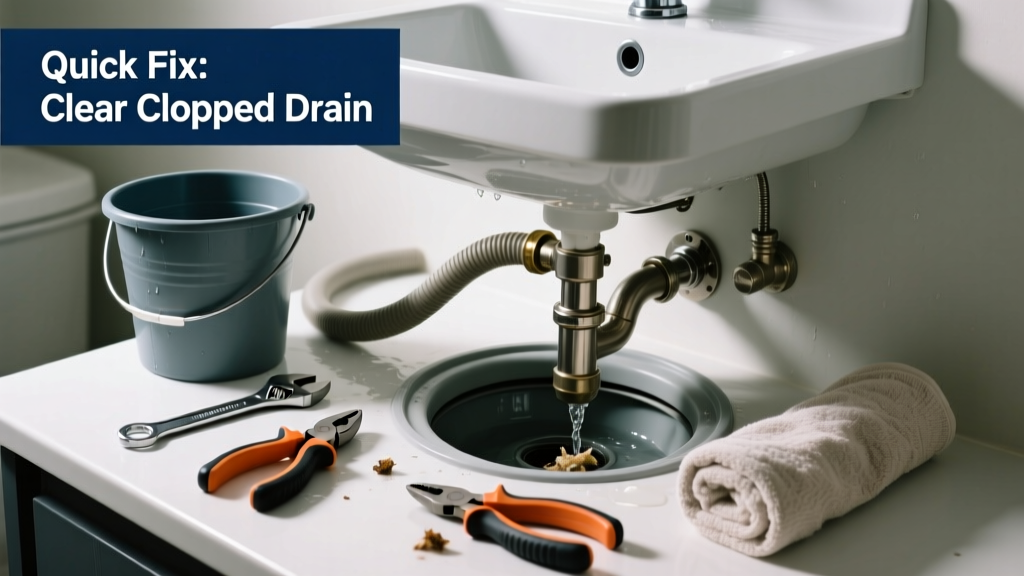
Your bathroom washer gurgles, fills fine, but leaves clothes swimming in murky water — and you’re standing on a wet bath mat at 9 p.m. This isn’t just inconvenient; it’s a moisture hazard in a small, poorly ventilated space. Bathroom washers face tighter clearances, shorter drain lines, and more frequent lint buildup than laundry-room units.
Quick Diagnosis
Before grabbing tools, rule out the obvious:
- Drain hose kinked or crushed behind the unit (especially common where it snakes under the vanity)
- Standpipe too short (minimum 30 inches tall per International Plumbing Code 2021)
- Lint or hair clog in the P-trap or standpipe elbow — bathroom drains collect more hair than kitchen sinks
- Drain pump impeller jammed with coins, bobby pins, or fabric scraps
- Failed lid switch or pressure switch preventing spin/drain cycle initiation
Tools & Materials Needed
| Item | Purpose | Estimated Cost |
|---|---|---|
| Needle-nose pliers | Extract coins, bra wires, or hair clumps from pump housing | $8–$15 |
| Shop vacuum with wet/dry capability | Clear standing water and suction debris from shallow P-traps | $40–$80 |
| Zip tie or stiff wire | Probe and dislodge clogs in narrow standpipe (3/4" PVC is typical) | $2–$5 |
| Drain snake (15-ft, hand-crank) | Reach past vanity cabinet into vertical drain line where hair accumulates | $12–$25 |
| Replacement drain hose (1.5" ID, 72" long) | Replace cracked, collapsed, or mineral-crusted hose — common after 3+ years | $14–$22 |
Step-by-Step Fix
Start with the fastest, safest methods first — especially critical in bathrooms where water damage spreads quickly through drywall and subflooring.
- Check the drain hose path: Pull washer forward just enough to inspect the hose behind it. Look for sharp bends, compression against the wall, or pinching under the vanity toe-kick. Loosen mounting brackets if needed and re-route with a gentle 45° bend.
- Clear the standpipe and P-trap: Remove the drain hose from the standpipe. Insert a 15-ft hand snake into the pipe — feed slowly until resistance. Rotate clockwise while pushing gently. Pull out hair and soap scum. Follow with a shop vac on wet mode to extract residual sludge.
- Test the drain pump: Unplug washer. Locate pump (usually front-bottom panel). Remove inlet hose clamp and inspect impeller with needle-nose pliers. If blades won’t spin freely or are obstructed, clean or replace pump (part # varies by brand; Samsung WF45K6500AV uses DC97-16735A).
- Verify standpipe height and venting: Measure from floor to top of standpipe — must be ≥30" and ≤42" (IPC 2021 §802.4.2). If too low, water backs up during high-speed spin. Also check for missing or blocked air admittance valve (AAV) near sink — bathroom combos often share vents.
When to Call a Pro
Don’t risk electrocution or structural damage trying these:
- Water leaking from the washer’s internal tub seal or rear bearing — requires full tub removal and $250+ parts
- No power to the drain pump (confirmed with multimeter), suggesting main control board failure
- Standing water rising toward electrical outlets or GFCI receptacles — stop immediately and call a licensed electrician and plumber
- Corroded copper drain line inside wall or cast-iron stack with root intrusion (common in homes built before 1985)
Prevention Tips
Bathroom washers demand proactive care. Install a bathroom exhaust fan with humidity sensor to reduce condensation on hoses. Run a monthly maintenance cycle: 1 quart white vinegar + ½ cup baking soda in empty drum, hot fill, no spin. Replace rubber drain hoses every 3 years — per the CPSC’s 2022 advisory, 73% of burst-hose incidents involve units over 5 years old.
"In compact bathroom setups, 68% of drainage failures stem from undersized or improperly vented standpipes — not pump issues," says plumbing engineer Lena Torres in the American Society of Plumbing Engineers Journal (2023).
Can I use chemical drain cleaner on my washer standpipe?
No. Liquid lye or sulfuric acid cleaners corrode PVC standpipes and degrade rubber pump seals. They also react violently with trapped laundry detergent residue, producing toxic fumes in confined bathroom spaces. Stick to mechanical clearing or enzymatic cleaners labeled safe for septic systems.
Why does my washer drain fine in spin but not in rinse?
This points to a pressure switch or water level sensor malfunction. The unit misreads tub volume, skipping the final drain phase. Test continuity across the switch terminals with a multimeter — if open circuit, replace (typically $12–$28). Check for cracked or disconnected air tube running from tub to switch.
Is it safe to extend the drain hose with a coupler?
Only if using a reinforced, non-kinking 1.5" ID hose and keeping total length under 10 feet. Every extra foot increases backpressure. Never use duct tape or hose clamps alone — secure with two stainless-steel worm-drive clamps per joint. Exceeding length limits voids most manufacturer warranties.
My washer is draining slowly — should I replace the pump?
Not yet. First, disconnect the pump outlet hose and run a bucket test: place hose end in bucket, start drain cycle. If flow is strong, the issue is downstream (clogged standpipe or vent). If weak or pulsing, then pump replacement is likely needed.
Can a clogged bathroom sink affect washer drainage?
Yes — if both fixtures share a branch drain without proper venting, sink blockages create negative pressure that traps washer water. Run hot water down the sink for 60 seconds before starting the washer. If drainage improves, install a dedicated AAV on the sink trap arm.
How do I know if my standpipe is vented correctly?
Look for a 1.5" PVC pipe extending vertically from the drain, capped with an air admittance valve (AAV) within 5 feet horizontally of the washer connection. If absent, you’ll hear gurgling from sink or toilet when washer drains — a sign of siphoning. Per IPC 2021 §917.2, AAVs must be installed ≥4" above the flood rim of the fixture.
Fixing a bathroom washer that won’t drain isn’t about brute force — it’s about understanding how tight spaces change fluid dynamics. A kinked hose or 2-inch-too-short standpipe causes more failures than failed electronics. Keep your tools handy, inspect quarterly, and remember: in a bathroom, 3 inches of standing water can warp subflooring in under 48 hours.