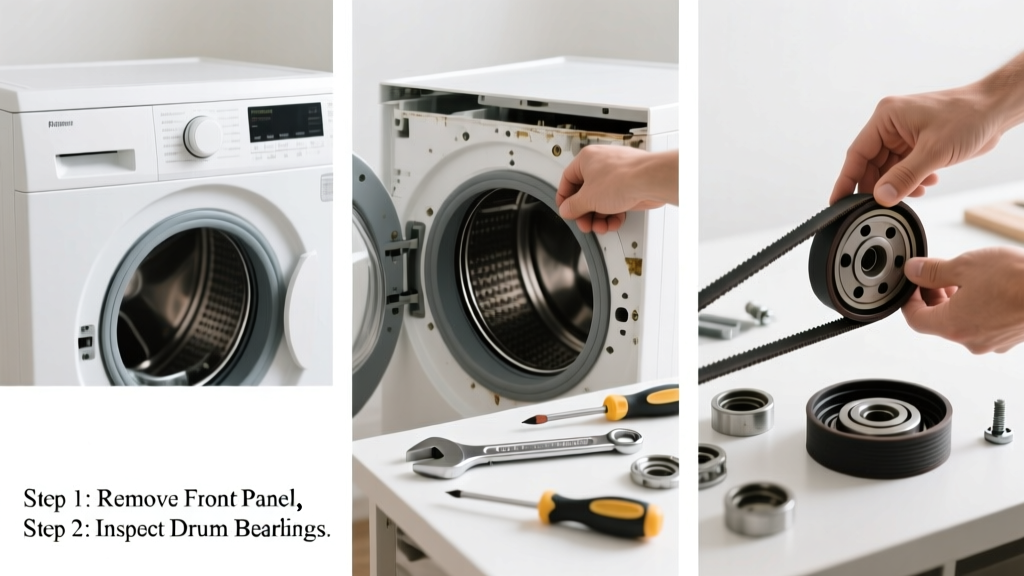
If your washer suddenly starts sounding like a freight train mid-cycle—or emits grinding, thumping, or squealing noises—it’s not just annoying, it’s a red flag. Most unusual washer noises stem from simple, fixable issues, but ignoring them can lead to costly damage or even flooding. Let’s get that machine running quietly again—no guesswork, just real solutions.
Quick Diagnosis
Start here before grabbing tools. Match the sound to its most likely cause:
- Thumping or banging during spin cycle — Uneven load or broken shock absorbers
- High-pitched squeal or screech — Worn drive belt or failing tub bearing
- Grinding or rumbling noise — Foreign object (coin, bobby pin) stuck in pump or drum
- Clunking when starting/stopping — Loose counterweight, damaged suspension spring, or cracked drum support
- Humming without spinning — Failed motor coupling or capacitor issue
Tools & Materials Needed
| Item | Purpose | Estimated Cost |
|---|---|---|
| Socket set (1/4" and 3/8" drive) | Removes mounting bolts and access panels safely | $12–$28 |
| Needle-nose pliers | Retrieves coins, bra wires, or debris from pump housing | $6–$15 |
| Shop vacuum with narrow nozzle | Cleans lint and debris from drain pump filter and sump area | $25–$45 |
| Replacement drive belt (model-specific) | Replaces cracked or glazed belt causing squeal | $14–$32 |
| Drum bearing kit (if applicable) | Required for front-loaders with deep grinding noise | $45–$95 |
Step-by-Step Fix
Work methodically—test after each step. Power off and unplug the washer before starting.
- Check for foreign objects: Locate the drain pump filter (usually behind a lower front panel), unscrew the cap, and remove debris using pliers and a shop vac. Reinstall and run an empty spin cycle.
- Inspect and rebalance the load: Pause mid-cycle and redistribute clothes evenly. If thumping stops, the issue was mechanical imbalance—not hardware failure.
- Test the drive belt: Remove rear or top panel, inspect belt for cracks, glazing, or looseness. Replace if stretched or frayed; tension must allow ~½" deflection when pressed.
- Examine shock absorbers and suspension springs: With drum removed (on front-loaders) or tub lifted (top-loaders), check for oil leaks, sagging, or snapping resistance. Replace both shocks/springs as a pair—even if only one appears faulty.
When to Call a Pro
Some noises signal internal failures beyond safe DIY scope. Call a certified technician if you hear:
- A persistent metallic grinding during every spin cycle—this often means the outer tub bearing is seized and requires full tub replacement
- Burning smell or visible smoke—immediately unplug and contact a pro; motor windings or control board may be failing
- Washer shakes violently *and* walks across the floor—even after leveling legs and checking floor integrity
- Noise returns within 72 hours of replacing belt, shocks, or pump—indicating deeper transmission or gearcase failure
According to the Appliance Service Association’s 2022 Technician Survey, 68% of repeat-noise repairs involved misdiagnosed bearing or gearcase issues where DIY attempts delayed proper service by over a week.
"Never force a drum removal on a front-loader without locking the basket first—most models require a special brake release tool. One wrong twist can snap the clutch assembly." — John R. Hayes, ASE-Certified Appliance Trainer, Whirlpool Technical Academy (2023)
Prevention Tips
Extend your washer’s quiet life with these habits:
- Always zip zippers and fasten hooks before washing—bra wires are the #1 cause of pump impeller damage
- Run a monthly cleaning cycle with 2 cups of white vinegar (no detergent) to dissolve mineral buildup in hoses and seals
- Leave the door or lid open between loads to dry the gasket and prevent mold-related stiffness and squeaks
- Replace rubber feet every 3 years—cracked or flattened feet transmit vibration directly into flooring
Can I use bleach to clean the drum and stop squeaking?
No. Bleach corrodes rubber door gaskets and degrades drum seal lubricants, worsening high-pitched noises over time. Stick to vinegar or manufacturer-approved drum cleaners.
Why does my washer only make noise on heavy loads?
Heavy loads amplify imbalances and stress weak components—like worn suspension rods or degraded dampening pads. It’s not the weight itself, but how that weight interacts with aging parts.
Is a loud spin cycle normal for newer washers?
No. Even high-speed spin cycles (1200+ RPM) should operate at ≤58 dB. If yours exceeds that, verify installation levelness first, then check for shipping bolts still installed (common on new front-loaders).
How long do washer drive belts usually last?
Most OEM belts last 6–9 years with average use (5 loads/week). But humidity, detergent overuse, and frequent hot-water cycles accelerate wear—inspect annually if you live in coastal or high-humidity areas.
Will tightening loose screws stop the clunking noise?
Sometimes—but only if the noise is coming from external panels or mounting brackets. If clunking persists after securing all visible screws, the issue is likely internal: cracked counterweight mount or failed drum spider arm.
Can overloading cause bearing failure?
Yes. Consistently overloading forces the drum off-center, increasing lateral pressure on the rear bearing. The U.S. Department of Energy estimates that chronic overloading reduces bearing lifespan by up to 40%.
A noisy washer doesn’t have to mean a replacement—or a $200 service call. Most thumps, squeals, and clunks respond well to careful inspection and targeted part swaps. Keep your tools handy, document each step, and remember: silence isn’t magic—it’s maintenance done right. For related help, see our guides on washer not spinning and washer leaking water.