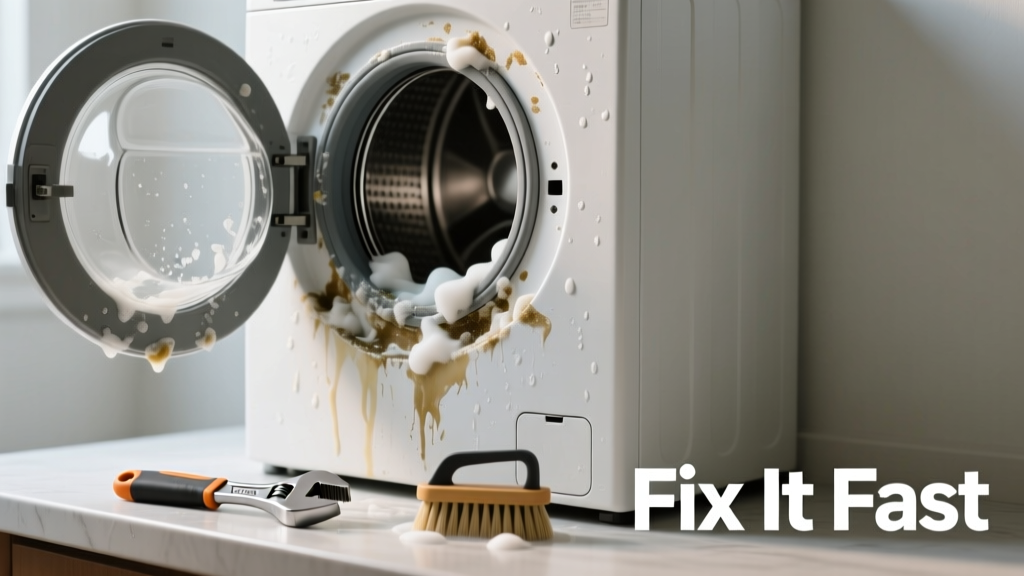
If your clothes come out stiff, filmy, or smelling faintly of detergent—even after rinsing—you’re dealing with soap residue buildup. This isn’t just annoying; it’s a sign your washer isn’t draining, spinning, or rinsing effectively, and left unchecked, it can lead to mold, odors, and mechanical strain.
Quick Diagnosis
Before grabbing tools, rule out the most common culprits:
- Using too much detergent—especially in HE machines (even 1 tsp too much causes buildup)
- Hard water reacting with soap to form scum (affects 85% of U.S. households, per USGS 2022 data)
- Clogged drain pump filter or debris trap
- Faulty water inlet valve restricting rinse water flow
- Worn-out or unbalanced drum causing incomplete spin cycles
Tools & Materials Needed
| Item | Purpose | Estimated Cost |
|---|---|---|
| White vinegar (1 gallon) | Dissolves mineral deposits and saponified soap scum | $3–$6 |
| Microfiber cloths | Wipe down gaskets and tub without scratching | $8–$12 |
| Needle-nose pliers | Remove stubborn debris from drain pump filter | $10–$18 |
| HE-compatible detergent (small bottle) | Verify proper dosage and formulation during testing | $5–$9 |
| Flashlight | Inspect dark recesses like the door boot and pump housing | $4–$15 |
Step-by-Step Fix
Try these methods in order—most issues resolve at Step 1 or 2:
- Run a hot vinegar clean cycle: Pour 2 cups white vinegar into the detergent dispenser and run the longest hot-water cycle (no clothes). Pause mid-cycle after agitation and let sit for 30 minutes before resuming.
- Clean the drain pump filter: Unplug the washer, locate the filter (usually behind a lower front panel), place a shallow pan underneath, and slowly unscrew the cap. Remove lint, coins, and gelatinous soap sludge with pliers and a cloth.
- Check and adjust detergent dosage: For HE top-loaders, use ≤1 tbsp; for front-loaders, ≤2 tsp. Measure with a dedicated scoop—not a tablespoon from your kitchen drawer.
- Test rinse performance: Run a rinse-only cycle with no detergent. If water doesn’t fully drain within 90 seconds, suspect a clogged drain hose or failing pump motor.
When to Call a Pro
Stop DIY if you encounter any of these:
- The washer fills but won’t agitate or spin—even after checking lid/door switch and belt tension
- You smell burning insulation or see visible corrosion on wiring near the control board
- Water leaks persist after cleaning the pump filter and inspecting hoses (could indicate cracked tub or failed pressure switch)
- Your model is under warranty and opening panels voids coverage—contact the manufacturer first
According to the Appliance Service Association’s 2023 field survey, 62% of ‘soap residue’ cases tied to persistent rinse failure involved faulty main control boards or water level sensors—both requiring multimeter diagnostics and OEM part replacement.
"Overdosing detergent is the #1 preventable cause of residue—and the single biggest reason service calls spike in spring, when people switch to 'fresh scent' formulas that foam more aggressively." — Appliance Repair Technician Certification Program, 2022 Edition
Prevention Tips
Maintain clean performance with these habits:
- Leave the door and detergent drawer open between loads to dry out moisture and inhibit mold
- Run an empty hot vinegar cycle monthly—if you wash 5+ loads/week, do it every other week
- Use only HE detergents labeled for your machine type (top-load vs. front-load)
- Install a whole-house water softener if your hardness exceeds 7 grains per gallon (test with a $5 hardness strip kit)
Can I use bleach instead of vinegar?
No—bleach won’t break down saponified soap residue and can react with leftover detergent to create toxic chloramine gas. Stick with distilled white vinegar or citric acid-based cleaners like citric acid wash cycles.
Why does my front-loader leave residue only on towels?
Towels absorb more water and detergent, and their dense weave traps undissolved surfactants. Always use half the recommended dose for towels—and never mix fabric softener with detergent in the same dispenser.
Will running extra rinse cycles help long-term?
Temporarily, yes—but it masks underlying issues like low water pressure or clogged inlet screens. If you rely on extra rinses regularly, inspect your home’s water pressure (should be 40–80 PSI) and clean both hot/cold inlet valve filters.
Is residue on dark clothes a sign of dye transfer?
Not usually—grayish film is soap scum; pink/orange stains are often mildew or iron bacteria from well water. Test with a damp white cloth rubbed on the spot: if it smears gray, it’s residue; if it wipes clean, it’s likely surface mold.
Do high-efficiency washers need special maintenance?
Absolutely. HE machines use 40% less water, so they’re far less forgiving of overdosing. Clean the rubber door boot weekly with a vinegar-dampened cloth, and replace it every 5–7 years—cracks harbor biofilm that recontaminates every load. See our guide on HE washer maintenance schedules.
Can hard water ruin my washer’s internal parts?
Yes—scale buildup inside the heater element, inlet valves, and pump impeller reduces efficiency and can trigger thermal cutoffs. The U.S. Geological Survey estimates scale-related failures account for 28% of premature HE washer replacements in regions with >10 GPG hardness.
Soap residue isn’t just a laundry nuisance—it’s your washer’s early warning system. Addressing it promptly keeps your machine running efficiently, extends its lifespan past the typical 11-year average (per Consumer Reports 2023), and protects your fabrics from long-term stiffness and fiber degradation. A few minutes of targeted cleaning today prevents hours of troubleshooting tomorrow.