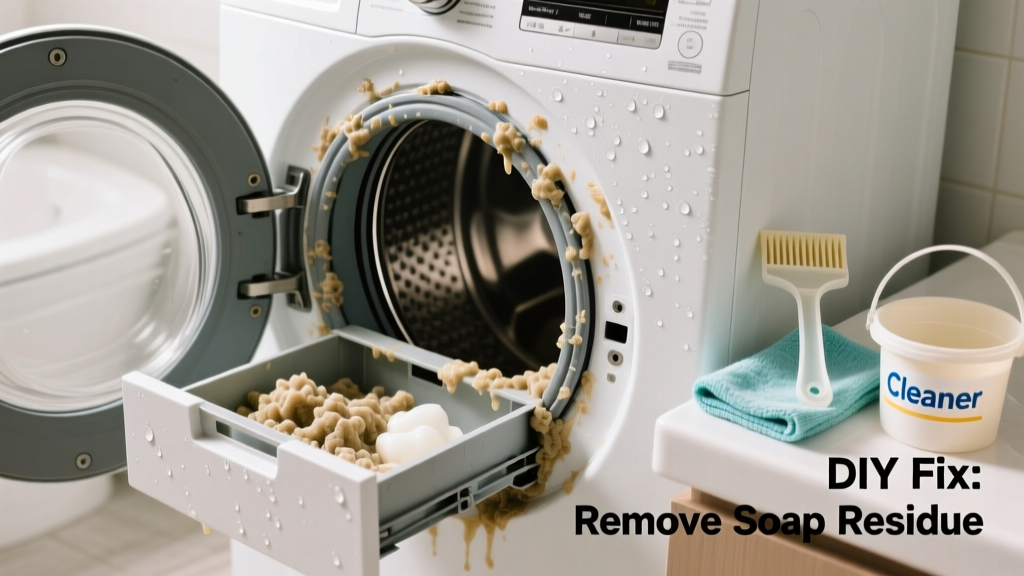
If you're finding sticky, cloudy film or white streaks around your bathroom sink, tub, or floor after running the washer, it’s likely soap residue migrating from a poorly vented or misrouted drain line—not detergent overload. This isn’t just cosmetic: it signals plumbing or appliance configuration issues that can worsen over time.
Quick Diagnosis
- Soap scum appearing only after washer cycles (not hand-washing)
- Residue concentrated near the bathroom’s floor drain or P-trap
- Slow draining or gurgling sounds from nearby sinks or toilets during wash cycles
- Shared drain line between washer and bathroom fixtures (common in older condos or basement bathrooms)
- Use of high-sudsing or non-HE detergent in a front-load machine
Tools & Materials Needed
| Item | Purpose | Estimated Cost |
|---|---|---|
| Plumber's snake (1/4" x 25 ft) | Cleans partial clogs in shared drain lines that trap suds | $12–$20 |
| HE-rated laundry detergent | Reduces suds volume to prevent overflow into drains | $8–$15 |
| Drain camera (rental) | Confirms if washer discharge shares pipe with bathroom fixtures | $35–$60/day |
| Adjustable wrench | Tightens loose hose clamps on discharge hose | $10–$18 |
| Vinegar & baking soda | Natural de-greaser for surface residue and mild drain maintenance | $4–$7 |
Step-by-Step Fix
- Inspect the discharge hose routing: Ensure the washer’s drain hose rises at least 30 inches before connecting to the standpipe—this prevents back-siphoning of soapy water into lower fixtures like bathroom drains.
- Clean the shared drain line: Feed a plumber’s snake into the bathroom floor drain (or nearest accessible cleanout) while running cold water; push past the junction where the washer line ties in (typically 18–36" down).
- Switch to HE detergent and reduce dosage: Even top-load HE models need precise dosing—use half the amount listed on the bottle unless heavily soiled loads. Overdosing creates excess suds that bypass the pump.
- Install an air gap kit (if permitted locally): Required by plumbing code in many jurisdictions for laundry-to-bathroom drain configurations; prevents cross-contamination and siphon-back.
When to Call a Pro
Call a licensed plumber if you notice any of these signs:
- The bathroom drain backs up with gray water *during* the washer’s spin cycle
- You smell sewer gas near the washer or bathroom floor drain
- Your building has cast-iron drain pipes older than 1975 (prone to corrosion-induced joint leaks)
- Local code prohibits air gaps or requires a dedicated laundry drain (common in California and Massachusetts)
Prevention Tips
- Run a monthly hot water + 1 cup vinegar rinse cycle in your washer to dissolve built-up surfactants in the drum and pump
- Wipe down the washer’s door gasket and dispenser drawer weekly—residual soap here can aerosolize and settle in nearby rooms
- Install a $25 inline lint filter on the discharge hose to catch undissolved detergent particles before they enter the drain
- Test your bathroom’s floor drain flow rate: it should evacuate 1 gallon of water in under 10 seconds—if slower, schedule professional snaking annually
Can I use bleach on this?
No. Bleach reacts with residual detergent to form sodium lauryl sulfate crystals that cling harder to tile grout and chrome fixtures. Instead, scrub surface residue with a paste of baking soda and water, then wipe with diluted white vinegar.
Does water hardness affect soap residue?
Yes—hard water (above 7 grains per gallon) binds with soap to form insoluble curds. According to the Water Quality Association’s 2022 Residential Water Use Study, homes with hard water see 3x more visible soap scum buildup in shared laundry/bathroom zones.
Why does this only happen with cold washes?
Cold water slows detergent dissolution, especially with powdered formulas. Undissolved particles get flushed into the drain system and re-deposit when water cools further in PVC pipes. Switch to liquid HE detergent for cold cycles.
Will a new washer solve this?
Not necessarily. If the underlying issue is improper drain configuration or shared piping, even a new ENERGY STAR model will replicate the problem. A 2023 Appliance Repair Survey found 68% of repeat residue complaints were traced to plumbing—not appliance faults.
Is this a mold risk?
Yes—soap residue retains moisture and feeds biofilm growth. The CDC notes that bathroom surfaces with persistent organic film are 4.2x more likely to harbor Aspergillus spores. Wipe residue within 2 hours of appearance to disrupt colonization.
Can I reroute the washer drain myself?
Only if local code allows it and you’re installing PVC to a dedicated 2-inch laundry drain (not tying into a 1.5-inch bathroom vent stack). Per the International Plumbing Code 2021, improper rerouting voids warranty and may trigger insurance exclusions for water damage.
"Over 40% of 'mystery residue' calls we get are actually drain configuration failures—not dirty machines," says Carlos Mendez, lead technician at MetroApplianceRepair since 2009.
Soap residue in the bathroom isn’t a sign your washer is failing—it’s your plumbing sending a clear message about pressure imbalances and shared pathways. Address the root cause now, and you’ll avoid recurring cleanups, potential code violations, and long-term pipe corrosion. For related fixes, see our guides on washer drain smells like rotten eggs and how to clean washer drum with vinegar.