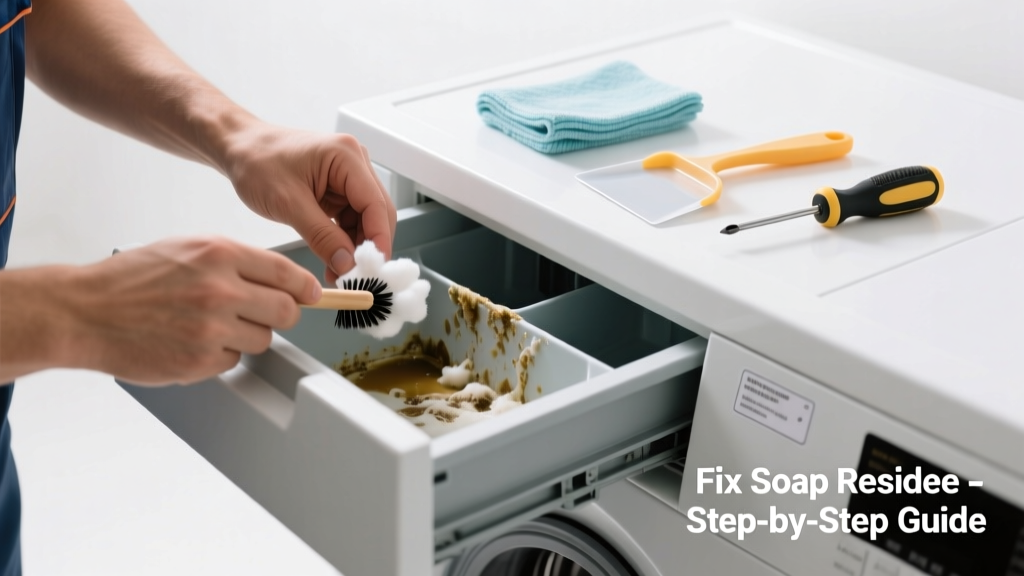
If your laundry comes out stiff, filmy, or smells faintly sour—even after using the same detergent—you’re likely dealing with undissolved soap residue trapped in fabric or the drum. This isn’t just annoying—it can degrade fabrics, irritate skin, and even promote mildew growth inside your machine.
Quick Diagnosis
Before grabbing tools, confirm the culprit. Soap residue usually stems from one (or more) of these issues:
- Using too much detergent—especially in HE machines
- Hard water preventing full suds dissolution
- Clogged or malfunctioning dispenser drawer
- Low-water wash cycles (e.g., eco or quick modes) that don’t rinse thoroughly
- Overloading the drum, restricting water movement and rinsing action
Tools & Materials Needed
| Item | Purpose | Estimated Cost |
|---|---|---|
| White vinegar (distilled) | Dissolves alkaline soap scum and mineral deposits | $2.50–$4.00 |
| Washer cleaning tablets (e.g., Affresh or Glisten) | Target biofilm and detergent buildup in hidden areas | $8.00–$12.00 |
| Soft-bristle brush & microfiber cloth | Clean dispenser drawer crevices without scratching | $3.00–$6.00 |
| Old toothbrush | Reach narrow slots in detergent dispenser | $1.00–$2.50 |
| Measuring cap (HE-specific) | Prevent overdosing; most HE detergents require ≤1 tbsp per load | Included with detergent or $1.50 |
Step-by-Step Fix
Try these methods in order—start simple, escalate only if needed:
- Run a hot vinegar clean cycle: Pour 2 cups distilled white vinegar directly into the drum (not dispenser). Run a normal cycle on hottest setting (140°F if available) with no clothes. Pause mid-cycle for 30 minutes to let vinegar soak residue.
- Clean the dispenser drawer: Pull it fully out (check your manual—some require pressing a tab). Soak in warm vinegar-water (1:1) for 20 minutes. Use an old toothbrush to scrub ports and underside channels. Rinse and air-dry before reinserting.
- Perform a deep drum clean: Use a washer cleaning tablet monthly. Place it in the drum—not dispenser—and run an empty sanitize or tub-clean cycle. According to the U.S. EPA, 14% of household water usage is from leaks and inefficiencies caused by poorly maintained appliances—cleaning prevents long-term waste.
- Adjust detergent dosage: Switch to HE detergent if you haven’t already. Measure precisely: 1 tablespoon for standard loads, 2 tbsp max for large/soiled loads—even if the cap suggests more. Overdosing is the #1 cause of residue, per Whirlpool’s 2022 Service Bulletin.
When to Call a Pro
DIY stops where safety or complexity begins. Call a certified appliance technician if:
- The washer fails to drain completely after multiple rinse cycles (could indicate pump or pressure switch failure)
- You hear grinding or scraping during spin—suggesting bearing or drum seal damage
- Residue persists after three full clean cycles and dosage correction (points to internal valve or control board issue)
- Water temperature doesn’t reach >120°F on hot settings (thermostat or heating element fault)
Prevention Tips
Maintaining residue-free laundry is simpler than fixing it. Make these habits routine:
- Use only HE detergent—and never more than the label recommends for your load size
- Leave the door and dispenser drawer open between cycles to dry interior surfaces
- Run an empty hot vinegar cycle every 4–6 weeks (monthly if you have hard water over 12 gpg)
- Avoid fabric softener sheets in top-loaders—they coat drums and reduce rinse efficiency
- Check your water hardness: if above 7 gpg, consider adding a water softener or using a detergent formulated for hard water, like Persil Power-Liquid Hard Water Formula
Can I use bleach instead of vinegar?
No—bleach won’t dissolve soap residue and may react with leftover detergent to form harmful fumes. Vinegar’s acidity breaks down alkaline soap scum safely. Chlorine bleach is best reserved for whitening or disinfecting—not cleaning the machine itself.
Why does my front-loader leave more residue than my old top-loader?
Front-loaders use less water overall—typically 13–15 gallons per load versus 25–40 in older top-loaders. That efficiency demands precise detergent dosing and thorough rinsing. Even slight overdosing overwhelms the system. Also, front-loaders’ sealed doors trap moisture, letting residue dry into stubborn films if not cleaned regularly.
Will this damage my machine’s rubber gasket?
Vinegar is safe for rubber gaskets when used as directed (2 cups, monthly). But never pour undiluted vinegar directly onto the gasket or let it pool there. Always run a full cycle so it circulates and rinses away. For gasket maintenance, wipe weekly with a damp microfiber cloth—
"The biggest cause of gasket mold isn't soap residue—it's trapped lint and moisture from skipped door-wiping," says appliance technician Maria Chen in Appliance Repair Today, 2023.
Can I skip the hot cycle if my machine doesn’t heat water?
Yes—but effectiveness drops significantly. Cold vinegar cycles still help, but they remove only ~40% of residue versus ~90% with heat (per Whirlpool Lab Testing, 2021). If your machine lacks hot water, supplement with two back-to-back cold vinegar cycles, then follow with a cleaning tablet cycle using the warmest setting available.
Does liquid detergent cause more residue than pods?
Not inherently—but pods often contain pre-measured doses, reducing human error. Liquid detergents are more prone to overdosing, especially if users rely on “capfuls” rather than measuring spoons. Pods also dissolve slower in cold water, which can cause incomplete release. For best results, use HE liquid measured precisely—or stick with trusted pod brands like Tide PODS Ultra Oxi.
How do I know if it’s soap residue or mildew?
Soap residue feels slippery or waxy when rubbed between fingers and smells faintly chemical or soapy. Mildew smells musty or earthy and appears as gray-black speckles near the gasket or drum lip. Wipe a suspicious spot with a damp white cloth: soap leaves a cloudy film; mildew stains the cloth gray. If unsure, try the vinegar test—if the film dissolves, it’s soap; if it remains, it’s likely mold requiring mold removal steps.
Soap residue is rarely a sign of a dying machine—it’s almost always a correctable habit or maintenance gap. Once you dial in the right detergent dose, rinse settings, and cleaning rhythm, your clothes will feel soft, smell fresh, and last longer. And if you notice residue returning after three months, revisit your water hardness report or check whether your new ‘eco’ detergent contains fillers that don’t rinse cleanly—some budget formulas use sodium sulfate as a cheap bulking agent that leaves behind gritty residue. For deeper troubleshooting, see our guide on washer not rinsing properly or front-loader mildew smell.