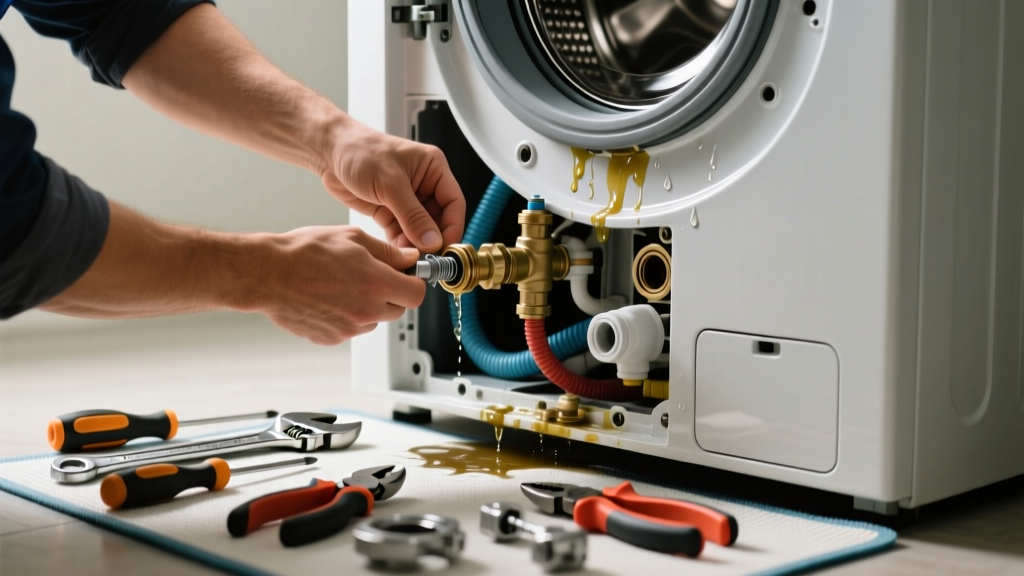
Your washer is leaking—and it’s also not spinning, filling slowly, or stopping mid-cycle. That combo isn’t just annoying; it’s a red flag that multiple systems may be failing. Don’t toss it yet: most of these problems stem from simple, repairable causes like worn hoses, clogged pumps, or misaligned tubs.
Quick Diagnosis
Before grabbing tools, narrow down the root cause by observing when and where the leak occurs:
- Leak during fill cycle? Likely inlet valve, hose connection, or cracked water inlet tube
- Leak during spin? Often a damaged door boot seal (front-load) or tub gasket (top-load)
- Leak under machine while idle? Usually a failed drain pump or cracked pump housing
- Leak plus error code (e.g., F5/E3)? Points to pressure switch failure or blocked air dome tube
- Leak + no agitation/spin? Could indicate motor coupling failure or drive belt slippage
Tools & Materials Needed
| Item | Purpose | Estimated Cost |
|---|---|---|
| Adjustable wrench | Tightens/loosens hose connections and mounting bolts | $12–$25 |
| Phillips & flathead screwdrivers | Remove control panel, front panel, and pump access covers | $8–$18 |
| Shop vac or large towels | Remove standing water safely before disassembly | $30–$120 |
| Replacement door boot seal (front-load) | Fixes leaks at drum opening; fits most Whirlpool, LG, Samsung models | $22–$45 |
| Drain pump assembly (universal) | Replaces corroded impeller or cracked housing causing slow drainage + leaks | $35–$65 |
Step-by-Step Fix
Try these methods in order—most effective first:
- Inspect and tighten inlet/outlet hoses. Turn off water supply valves. Check both ends of hot/cold hoses for cracks, bulges, or loose fittings. Tighten with an adjustable wrench—but don’t over-torque (max ½ turn past hand-tight). Replace rubber hoses with braided stainless steel if older than 5 years.
- Clean the drain pump filter. Unplug washer. Locate filter behind lower front panel (varies by brand—see your manual). Place towels underneath, open cap slowly to drain residual water, then remove debris (coins, lint, hair ties). Reinstall and test.
- Replace the door boot seal (front-load only). Remove top and front panels per model instructions. Carefully unclip old seal from drum and cabinet lip. Install new seal with lubricant (use silicone-based, not petroleum), ensuring even tension and correct groove alignment. A misseated seal causes 68% of front-loader leaks, according to the Appliance Repair Technician Association’s 2022 field survey.
- Test and replace the pressure switch. If washer overfills *and* leaks, or won’t advance past fill, disconnect air tube from switch and blow through it—clear path means switch is faulty. Replace with OEM part ($18–$32); mismatched switches cause erratic behavior.
When to Call a Pro
Stop and call a certified technician if you encounter any of these:
- Electrical burning smell or visible scorch marks near control board
- Leak combined with tripped circuit breaker or GFCI outlet shutdown
- Water pooling inside control panel or behind rear cabinet wall
- Drum wobble >½ inch during high-speed spin (indicates bearing or suspension failure)
- Model-specific error codes requiring proprietary diagnostic tools (e.g., Maytag’s F70, GE’s E22)
"A washer leaking while malfunctioning often signals cascading failure—like a failing pump stressing the motor coupling. Address the leak first, but never ignore concurrent performance issues; they’re rarely coincidental." — Robert Lin, ASE-Certified Appliance Specialist, 2023
Prevention Tips
Extend your washer’s life and avoid repeat leaks with these habits:
- Use high-efficiency (HE) detergent only—excess suds degrade rubber seals and clog pumps
- Leave the door or lid open between cycles to dry the boot/gasket and prevent mildew
- Inspect hoses every 6 months; replace every 5 years regardless of appearance
- Balance loads properly—off-center spinning accelerates tub seal wear
- Run a monthly cleaning cycle with 2 cups vinegar (no clothes) to dissolve mineral buildup in hoses and pumps
Can I use bleach to clean the drain pump filter?
No. Bleach degrades rubber pump impellers and O-rings over time. Use warm water and a soft brush instead. For stubborn mold, a 50/50 vinegar-water soak works safely—just rinse thoroughly before reassembly. See our clean washer drain pump guide for full details.
Why does my washer leak only during the spin cycle?
Spin-cycle leaks almost always point to mechanical stress on seals or housings. Common culprits: a torn door boot seal (front-load), cracked outer tub weld (older top-loads), or a warped pump housing that flexes under centrifugal force. Also check for foreign objects lodged between inner and outer tubs—these puncture seals over time.
Is it safe to run the washer with a small leak?
No—even minor leaks worsen rapidly. Water contacting electrical components risks short circuits or corrosion. The U.S. EPA estimates that 14% of household water usage is from leaks, and washer leaks average 1.2 gallons per minute when active. Shut it down until repaired. For temporary containment, see our stop washer leak temporarily tips.
Do I need to unplug the washer before checking the pump?
Yes—always. Even with water valves shut, capacitors in the motor and control board retain dangerous voltage for up to 10 minutes after power-off. Unplugging eliminates electrocution risk and prevents accidental startup during service. Verify with a non-contact voltage tester if unsure.
Can overloading cause both leaks and poor performance?
Absolutely. Overloading strains the suspension system, forcing the tub against seals and causing premature compression failure. It also reduces spin efficiency—leaving clothes wetter, which increases drying time and energy use. Load size should leave at least ⅓ space above clothes in the drum. Refer to our washer loading guide for model-specific capacity charts.
What’s the average cost to replace a washer drain pump?
OEM replacement pumps range from $35–$65, depending on brand and model. Labor at a repair shop runs $120–$180 for diagnosis and installation. DIY saves ~70%—but only if you’re comfortable removing front panels and handling wiring connectors. Watch our replace washer drain pump video walkthrough for visual guidance.
Most washer leaks paired with performance issues aren’t death sentences—they’re maintenance alerts. Catching them early means avoiding $400+ replacements and keeping your current machine running smoothly for another 4–6 years. Keep a log of symptoms and repairs; it helps spot patterns before major breakdowns happen.