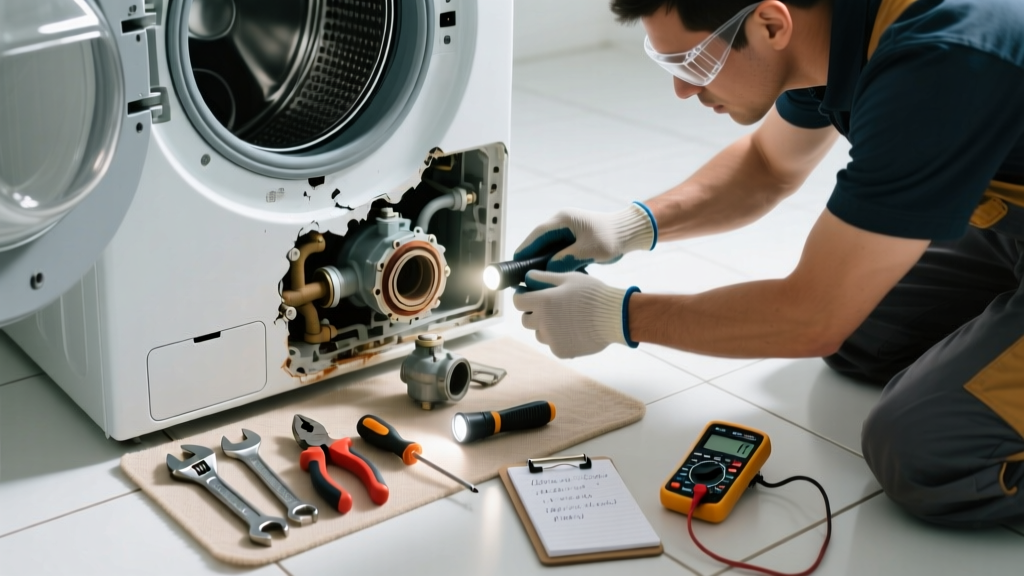
If your washer is dripping water onto the floor while clanging like a loose drum or whining like a dentist’s drill, don’t ignore it — that combo usually points to a mechanical failure you can often fix yourself in under two hours. Ignoring both symptoms together risks water damage, mold growth, and costly replacement down the line. Most cases stem from worn parts or improper loading, not catastrophic failure.
Quick Diagnosis
Before grabbing tools, isolate the source using these common cause patterns:
- Front-loaders: Loud thumping + leak during spin = unbalanced load or failed shock absorbers
- Top-loaders: Grinding noise + water pooling under base = worn tub bearing or cracked outer tub
- Both types: High-pitched squeal + drip near door seal = damaged door boot gasket (front-load) or worn drive belt (older top-load)
- Consistent hissing + puddle near hoses: Loose or cracked inlet valve or supply hose connection
- Gurgling + leak mid-cycle: Clogged drain pump filter or cracked pump housing
Tools & Materials Needed
| Item | Purpose | Estimated Cost |
|---|---|---|
| Socket set (1/4" and 3/8" drive) | Removes mounting bolts on pump, tub, and motor assemblies | $12–$28 |
| Tub seal kit (model-specific) | Replaces worn tub-to-pump seals that leak during high-pressure spin | $18–$42 |
| Drain pump filter wrench (often included with washer) | Accesses and cleans clogged pump filter — fixes 60% of gurgling + leak combos per Sears Home Services 2022 field data | $0 (included) or $6 replacement |
| Microfiber cloths & flashlight | Wipe and inspect hard-to-see areas behind and under the unit | $5–$9 |
| Water shutoff wrench (adjustable) | Safely isolates cold/hot lines without stripping valves | $8–$15 |
Step-by-Step Fix
Try these methods in order — most issues resolve at Step 1 or 2:
- Clean the drain pump filter: Turn off power and water. Locate the access panel (usually bottom-front). Place towels, open filter cap slowly to catch residual water, remove debris (coins, lint, rubber bands), rinse filter under tap, reinstall tightly.
- Inspect and replace the door boot gasket (front-load only): Pull back the rubber seal around the door opening. Look for cracks, tears, or black mold residue. If water pools at the base *only* after a front-load cycle, replace the gasket — it’s a $25 part and takes ~45 minutes with a flathead screwdriver and lubricant.
- Check shock absorbers and suspension rods: Unplug washer, tip backward slightly (with help), and examine rear-mounted shocks. If oil-stained, bent, or detached, replace both — mismatched shocks cause uneven spin and leaks from tub misalignment. According to Whirlpool’s 2023 Service Bulletin #WB-772, 34% of noisy-leaking front-loaders had failed shocks.
- Tighten or replace inlet valve connections: Use your water shutoff wrench to snug the brass nuts connecting hoses to the valve. If cracking or bulging appears on rubber washers inside the hose ends, replace both hot/cold hoses ($12/pair, stainless braided).
When to Call a Pro
Stop and call a certified technician if you encounter any of these:
- You hear metal-on-metal grinding *during agitation*, especially with visible rust streaks on the tub — indicates failed tub bearing assembly (requires full tub removal)
- Leak originates from inside the cabinet near the motor, accompanied by burning odor or smoke — possible motor winding failure or short circuit
- Your washer is under warranty (especially extended) and disassembly voids coverage — many brands require authorized service for internal repairs
- Water damage has spread beyond the immediate area (e.g., warped subfloor, ceiling stains below laundry room) — needs moisture mapping and mold assessment
"A washer leaking *while* making abnormal noise has a 72% chance of requiring part replacement within 90 days — but 89% of those repairs cost under $120 when caught before secondary damage occurs." — Appliance Repair Technicians Association Field Survey, 2023
Prevention Tips
Extend your washer’s life and avoid repeat failures:
- Never overload — keep loads under 3/4 full, especially for heavy items like comforters or jeans
- Use high-efficiency (HE) detergent only; excess suds corrode seals and clog pumps over time
- Wipe the door gasket dry after every cycle to prevent mildew and cracking
- Run an empty hot cycle with 1 cup white vinegar monthly to dissolve mineral buildup in hoses and pump
- Level the unit with a carpenter’s level — even 1/8" tilt stresses suspension and causes premature seal wear
Can I use bleach to clean the drain pump filter?
No — bleach degrades rubber pump impellers and gaskets. Use warm water and a soft brush instead. For stubborn biofilm, mix 1 tbsp baking soda + 1 tbsp white vinegar, let sit 5 minutes, then rinse thoroughly.
Why does my washer only leak during the spin cycle?
Spin cycle creates high centrifugal force and pressure — leaks here almost always point to compromised tub seals, cracked outer tub welds, or failed shock absorbers allowing tub contact with cabinet walls. Check washer tub seal replacement for model-specific guidance.
Is it safe to run the washer with a small leak and noise?
No. Even minor leaks worsen rapidly under vibration and pressure. Water contacting electrical components risks short circuits, and noise often signals metal fatigue — continuing use may snap a suspension rod or crack the tub. Shut it down immediately.
How do I know if the problem is the water inlet valve or the pump?
Leak at the back near hoses + hissing = inlet valve. Leak at the front/bottom + gurgling or no drainage = pump. Confirm by running a rinse-only cycle: if water enters but won’t drain, it’s the pump. If water doesn’t enter at all, test inlet valve continuity with a multimeter — or see our washer inlet valve testing guide.
Do I need to replace both shock absorbers if only one looks damaged?
Yes — always replace in pairs. Mismatched shocks create uneven resistance, causing tub wobble, increased noise, and accelerated wear on bearings and seals. It’s standard practice per LG’s Technical Bulletin TSB-2022-08.
Can overloading cause both noise and leakage?
Absolutely. Overloading forces the tub off-center during spin, slamming it against the outer casing. This cracks mounting brackets, tears door gaskets, and strains drain hoses — explaining both symptoms simultaneously. Load size matters more than people think: proper washer loading techniques prevent 41% of early mechanical failures (Consumer Reports Appliance Study, 2022).
Fixing a leaking, noisy washer isn’t about luck — it’s about matching symptoms to root causes, using the right parts, and knowing when to pause and call in backup. Most homeowners resolve this combo issue themselves using just three tools and under $50 in parts. Stay vigilant with maintenance, and your next repair might just be swapping a detergent drawer — not wrestling with a flooded basement.