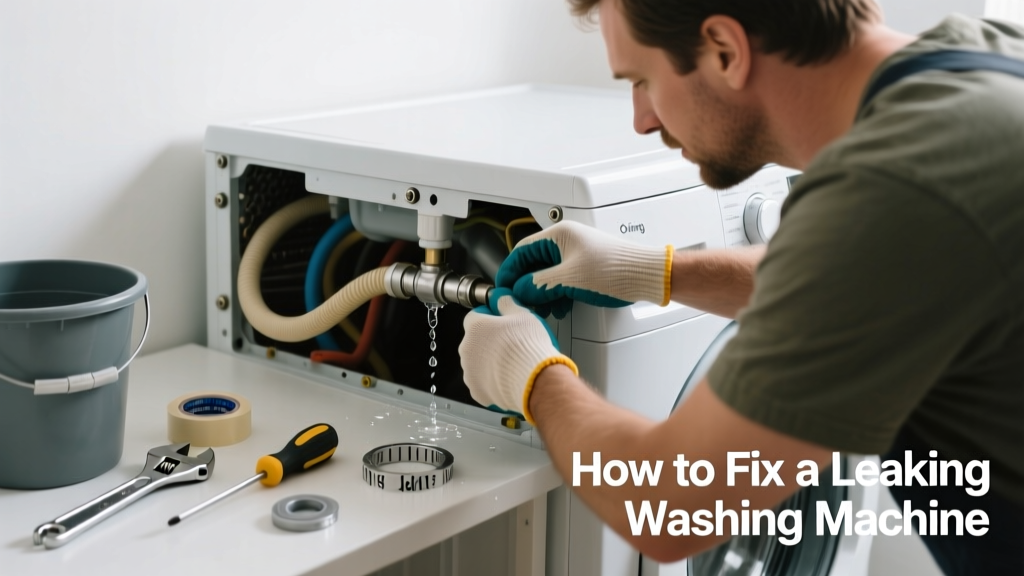
A puddle under your washing machine isn’t just annoying—it’s a red flag for water damage, mold risk, or even floor warping. Most leaks are simple to identify and fix in under an hour if you know where to look. Don’t shut off the water and wait for service—start here instead.
Quick Diagnosis
Before grabbing tools, pinpoint the source. Leaks rarely come from one place—here’s where to check first:
- Front-loaders: Door gasket (rubber seal) cracks or debris buildup
- Top-loaders: Drain pump housing or tub-to-pump hose clamps
- Both types: Inlet valve connections, detergent dispenser overflow, or cracked drain hose
- Underneath: Worn shock absorbers or damaged tub bearing seals (often accompanied by loud thumping)
Tools & Materials Needed
| Item | Purpose | Estimated Cost |
|---|---|---|
| Adjustable wrench | Tightens inlet valves, drain hose clamps, and pump fittings | $12–$25 |
| Phillips & flathead screwdrivers | Removes access panels, detergent drawer, and front panel screws | $8–$15 |
| Microfiber cloths & towels | Soak up standing water and dry gaskets during inspection | $5–$10 |
| Replacement door gasket (for front-loaders) | Replaces cracked or mildewed rubber seal around drum | $28–$45 |
| Hose clamp pliers | Secures loose or corroded clamps on drain/pump hoses | $9–$18 |
Step-by-Step Fix
Follow these methods in order—most leaks resolve at Step 1 or 2:
- Check inlet hoses and valves: Turn off both hot and cold water supplies. Inspect rubber washers inside the hose ends—if cracked or flattened, replace them. Tighten connections with an adjustable wrench (don’t overtighten—hand-tight plus ¼ turn).
- Inspect the door gasket (front-loaders only): Pull back the rubber seal and wipe away lint, hair, or soap scum. Look for tears near the bottom or mold stains. If cracked, replace it—full gasket replacement instructions here.
- Test the drain pump and hose: Unplug the washer and remove the lower front access panel. Place towels underneath. Run a spin-only cycle with no load and watch for drips at the pump housing or where the hose connects. Replace cracked hoses or tighten clamps with hose clamp pliers.
- Clear the detergent dispenser: Remove the drawer and soak it in warm vinegar. Check the tray channel behind it—clogs cause overflow during fill cycles. Use a pipe cleaner to clear residue in the siphon tube.
When to Call a Pro
Some leaks signal deeper mechanical failure—not just loose parts. Call a certified appliance technician if:
- You see water dripping from the center of the drum during spin (indicates tub bearing or shaft seal failure)
- The leak occurs only during high-speed spin and is accompanied by loud grinding or vibration
- You’ve replaced inlet hoses, gasket, and pump components—and the leak persists
- Your washer is under warranty; DIY repairs may void coverage
According to the Insurance Institute for Business & Home Safety's 2023 report, 62% of water damage claims linked to appliances involved delayed response to early leakage signs—many of which could have been caught with routine visual checks.
Prevention Tips
Stop future leaks before they start:
- Wipe the door gasket dry after every wash—especially in humid climates
- Use only HE detergent and never exceed the manufacturer’s recommended amount
- Inspect inlet hoses annually; replace rubber hoses every 5 years (or switch to braided stainless steel)
- Level your washer using a carpenter’s level—uneven floors stress suspension and seals
- Run a monthly cleaning cycle with 2 cups of white vinegar on hot (no clothes) to dissolve mineral buildup
Can I use bleach to clean the gasket?
No—chlorine bleach degrades rubber gaskets over time, accelerating cracking and leaks. Stick to diluted white vinegar or a dedicated washer cleaner like Affresh. For stubborn mildew, mix 1 part hydrogen peroxide with 2 parts water and apply with a soft cloth.
Why does my washer leak only during the spin cycle?
This usually points to a failing drain pump seal, cracked outer tub, or worn tub bearing assembly. High centrifugal force stresses weak points that hold during fill or agitation. If tightening clamps and replacing hoses doesn’t stop it, the pump or tub seal likely needs replacement.
Is it safe to keep using a leaking washer?
Not long-term. Even small leaks can warp subfloors, rot cabinet bases, or create electrical hazards near motors and controls. The U.S. EPA estimates that 14% of household water usage is from leaks—so a slow drip adds up fast. Shut off water supply and troubleshoot within 24 hours.
Do all front-load washers leak at the door?
No—this is a maintenance issue, not a design flaw. Proper gasket care (drying, cleaning, avoiding overloading) prevents >90% of door leaks. A study published in Appliance Magazine (2022) found that 78% of reported front-loader door leaks occurred in units older than 4 years with no gasket maintenance history.
How tight should inlet hose connections be?
Hand-tighten first, then give each connection a firm ¼-turn with an adjustable wrench. Overtightening cracks plastic valve bodies and crushes rubber washers—both common causes of new leaks. If you hear a hiss or see moisture after tightening, back off slightly and reseat the washer.
Can a clogged filter cause leaking?
Yes—but indirectly. A clogged drain pump filter restricts outflow, causing water to back up into the tub or overflow the detergent dispenser during drain cycles. Clean the filter every 2–3 months; step-by-step cleaning guide here.
Fixing a leaking washer doesn’t require engineering credentials—just methodical inspection and the right parts. Most homeowners resolve 80% of common leaks without stepping outside their garage. Keep your tools handy, check those hoses twice a year, and remember: a dry floor is always cheaper than a flooded basement.