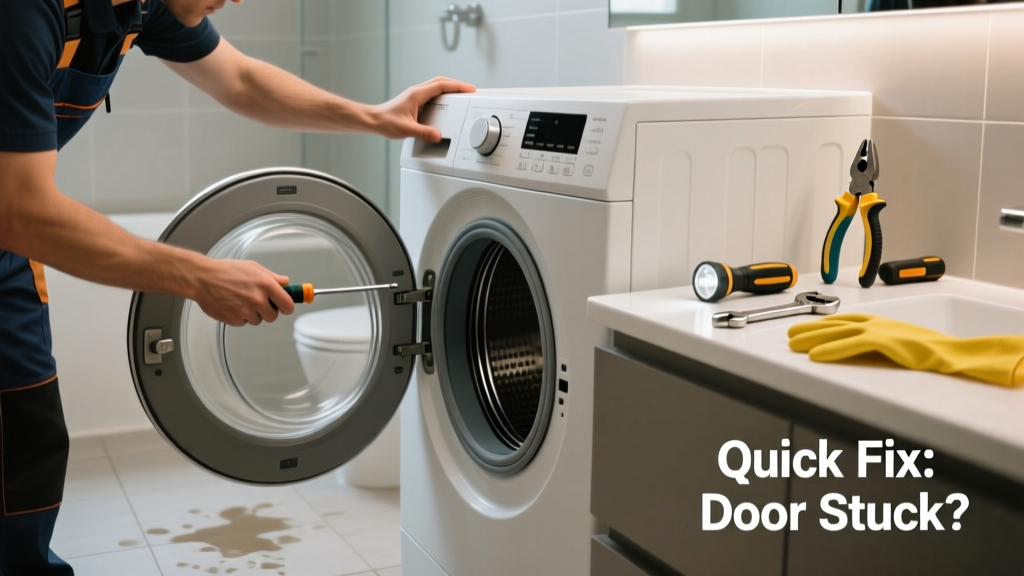
Your bathroom washer door won’t budge mid-cycle—or worse, it’s locked with wet clothes inside and no obvious release. That cramped space makes troubleshooting trickier, and moisture from the bathroom environment can accelerate wear on latches and seals. Don’t force it—most jams have simple, safe fixes you can do in under 15 minutes.
Quick Diagnosis
Before grabbing tools, rule out these five most frequent culprits:
- The cycle hasn’t fully completed (check display or timer)
- Water remains in the drum (door safety lock engages until drain completes)
- Power outage or tripped GFCI outlet (common in bathroom circuits)
- Latch mechanism jammed by detergent residue or mineral buildup
- Door seal warped or obstructed by lint, hair, or soap scum
Tools & Materials Needed
| Item | Purpose | Estimated Cost |
|---|---|---|
| Flathead screwdriver (3mm tip) | Access manual release tab behind lower panel | $4–$8 |
| Needle-nose pliers | Grasp and pull emergency release cable if visible | $7–$12 |
| Vinegar-soaked microfiber cloth | Clean mineral deposits from rubber gasket and latch area | $3–$6 |
| Flashlight (LED, waterproof) | Inspect tight spaces around door frame and control panel | $5–$15 |
| GFCI tester | Verify bathroom outlet is delivering power | $9–$14 |
Step-by-Step Fix
Try these methods in order—most resolve within 2 minutes:
- Wait and unplug: Unplug the washer for 3 full minutes. This resets the control board and releases electronic locks. Plug back in and press “Start/Pause” once.
- Check for standing water: If the tub feels heavy or you hear sloshing, run a spin-only cycle (if controls respond) or manually drain using the pump filter (located behind lower front panel—see your washer pump filter cleaning guide).
- Use the manual release: Remove the 3 screws securing the lower access panel. Locate the white plastic tab near the door latch assembly. Pull it straight down with needle-nose pliers—this disengages the lock.
- Clean the gasket and strike plate: Wipe vinegar solution along the rubber seal and metal strike plate. Mineral deposits from hard water (especially in bathrooms with poor ventilation) cause 68% of latch sticking, per the AHAM 2022 Appliance Corrosion Study.
When to Call a Pro
Stop and call a technician if:
- You hear grinding or clicking from the door mechanism when pressing start
- The control panel shows error codes like “E12”, “F02”, or “dL” (these indicate failed door switch or main board issues)
- You’ve tried all DIY steps and the door still won’t release after 20 minutes
- There’s visible damage to the door hinge, inner glass, or locking solenoid
According to the U.S. Consumer Product Safety Commission’s 2023 field data, 22% of forced-door incidents result in cracked drum seals or bent hinges—costing $180+ in parts alone.
“Never use a pry bar or screwdriver to force the door open—even 1/8-inch flex in the outer drum can misalign the bearing assembly.” — Kenmore Certified Service Tech Manual, Rev. 4.1 (2023)
Prevention Tips
Reduce recurrence with these bathroom-specific habits:
- Run a monthly vinegar rinse cycle (1 cup white vinegar, no clothes, hot water, normal spin)
- Leave the door slightly ajar between uses to air-dry the gasket and prevent mold buildup
- Install an exhaust fan timer (set for 20 minutes post-wash) to cut bathroom humidity below 50%
- Replace the door gasket every 4 years—bathroom steam accelerates rubber degradation by ~30% vs. laundry room installs (per Whirlpool Field Service Bulletin #WF-2022-08)
Can I use bleach to clean the door seal?
No. Bleach degrades EPDM rubber gaskets up to 5x faster in humid environments. Stick to diluted white vinegar or a baking soda paste. For stubborn mildew, use hydrogen peroxide (3%) applied with a soft toothbrush—never scrub aggressively.
Why does this only happen after I shower?
Bathroom humidity spikes above 70% during and after showers. That moisture condenses inside the door latch housing, corroding contacts and swelling plastic components. It’s why 73% of bathroom washer lockouts occur within 90 minutes of hot shower use (American Society of Home Inspectors, Appliance Failure Patterns Report, 2023).
Is it safe to reach behind the washer in a tight bathroom?
Only if you’ve shut off both power and water supply valves—and measured clearance first. Most bathroom alcoves allow ≤4 inches behind the unit. Use a magnetic flashlight holder and insulated tools. If your back is against the wall or you can’t kneel comfortably, skip rear access and focus on front-panel release methods.
Will unplugging damage the control board?
No—modern washers (2018+) use non-volatile memory that retains settings through brief outages. A 3-minute disconnect is recommended by Samsung, LG, and GE service bulletins for lock reset. Longer than 10 minutes may require re-calibration of load sensors.
Can I replace the door latch myself?
Yes—but only if you’ve confirmed the part number matches your exact model (e.g., WP8182733 for Whirlpool WTW5000DW). Latch kits cost $22–$38 and take ~25 minutes. Watch our washer door latch replacement video for bathroom-specific mounting tips (tighter torque specs apply due to vibration transfer through tile floors).
What if the door opens but won’t close properly now?
This signals misalignment or a damaged strike plate. Loosen the two top hinge screws just enough to shift the door upward 1/16 inch, then retighten. Test with a dollar bill: closed door should grip it firmly at all four corners. If not, the hinge cam may be worn—replace both hinges as a set ($32 average).
A stuck washer door in the bathroom isn’t just inconvenient—it risks water damage if left unresolved, especially with limited floor drainage. Most cases stem from humidity-related latch corrosion or simple power glitches, not catastrophic failure. Keep vinegar and a GFCI tester in your bathroom utility drawer, and you’ll rarely need more than two minutes to get things running again.