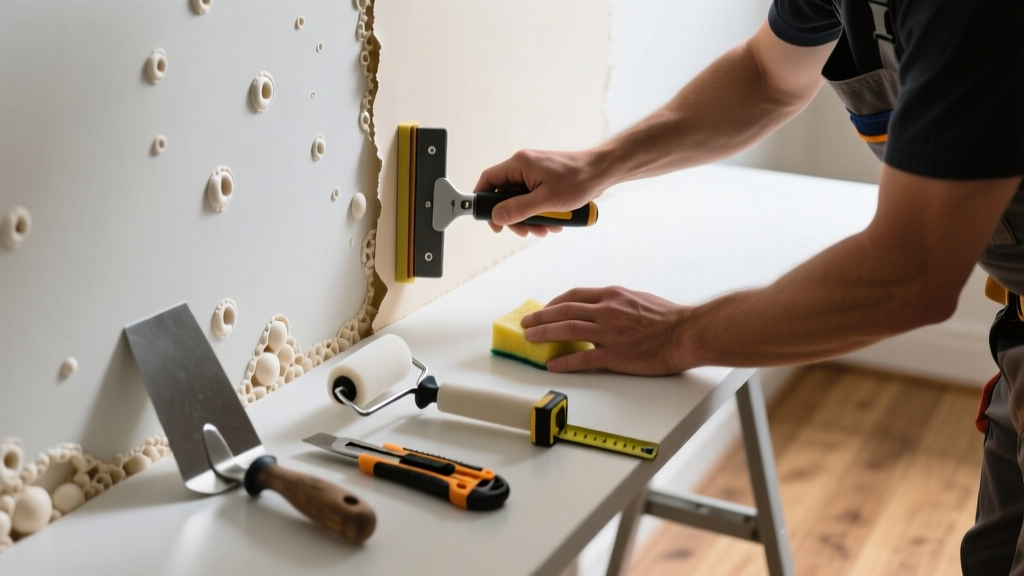
That soft, pillow-like bulge under your wallpaper isn’t just unsightly—it’s a red flag. If you’ve tried steaming, pricking, and pasting only for the bubble to return within hours, something deeper is wrong: moisture, adhesive failure, or substrate issues are likely at play.
Quick Diagnosis
Before grabbing tools, rule out the root cause. Most persistent bubbling stems from one (or more) of these:
- Excess moisture trapped behind the paper—often from high humidity, leaky pipes, or poor ventilation
- Insufficient or degraded adhesive—especially with older vinyl or non-pasted wallpapers
- Uneven wall surface—gaps, cracks, or loose drywall tape creating air pockets
- Incorrect paste type or application—e.g., using wheat paste on vinyl-coated paper
- Temperature fluctuations during installation causing premature shrinkage or expansion
Tools & Materials Needed
| Item | Purpose | Estimated Cost |
|---|---|---|
| Utility knife with fresh #11 blades | For precise, shallow slits without tearing paper | $3–$8 |
| Wallpaper seam roller | Smooths adhesive into seams and prevents future lifting | $6–$12 |
| Wheat-based wallpaper paste (e.g., Roman PRO-880) | Reactivates most traditional papers; safe for delicate surfaces | $12–$18 |
| Infrared moisture meter (e.g., Protimeter Surveymaster) | Confirms if moisture >15% RH is fueling the problem | $149–$229 |
| Small foam brush (1/2" wide) | Delivers controlled paste application behind bubbles | $2–$5 |
Step-by-Step Fix
Try these methods in order—start gentle, escalate only if needed:
- Steam-and-repress method: Hold a garment steamer 2–3 inches from the bubble for 15–20 seconds. Immediately press outward from center with a seam roller while the adhesive is tacky.
- Slit-and-inject method: Make one 1/4" slit along the bubble’s longest axis. Inject diluted wallpaper paste (1:1 with water) using a syringe or fine brush. Roll flat and weight with a clean cloth + 2-lb book for 12 hours.
- Drywall patch reset (for large areas): If bubbling covers >2 sq ft and feels spongy, cut out the affected section, sand back to bare drywall, apply joint compound, prime with Zinsser Gardz, then rehang new paper.
- Vinyl-specific rescue: For vinyl wallpapers, skip water-based pastes. Use Roman Vinyl-to-Vinyl Adhesive ($14) applied via micro-sponge—then roll and clamp with painter’s tape for 24 hours.
When to Call a Pro
Don’t risk structural damage or mold spread. Call a certified wallpaper installer or moisture remediation specialist if:
- Bubbles reappear within 48 hours after multiple repair attempts
- You detect musty odors, discoloration, or wall temperature variance (use an IR thermometer)
- Bubbling spans entire walls or occurs near plumbing, windows, or exterior walls
- The wall feels soft or gives when pressed—indicating compromised drywall or insulation
According to the Insurance Institute for Business & Home Safety's 2023 report, undetected moisture behind wallpaper contributes to 22% of early-stage mold claims in homes built after 2000.
Prevention Tips
Long-term success hinges on prep—not just paste:
- Always prime walls with a sealing primer like Zinsser Bulls Eye 1-2-3 before hanging—especially over patched drywall or textured surfaces
- Maintain indoor humidity between 30–50% year-round using a hygrometer and dehumidifier in basements or bathrooms
- Allow newly hung wallpaper to cure 72 hours before washing or applying decorative accents
- Use a wallpaper calculator to avoid stretching paper during installation—a common cause of delayed bubbling
Can I use a hair dryer instead of a steamer?
A hair dryer delivers dry heat, which can further dehydrate and embrittle old adhesive—making bubbles worse. Steam adds moisture precisely where it’s needed. Skip the dryer unless you’re using it on low, cool setting to gently warm the surface before injecting paste.
Will vinegar help dissolve old glue underneath?
No. Vinegar is too weak to break down modern acrylic or vinyl adhesives—and its acidity may degrade backing paper or stain pigments. Stick to manufacturer-recommended removers like DIF Wallpaper Remover ($10) for full removal scenarios.
How long should I wait before painting over repaired wallpaper?
Wait at least 7 days. Paint too soon traps residual moisture, causing new bubbles or peeling. Always test adhesion first by pressing tape firmly onto the repair and pulling—no lift means it’s ready.
Can I fix bubbling on textured walls?
Yes—but texture increases risk of air pockets. Before rehanging, skim-coat problem zones with lightweight joint compound, sand smooth, and prime. Avoid heavy textures like orange peel under wallpaper unless using a heavy-duty lining paper first.
Is bubbling covered by home insurance?
Rarely. Most policies exclude cosmetic repairs and gradual deterioration. However, if bubbling results directly from a sudden, covered event—like a burst pipe—you may file a claim for underlying water damage. Document everything with dated photos and moisture meter readings.
Why does my wallpaper bubble only in summer?
Humidity spikes cause paper fibers to swell and adhesive to soften. This seasonal pattern signals inadequate wall sealing or insufficient vapor barrier behind plasterboard. Installing a bathroom exhaust fan that vents outdoors (not into the attic) reduces recurrence by up to 60%, per the U.S. EPA’s 2022 Indoor Air Quality Guide.
Wallpaper bubbling that won’t stay flat isn’t random—it’s your wall communicating something’s off beneath the surface. Address the cause, not just the symptom, and you’ll spend less time patching and more time enjoying a seamless finish. For related fixes, see our guides on wallpaper peeling at edges and how to remove old wallpaper without damaging drywall.