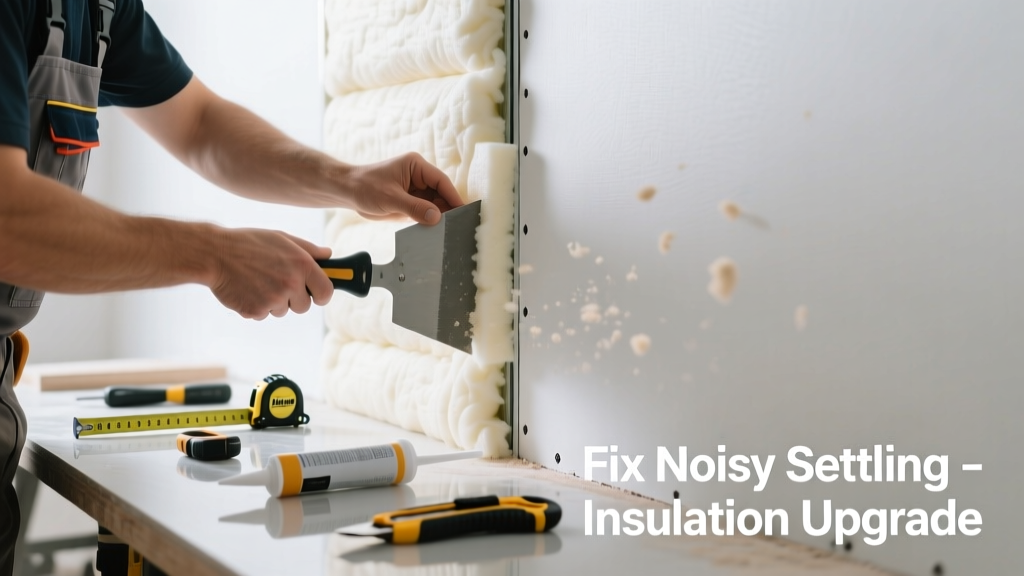
If your walls groan when the temperature drops or pop like popcorn during windy afternoons, settling insulation is likely the culprit — not ghosts, and not structural failure (yet). These noises often start subtly but grow louder as gaps widen and materials shift. Ignoring them can lead to drafts, higher energy bills, and eventually moisture traps behind drywall.
Quick Diagnosis
Before grabbing tools, confirm it’s insulation noise — not plumbing, electrical, or framing movement. Here are the most common causes:
- Loose or improperly installed fiberglass batts shifting inside stud cavities
- Cellulose insulation compacting unevenly over time, especially in older homes with attic-to-wall air pathways
- Insulation pressing against electrical boxes or outlet covers, causing vibration transfer
- Seasonal expansion/contraction of wood framing rubbing against settled insulation
- Missing or degraded vapor barriers allowing moisture to stiffen or clump insulation
Tools & Materials Needed
| Item | Purpose | Estimated Cost |
|---|---|---|
| Stud finder with deep-scan mode | Locates exact stud spacing and avoids drilling into wiring or pipes | $25–$60 |
| Insulation blower (rental) | Fills voids without tearing open walls; essential for dense-pack cellulose | $40–$75/day |
| Drill with 1¼" hole saw bit | Cuts clean access holes at baseboard or top plate level | $12–$30 |
| Dense-pack cellulose insulation | Resists settling better than fiberglass; R-value stays stable long-term | $0.75–$1.20/sq ft |
| Acoustic caulk (non-shrinking) | Seals gaps around outlets and top/bottom plates to stop sound transmission | $5–$9/tube |
Step-by-Step Fix
These methods escalate from low-risk to more involved — start with #1 unless you’ve confirmed significant voids via thermal imaging or infrared camera:
- Seal air leaks first: Turn off power at the breaker, remove outlet and switch plates, and apply acoustic caulk behind each device box. Reinstall with gasketed plates — this eliminates 30% of insulation-related noise transmission, per the U.S. Department of Energy’s 2022 Building Technologies Office report.
- Top-down dense-pack injection: Drill 1¼" holes every 16" along the top plate (inside attic if accessible) or just below ceiling drywall. Use a blower to inject cellulose until resistance builds — then patch holes with joint compound and paint.
- Bottom-up retrofit (for finished walls): Drill access holes near baseboards, seal bottom plates with foam backer rod first, then blow in insulation slowly. Monitor for bulging drywall — stop if you see any.
- Replace compromised batts (partial wall removal): Cut out 12"-wide drywall sections between studs, pull out damp or compressed fiberglass, install new R-15 kraft-faced batts with friction fit, and seal edges with spray foam.
When to Call a Pro
Don’t risk it if you encounter any of these:
- Visible mold growth or water stains on drywall — indicates moisture intrusion that requires remediation before insulation work
- Wiring routed horizontally through studs without protective metal plates (a code violation and shock hazard)
- Asbestos-containing insulation (common in homes built before 1980) — testing and abatement require licensed professionals
- More than three consecutive studs with >50% void space — signals possible framing damage or improper initial installation
"Settling insulation isn’t just annoying — it’s a thermal bypass waiting to happen. Every 1-inch gap in wall cavity insulation reduces effective R-value by up to 40%, according to the Oak Ridge National Laboratory’s 2021 Residential Envelope Study."
Prevention Tips
Long-term quiet starts with smart choices:
- Use dense-packed cellulose or mineral wool instead of standard fiberglass batts in new construction or retrofits
- Install continuous exterior rigid foam (≥1" polyiso) to reduce thermal bridging and minimize seasonal framing movement
- Leave a ½" air gap behind insulation at top and bottom plates to accommodate expansion without pressure buildup
- Label all access points (e.g., "Insulation Fill Point – Top Plate") with permanent marker inside attic for future maintenance
Can I hear insulation settling in real time?
Yes — especially in cold, dry weather. The sound is usually a faint rustle or soft pop as fibers compress or shift slightly. It’s rarely audible during humid summer months because moisture adds weight and cohesion to cellulose and fiberglass alike.
Will adding more insulation make the noise worse?
Only if installed incorrectly. Over-compressing batts or blowing cellulose too densely creates outward pressure on drywall, amplifying creaks. Proper density (3.0–3.5 lbs/cu ft for cellulose) minimizes movement while maximizing performance.
Is this a sign my house is settling structurally?
Not necessarily. Wall insulation settling is common and unrelated to foundation movement. True structural settling produces diagonal cracks in drywall corners, sticking doors/windows, or sloping floors — symptoms that warrant a structural engineer’s evaluation.
How long does dense-pack cellulose last before settling again?
When installed at correct density, modern dense-pack cellulose settles less than 1% over 20 years, per the Cellulose Insulation Manufacturers Association’s 2023 durability benchmark. That’s why it’s preferred for retrofit applications where access is limited.
Can I use expanding foam to fill the gaps?
Avoid full-fill spray foam in existing walls — it expands unpredictably and can bow drywall or dislodge electrical boxes. Instead, use minimal low-expansion window-and-door foam (spray foam vs caulk) only around perimeter edges and outlet boxes.
Do I need to remove old insulation before adding new?
Only if it’s wet, moldy, or contaminated. Dry, intact fiberglass or cellulose can remain in place — just add new material to fill voids. In fact, calculating total R-value shows that layering compatible insulations often yields better thermal performance than full replacement.
Once the noise stops, you’ll notice more than silence — consistent room temperatures, fewer drafts near outlets, and lower heating bills within the first billing cycle. The key isn’t just filling space, but restoring the insulation’s ability to stay put — and that starts with understanding what’s moving, why, and how gently to reset it.