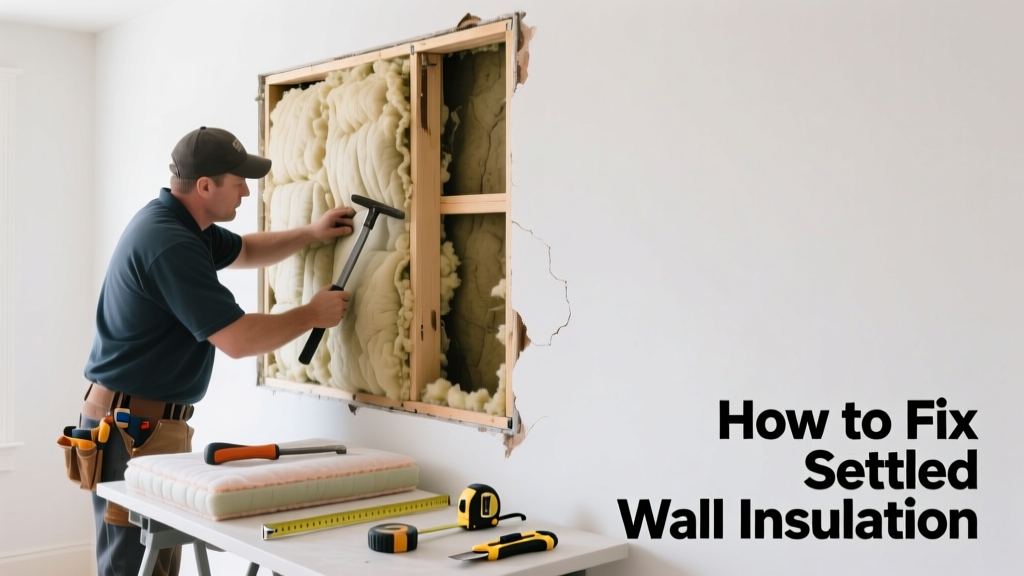
If you’ve noticed cold spots on interior walls, higher heating bills, or drafts near outlets and baseboards, your wall insulation may have settled—especially in homes built before 2000. Unlike attic insulation, wall cavities are hard to inspect and harder to refill without opening the wall. But many cases can be addressed safely and effectively with the right approach.
Quick Diagnosis
Settling happens when loose-fill or fiberglass batt insulation compresses, shifts, or sinks over time—leaving gaps at the top of wall cavities where heat escapes most easily. Common causes include:
- Aging cellulose or fiberglass that loses loft after 15–25 years
- Poor initial installation (e.g., batts cut too short or not friction-fit)
- Vibration from nearby traffic, HVAC cycling, or construction
- Movement in framing due to foundation settling or seasonal wood shrinkage
- Moisture exposure causing clumping or compaction
Tools & Materials Needed
| Item | Purpose | Estimated Cost |
|---|---|---|
| Insulation blower machine (rental) | For injecting loose-fill cellulose or fiberglass into wall cavities | $40–$65/day |
| Drill with 2¼" hole saw | Cuts clean access holes between studs without damaging wiring | $25–$80 |
| Stud finder with AC detection | Locates studs and avoids live wires before drilling | $20–$55 |
| Loose-fill cellulose insulation (R-3.2–3.7 per inch) | Dense-packed fill resists future settling better than fiberglass | $0.50–$0.75 per sq ft |
| Fire-rated caulk & drywall patches | Seals holes and meets code for fire blocking | $12–$22 |
Step-by-Step Fix
Most effective fixes target accessible exterior or interior walls. Prioritize north- and west-facing walls first—they show symptoms earliest due to temperature differentials.
- Map the cavity: Use a stud finder to mark stud centers every 16" on center; confirm spacing with a tape measure. Note outlet boxes, windows, and any visible gaps in baseboard trim.
- Drill access holes: Drill two 2¼" holes per cavity—one 12" above the baseboard and one 12" below the top plate. Avoid electrical boxes and plumbing by checking behind walls with a borescope if uncertain.
- Blow in dense-pack cellulose: Connect the blower to the lower hole; feed insulation until material begins exiting the upper hole. Then seal both holes with fire-rated caulk and drywall patches.
- Verify fill density: Use an infrared camera (rental) or thermal leak detector to check for consistent surface temps across the wall. Gaps appear as cooler vertical stripes.
- Re-insulate problem zones: If only partial settling is found (e.g., top 24" of cavity), use a flexible insulation rod or compressed air nozzle to gently push existing batts upward before topping off.
When to Call a Pro
DIY isn’t safe or effective in these situations:
- Walls with knob-and-tube wiring still active (risk of arc flash during drilling)
- Structural sheathing covered in tar paper or asphalt-saturated felt (requires specialized removal)
- Insulation contaminated with mold, rodent droppings, or asbestos (pre-1980 homes require abatement)
- More than 30% of wall cavities showing voids—indicating systemic failure or water intrusion
- No access to wall interior (e.g., brick veneer with no interior drywall removal option)
According to the Insurance Institute for Business & Home Safety's 2023 report, improperly refilled walls increase condensation risk by up to 40% when vapor barriers aren’t re-established—making professional assessment critical in humid climates.
Prevention Tips
Once fixed, extend insulation life with proactive measures:
- Install whole-house dehumidification if indoor RH regularly exceeds 50%
- Seal all top-plate penetrations (plumbing vents, wiring chases) with expanding foam
- Use dense-pack cellulose instead of fiberglass batts for retrofits—it settles less and has higher R-value per inch
- Add continuous exterior insulation (e.g., 1" rigid mineral wool) during siding replacement
- Inspect attic insulation annually—heat rising through walls accelerates settling below
Can I blow insulation into walls without removing drywall?
Yes—if the wall is framed with standard 2x4 or 2x6 studs and no obstructions block the cavity. You’ll need to drill small access holes (2¼") and patch them afterward. This method works best with loose-fill cellulose, which flows freely and packs tightly. Fiberglass batts cannot be blown in—they must be installed manually.
How do I know if my insulation is settled or just missing?
Use a borescope inserted through an outlet box (after turning off power) to view the cavity. Settled insulation appears compacted at the bottom with an air gap above; missing insulation shows empty space from top to bottom. According to ENERGY STAR’s 2022 Retrofit Guide, 68% of homes built before 1990 have at least one wall cavity with >50% void coverage.
Will adding insulation lower my energy bills significantly?
Yes—if walls contribute to >25% of your home’s heat loss. The U.S. Department of Energy estimates that properly refilled walls improve whole-house R-value by R-2 to R-5, cutting heating costs 10–15% in cold climates. For context, a typical 1,800 sq ft home with R-13 walls saves $180–$260/year after retrofitting.
Can I use spray foam to fix settled wall insulation?
Not recommended for retrofits. Closed-cell spray foam expands aggressively and can warp drywall or trap moisture behind it. Open-cell foam lacks sufficient density to resist future settling and may shrink slightly over time. Stick with dense-pack cellulose—it’s breathable, fire-resistant, and designed for this application. Attic insulation settling is easier to address but often masks wall issues.
Do I need a building permit to add wall insulation?
In most jurisdictions, yes—if you’re opening walls or altering fire-blocking requirements. Permits ensure inspections verify proper vapor barrier placement and electrical clearance. Check with your local building department before drilling; some cities (like Portland and Minneapolis) require third-party density testing for blown-in jobs. A home energy audit often includes free permit guidance and utility rebate support.
What’s the average cost to fix settled wall insulation?
DIY materials run $1.25–$2.10 per square foot. Hiring a certified contractor averages $2.75–$4.30/sq ft—including diagnostic imaging, drilling, dense-pack fill, and patching. Rebates from programs like utility rebates can cover 30–50% of labor in participating states.
Fixing settled wall insulation isn’t glamorous—but it’s one of the highest-ROI repairs you can make. Unlike cosmetic upgrades, it works silently year after year, reducing strain on your HVAC system and keeping rooms consistently comfortable. And once done right, it typically lasts 30+ years without attention—especially when paired with smart humidity control and routine visual checks around outlets and trim.