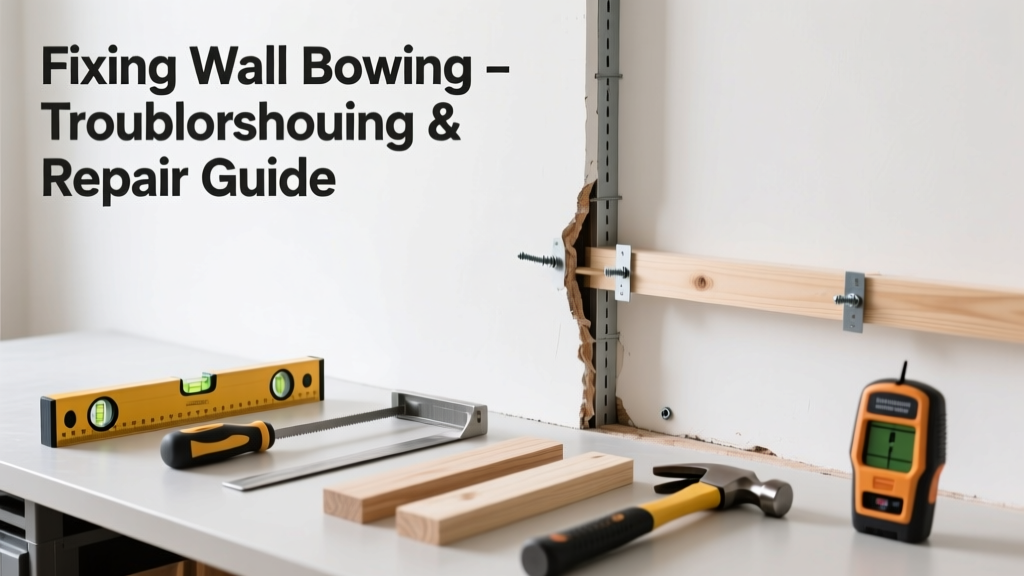
If your wall is visibly curving inward or outward—especially near the ceiling, floor, or center—you’re dealing with wall bowing, a sign of underlying structural stress or moisture damage. Ignoring it risks drywall cracks, door misalignment, or even collapse in extreme cases. This guide walks you through real-world fixes, not theory.
Quick Diagnosis
Wall bowing rarely happens without cause. Start here before grabbing tools:
- Moisture intrusion behind drywall (e.g., leaky pipe, poor exterior flashing)
- Missing or undersized wall studs (common in older homes or DIY remodels)
- Excessive lateral load (e.g., heavy shelving anchored poorly, soil pressure on basement walls)
- Rotted or compressed bottom plate due to chronic dampness
- Improperly braced framing during original construction
Tools & Materials Needed
| Item | Purpose | Estimated Cost |
|---|---|---|
| Laser level or long straightedge (8 ft) | Accurately measure deviation from true vertical/horizontal | $45–$120 |
| Stud finder with deep-scan mode | Locate existing framing members and gaps between them | $25–$65 |
| 1/2" plywood or 3/4" OSB sheets | Sheathing reinforcement for bowed sections | $22–$38 per 4'×8' sheet |
| Heavy-duty toggle bolts or lag screws (1/4" × 3") | Secure reinforcement to framing where studs are weak or missing | $8–$15 |
| Moisture meter (pin-type) | Confirm if wood framing or drywall is above 16% moisture content | $60–$140 |
Step-by-Step Fix
Choose the method based on severity and root cause. Always verify moisture levels first—if above 16%, stop and address water source before proceeding.
- Assess bow depth: Use a laser level or straightedge to measure maximum deviation. If >1/2" over 8 ft, reinforce; if >1", consult a structural engineer before any work.
- Add backing support: Cut 3/4" OSB to match wall height and width of bowed zone. Screw into every stud using 2.5" coarse-thread screws spaced 6" apart along edges and 12" in field.
- Install sister studs: For localized bowing between two studs, cut a new 2×4 to length, apply construction adhesive, and screw it alongside the weak stud using 3" screws every 12".
- Anchor to floor/ceiling: If bowing stems from lateral movement, install angled 2×4 braces ("knee braces") from top plate to floor joist or subfloor—slope no steeper than 45°.
When to Call a Pro
Some wall bowing signals deeper problems that demand licensed expertise—not YouTube tutorials.
- Bowing exceeds 1 inch over an 8-foot span (per structural wall cracks guidelines)
- Cracks radiate from corners or follow diagonal paths—possible foundation settlement
- Adjacent floors slope or doors bind across multiple rooms
- You detect musty odors or visible mold behind baseboards or outlets
- The wall feels spongy or moves when pressed (indicates rotted framing or compromised bearing points)
"Over 70% of wall bowing incidents in single-family homes involve undetected moisture infiltration behind finishes—often misdiagnosed as 'just settling' until framing fails." — National Association of Home Builders Structural Committee Report, 2022
Prevention Tips
Once fixed, keep it fixed. Prevention isn’t optional—it’s what separates a one-time repair from recurring headaches.
- Inspect exterior grade and drainage yearly; ensure soil slopes away from foundation at 6 inches over 10 feet
- Use exhaust fans in bathrooms/kitchens and vent them outside—not into attics
- Seal all penetrations (pipes, wires) through exterior walls with closed-cell spray foam or butyl tape
- Keep interior humidity between 30–50% year-round using a hygrometer and dehumidifier if needed
Can I fix wall bowing with drywall anchors alone?
No. Drywall anchors only hold surface finishes—they don’t resist lateral or compressive forces causing bowing. Anchors may even worsen the issue by concentrating stress on brittle drywall. Structural correction requires engagement with framing or sheathing.
How do I know if the bowing is getting worse?
Mark high points with a pencil and re-measure monthly using the same straightedge position. Track changes in millimeters: >2 mm/month indicates active movement requiring immediate investigation. Also watch for new cracks, nail pops, or gaps widening around trim.
Will adding insulation help prevent future bowing?
Only if it’s part of a moisture-control strategy. Spray foam insulation can reduce condensation inside walls—but improperly installed fiberglass batts trap moisture against cold sheathing, accelerating rot and bowing. Always pair insulation upgrades with vapor control and ventilation.
Can bowed walls be repaired without removing drywall?
Sometimes—but only for minor deviations (<1/4") and confirmed sound framing. Options include low-profile steel strapping screwed through drywall into studs, or targeted injection of expanding polyurethane adhesive behind drywall. Both require precision drilling and carry risk of surface dimpling or blowout.
Is wall bowing covered by homeowners insurance?
Rarely. Most policies exclude gradual damage like bowing caused by moisture, settlement, or wear. Sudden events (e.g., burst pipe flooding that leads to immediate bowing) may qualify—but insurers often deny claims citing 'lack of maintenance.' Document everything and file promptly if a sudden event triggered it.
What’s the average cost to professionally repair wall bowing?
According to HomeAdvisor’s 2023 Remodeling Cost Report, minor reinforcement runs $850–$2,200. Full structural remediation—including jack-and-repair, stud replacement, and moisture abatement—averages $4,800–$12,500 depending on wall length and accessibility. Basement wall systems (e.g., carbon fiber straps or wall anchors) add $150–$300 per linear foot.
A properly addressed bow won’t just look better—it’ll restore structural integrity, improve energy efficiency, and protect your home’s resale value. Don’t wait for plaster dust to fall or doors to stick tighter; catch it early, fix it right, and monitor like clockwork. And if you’re ever unsure whether that subtle curve is harmless or hazardous, grab your moisture meter and level—and when in doubt, call someone with a structural license and liability insurance.