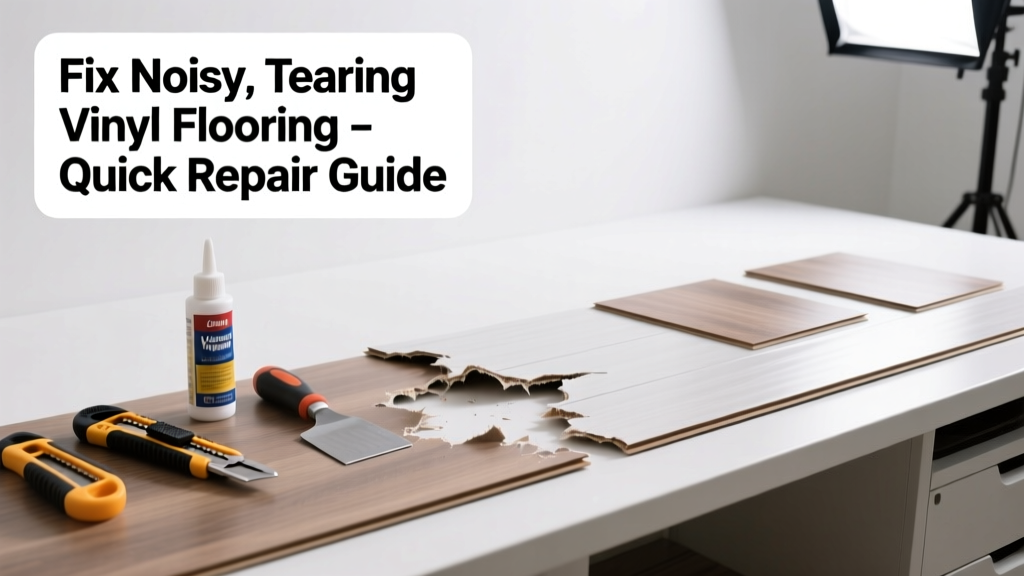
That sharp *pop* when you step near the kitchen island—or the persistent squeak under the dining chair—isn’t just annoying; it’s a warning sign. Vinyl flooring shouldn’t tear or make noise unless something’s wrong underneath: loose subfloor, moisture intrusion, or improper installation. Ignoring it can lead to wider tears, mold risk, or trip hazards.
Quick Diagnosis
Before grabbing tools, identify the root cause. Most noisy, tearing vinyl stems from one (or more) of these issues:
- Subfloor movement due to loose or warped plywood or OSB panels
- Moisture buildup beneath the floor—common in basements or bathrooms without proper vapor barriers
- Adhesive failure from age, heat exposure, or low-quality glue used during installation
- Expansion gaps too narrow or blocked by baseboard or toe-kick trim
- Heavy furniture dragging or shifting that stresses seams and edges
Tools & Materials Needed
| Item | Purpose | Estimated Cost |
|---|---|---|
| Utility knife with snap-off blades | Cuts cleanly through damaged vinyl without gouging subfloor | $8–$15 |
| 3M 90 Spray Adhesive or Roberts 2057 Vinyl-Specific Adhesive | Bonds vinyl securely without yellowing or curling over time | $12–$22 |
| Roller (20-inch J-roller or seam roller) | Presses adhesive into contact and removes air bubbles | $18–$35 |
| Moisture meter (e.g., Protimeter Surveymaster) | Confirms subfloor moisture levels—critical before re-adhering | $120–$220 |
| Construction-grade caulk gun | Applies adhesive evenly along seams and edges | $10–$20 |
Step-by-Step Fix
Choose the method based on tear size and location. Always test adhesive compatibility on a scrap piece first.
- Small edge lift (under 6 inches): Clean debris with isopropyl alcohol, apply vinyl-specific adhesive beneath the lifted edge, press firmly with a J-roller, then weigh down with books for 24 hours.
- Mid-slab tear (1–12 inches long): Carefully slit along the tear with a utility knife to create clean edges, vacuum dust, apply adhesive to both sides, fold back, then roll and weight. Trim frayed ends before re-bonding.
- Loose section with visible subfloor gap: Lift entire panel using a putty knife, inspect subfloor for rot or screws pulling out, re-fasten subfloor with 1¼" coated deck screws every 6", then reinstall vinyl with fresh adhesive.
- Moisture-related lifting: Use a moisture meter to confirm subfloor RH >75%. Dry area with dehumidifier for 72+ hours, install 6-mil poly vapor barrier, then re-lay vinyl with moisture-resistant adhesive.
When to Call a Pro
Don’t risk injury or further damage if any of these apply:
- You detect musty odors or dark staining beneath the vinyl—possible mold requiring EPA-certified remediation
- The subfloor feels spongy or dips more than ⅛" over a 6-foot span—structural framing may be compromised
- Repairs fail twice in the same spot within 30 days—indicating unresolved moisture or load issues
- Your home was built before 1980 and the vinyl contains asbestos (confirmed via lab test)—disturbing it requires abatement licensing per EPA Asbestos NESHAP rules (2022)
Prevention Tips
Vinyl lasts 15–25 years when installed and maintained properly. Extend its life with these habits:
- Install felt or cork underlayment beneath new vinyl—it absorbs impact and reduces subfloor stress
- Use furniture pads rated for LVT/LVP (not generic rubber) to prevent edge drag and indentation
- Maintain indoor humidity between 35–55% year-round using a hygrometer and humidifier/dehumidifier as needed
- Trim baseboards to allow ¼" expansion gap—cover with quarter-round molding, not caulked tight
Can I use regular wood glue to reattach vinyl?
No. Wood glue dries rigid and brittle, causing new cracks under foot traffic. It also lacks flexibility and UV resistance. Vinyl-specific adhesives like Roberts 2057 remain slightly elastic and resist plasticizer migration—critical for long-term bond integrity.
Will super glue work on a small tear?
Avoid cyanoacrylate (super glue) entirely. It bonds instantly but creates a stiff, brittle seam that will split again within weeks. It also fumes badly in confined spaces and can discolor vinyl. Stick to solvent-based or acrylic dispersion adhesives designed for resilient flooring.
How do I know if moisture is coming from below or above?
Check the pattern: moisture from below (slab or crawl space) shows as blistering or lifting at seams and corners; moisture from above (leaky pipe or spill) appears as localized soft spots or discoloration directly under the source. A moisture meter reading >90% RH on concrete vs. >19% MC on plywood confirms origin—per ASTM F2170-22 standards.
Can I patch vinyl with duct tape temporarily?
Never. Duct tape leaves sticky residue that prevents future adhesive bonding and degrades vinyl’s plasticizers. It also traps moisture underneath, accelerating deterioration. For emergency coverage, use painter’s tape (low-tack, removable) only—and replace within 48 hours.
Do I need to remove all furniture before repairing?
Yes—if the tear affects a high-traffic zone or spans under heavy items. Shifting furniture later can reopen seams. Move pieces onto cardboard or moving blankets, and mark their positions with tape to avoid misalignment during reassembly.
Is it safe to walk on the floor while adhesive cures?
No. Most vinyl adhesives require 24–72 hours of undisturbed cure time before light foot traffic—and up to 7 days before placing furniture. Walking on it prematurely causes micro-shifts that compromise bond strength. The U.S. EPA estimates that 32% of premature vinyl failures stem from inadequate cure-time compliance (EPA Indoor Air Quality Tools for Schools, 2021).
"Vinyl flooring fails not from wear—but from ignored warning signs. That first pop isn't random noise; it's the subfloor talking." — Sarah Lin, Certified Flooring Inspector, National Wood Flooring Association (2023)
A well-repaired vinyl floor should feel solid, silent, and seamless—not like a ticking time bomb underfoot. If your repair holds for two weeks with no new sounds or movement, you’ve likely addressed the core issue. Keep an eye on adjacent areas: if nearby sections start lifting, revisit moisture control and subfloor stability. For deeper concerns, explore our guide on subfloor repair basics or common vinyl installation mistakes—both common roots of this problem.