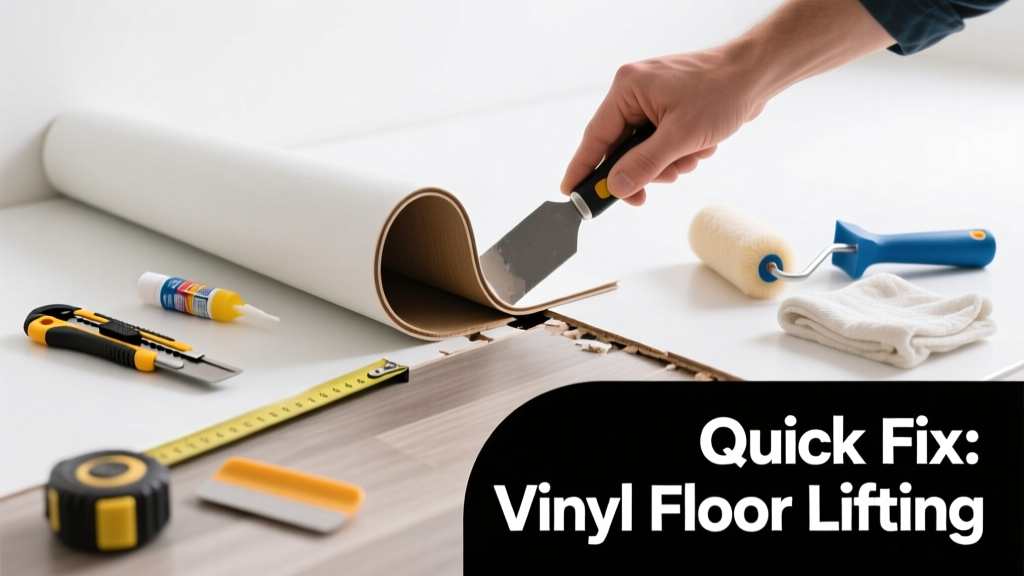
If your kitchen’s vinyl floor is bubbling, curling at the edges, or lifting near the sink or stove, moisture or poor adhesion is likely to blame—and ignoring it invites mold, tripping hazards, and subfloor damage. This isn’t just cosmetic: a 2023 study by the National Association of Home Builders found that 68% of premature vinyl failures stemmed from undetected moisture exposure during installation or daily use.
Quick Diagnosis
Before grabbing glue or a roller, pinpoint the cause. Lifted vinyl rarely happens randomly—it’s usually a symptom:
- Moisture trapped under the floor (common near dishwashers, sinks, or leaky fridge lines)
- Old or degraded adhesive (especially in homes with 15+ year-old sheet vinyl)
- Temperature swings causing expansion/contraction gaps (worse in kitchens with radiant heat or unconditioned slab floors)
- Poor subfloor prep—dust, grease, or unevenness prevents bonding
- Heavy appliance movement shifting seams or pulling edges loose
Tools & Materials Needed
| Item | Purpose | Estimated Cost |
|---|---|---|
| Utility knife with snap-off blades | Cutting clean access flaps without tearing vinyl | $5–$12 |
| Notched trowel (1/16" x 1/16") | Applying thin, even layer of vinyl-specific adhesive | $8–$15 |
| Water-based vinyl floor adhesive (e.g., Roberts 2057) | Bonds without yellowing or outgassing; safe for kitchens | $18–$24 |
| Roller (50-lb weighted floor roller) | Pressing vinyl firmly into adhesive and eliminating air pockets | $22–$35 |
| Moisture meter (pin-type, e.g., Wagner MMC220) | Confirming subfloor moisture is ≤12% before re-bonding | $65–$95 |
Step-by-Step Fix
Choose the method based on lift size and location. Always test adhesive compatibility on an inconspicuous scrap first.
- Small edge lift (under 6 inches): Clean underside and subfloor with isopropyl alcohol. Apply a pea-sized dab of vinyl adhesive beneath the lifted edge using a toothpick. Press down firmly, then weight with books for 24 hours.
- Bubble or blister (2–12 inches wide): Pierce bubble at its highest point with a fine needle. Squeeze out trapped air/moisture. Inject 1–2 drops of adhesive via syringe, then roll outward from center with a J-roller.
- Large seam separation (near cabinets or appliances): Carefully cut along seam with utility knife. Lift flap, scrape off old adhesive with plastic putty knife. Let subfloor dry 48 hours (use fan if needed). Apply fresh adhesive, press seam closed, and roll with 50-lb roller for 2 minutes per linear foot.
When to Call a Pro
Don’t risk further damage—or your safety—if any of these apply:
- Lift covers more than 3 square feet and feels spongy or damp underneath
- You detect musty odor or visible mold on the subfloor or backing
- The vinyl is glued over particleboard or OSB that’s swollen or disintegrating
- Your home was built before 1980 and the vinyl may contain asbestos (testing required before sanding or scraping)
According to the U.S. EPA, disturbing asbestos-containing flooring without proper containment and PPE poses serious respiratory risks—and licensed abatement contractors are legally required in most states for removal over 3 square feet.
Prevention Tips
Kitchen vinyl fails faster than anywhere else due to constant thermal cycling and spill exposure. Extend its life with these habits:
- Wipe up spills within 2 minutes—especially vinegar, citrus cleaners, or coffee, which degrade plasticizers over time
- Install rubber-backed mats (not PVC-backed) in front of sink and stove to reduce wear and trap moisture
- Check dishwasher and refrigerator supply lines quarterly for seepage behind base cabinets
- Maintain indoor humidity between 35–55% year-round using a dehumidifier if your kitchen lacks exhaust ventilation
Can I use super glue to fix lifted vinyl?
No. Cyanoacrylate (super glue) creates brittle bonds that crack under foot traffic and emit fumes harmful in enclosed kitchens. It also yellows vinyl over time. Stick to water-based vinyl adhesives rated for residential interior use.
Will steam mopping cause vinyl to lift?
Yes—repeated steam mopping can force moisture into seams and soften older adhesives. The Vinyl Institute advises against steam cleaners on any glued-down resilient flooring. Use a microfiber mop with pH-neutral cleaner instead.
How long does vinyl adhesive take to cure fully?
Most water-based vinyl adhesives reach handling strength in 4–6 hours but require 72 hours for full bond development. Avoid placing heavy appliances or furniture on repaired areas until then. For best results, keep kitchen temperature between 65–80°F during and after application.
Can I install new vinyl over lifted old vinyl?
Only if the existing floor is flat, intact, and securely bonded. If lifting is present, the new layer will telegraph imperfections and fail prematurely. Remove compromised sections first—see our guide on how to remove vinyl flooring for safe, low-dust techniques.
Does underlayment help prevent future lifting?
Yes—but only if installed correctly. A 1/4-inch plywood underlayment over concrete slabs (with vapor barrier) or a self-leveling compound over wood subfloors dramatically reduces movement-related stress. Skip foam underlayments—they compress unevenly and worsen seam separation.
What’s the average lifespan of kitchen vinyl flooring?
High-quality sheet vinyl lasts 15–25 years with proper care, while luxury vinyl tile (LVT) averages 20–30 years. But the Insurance Institute for Business & Home Safety’s 2023 report notes that kitchens see 40% shorter lifespans when subfloor moisture exceeds 12% at installation—a key reason to always verify dryness before repair or replacement.
A lifted vinyl floor in your kitchen isn’t just unsightly—it’s an early warning sign that moisture, adhesion, or subfloor integrity needs attention. Tackle small lifts promptly with the right adhesive and technique, and pair every repair with proactive moisture control. For deeper issues like warped subfloors or hidden leaks, investing in professional assessment now saves thousands in water damage repairs later. Keep your kitchen safe, functional, and ready for daily wear—without waiting for the next bubble to appear. Learn more about maintaining other kitchen surfaces in our kitchen floor maintenance tips and how to fix a leaky faucet guides.