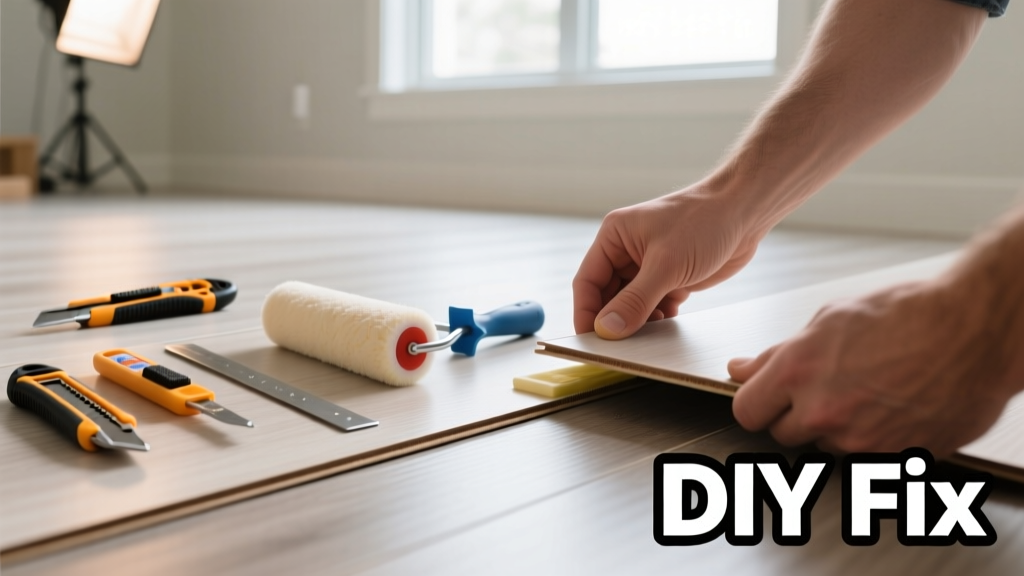
Vinyl flooring is durable and affordable—but when corners start curling or seams pop up like tiny flags, it’s more than an eyesore: it’s a tripping hazard and moisture trap. Left unaddressed, lifting can worsen fast, especially in high-traffic or humid areas like kitchens and bathrooms. The good news? Most small- to medium-sized lifts are fixable in under an hour with basic tools.
Quick Diagnosis
Before grabbing glue or a roller, identify the root cause. Vinyl lifts rarely happen for just one reason—here are the most common culprits:
- Moisture intrusion from leaks, spills, or high humidity (especially under-slab or in basements)
- Poor subfloor preparation—dust, debris, or unevenness prevents proper adhesion
- Temperature swings causing expansion/contraction stress at seams or edges
- Old or degraded adhesive—common in peel-and-stick or sheet vinyl installed over 10 years ago
- Heavy furniture dragging or rolling casters pulling at edges
Tools & Materials Needed
| Item | Purpose | Estimated Cost |
|---|---|---|
| Utility knife with fresh blades | Cutting away damaged sections or scoring lifted edges for glue access | $5–$12 |
| Notched trowel (1/16" x 1/16") | Applying even, thin layers of vinyl-specific adhesive | $8–$15 |
| Vinyl flooring adhesive (e.g., Roberts 2057) | Bonding lift-prone areas without discoloration or bubbling | $12–$22 |
| Roller (50-lb weighted) or J-roller | Pressing seams and edges firmly into adhesive for full contact | $10–$25 |
| Painter’s tape & clamps | Holding edges down while adhesive cures (24–48 hrs) | $3–$9 |
Step-by-Step Fix
Choose the method that matches your lift type and severity. Always test adhesive on an inconspicuous area first to avoid staining.
- Small edge lift (under 2 inches): Clean underside with isopropyl alcohol, apply vinyl adhesive with a fine brush, press down firmly, then weight with books or clamps for 24 hours.
- Seam separation (up to 6 inches): Gently lift both sides using a putty knife, scrape old adhesive residue, reapply fresh adhesive with a notched trowel, align seam precisely, and roll with a J-roller from center outward.
- Bubble or blister (no tear): Pierce bubble at its highest point with a fine needle, inject adhesive via syringe, then roll flat and weight for 36 hours. Do not cut or peel the bubble—this often worsens delamination.
- Lifted corner near wall (floating LVT): Remove baseboard, reposition plank, use tapping block + rubber mallet to lock edge, then reinstall trim—no adhesive needed if interlocking system is intact.
When to Call a Pro
Some situations demand expertise—not just experience. Don’t risk structural damage or voiding warranties by DIY-ing these:
- Lifting covers more than 15% of the room (e.g., >30 sq ft in a 200-sq-ft kitchen)
- Moisture readings exceed 75% RH under the floor (confirmed with a pinless moisture meter)
- Subfloor is warped, rotted, or shows black mold—especially under sheet vinyl
- You’re dealing with glued-down luxury vinyl tile (LVT) over concrete with radiant heat; adhesive compatibility is critical
- The lift coincides with recent plumbing leaks or foundation settling signs (cracked drywall, sloping floors)
According to the National Wood Flooring Association’s 2022 Vinyl Installation Standards, improper adhesive selection accounts for 68% of premature vinyl failures—and licensed installers carry liability insurance for subfloor remediation.
“If you see buckling across multiple planks or hear hollow sounds when walking, it’s rarely just an adhesive issue—it’s usually subfloor movement or moisture migration you can’t see.” — Sarah Lin, Certified Flooring Inspector, NWFA, 2023
Prevention Tips
Long-term stability starts after the repair. Vinyl doesn’t forgive neglect—but it rewards consistency:
- Maintain indoor humidity between 35–55% year-round using a hygrometer and dehumidifier/humidifier as needed
- Use felt pads under all furniture legs and replace them every 6 months
- Wipe up spills within 2 minutes—vinyl backing isn’t waterproof, only water-resistant
- Avoid ammonia-based cleaners; they degrade plasticizers and accelerate edge curling over time
- Re-roll high-traffic seams with a J-roller every 12 months—even if they look fine
Can I use super glue instead of vinyl adhesive?
No. Cyanoacrylate (super glue) creates brittle bonds that crack under foot traffic and may yellow or haze the vinyl surface. It also lacks flexibility—critical for thermal expansion. Vinyl-specific adhesives like Bostik’s Best or Roberts 2057 remain slightly elastic for decades.
Will heat from a hair dryer help re-adhere lifted edges?
Only temporarily—and dangerously. Heat softens the vinyl but doesn’t reactivate old adhesive. Worse, overheating can warp planks or release VOCs from backing layers. If you must warm an edge for repositioning, use a heat gun on low (<150°F) for under 10 seconds, then glue immediately.
How long does vinyl adhesive take to cure fully?
Most solvent-based vinyl adhesives reach handling strength in 4–6 hours but require 24–72 hours for full bond development. Water-based formulas (e.g., Mapei Ultrabond Eco 350) need 72+ hours before heavy furniture return. Always check the product datasheet—cure time doubles in temps below 65°F or above 85% humidity.
Can I repair vinyl over radiant heat flooring?
Yes—but only with adhesives rated for radiant heat (look for “ASTM F1482 compliant” on the label). Never use standard acrylic or solvent-based glues; they outgas or soften when heated. Also confirm your LVT or sheet vinyl is certified for radiant use—some rigid cores aren’t.
Do I need to remove baseboards for every repair?
No—only if the lift originates at the wall edge and involves floating LVT/LVP where expansion gaps are compromised. For glue-down sheet vinyl or perimeter-bonded LVT, baseboards usually stay. Just use a thin putty knife to slide adhesive beneath the gap.
What’s the best way to clean adhesive off vinyl without damaging it?
For uncured adhesive: wipe with a damp microfiber cloth and warm water. For cured residue: use mineral spirits on a cotton swab, test in a hidden spot first, and rinse immediately with water. Avoid acetone—it dissolves vinyl’s wear layer. For stubborn spots, try Goof Off® Heavy Duty Cleaner (tested safe on Armstrong and Shaw vinyl per their 2023 Care Guide).
Fixing vinyl floor lifting isn’t about perfection—it’s about catching it early, matching the solution to the cause, and respecting the material’s limits. A well-maintained vinyl floor can last 20+ years, but only if you treat adhesion like a relationship: consistent attention, timely intervention, and the right tools for the job. For related issues, see our guides on vinyl floor bubbles and subfloor repair before flooring.