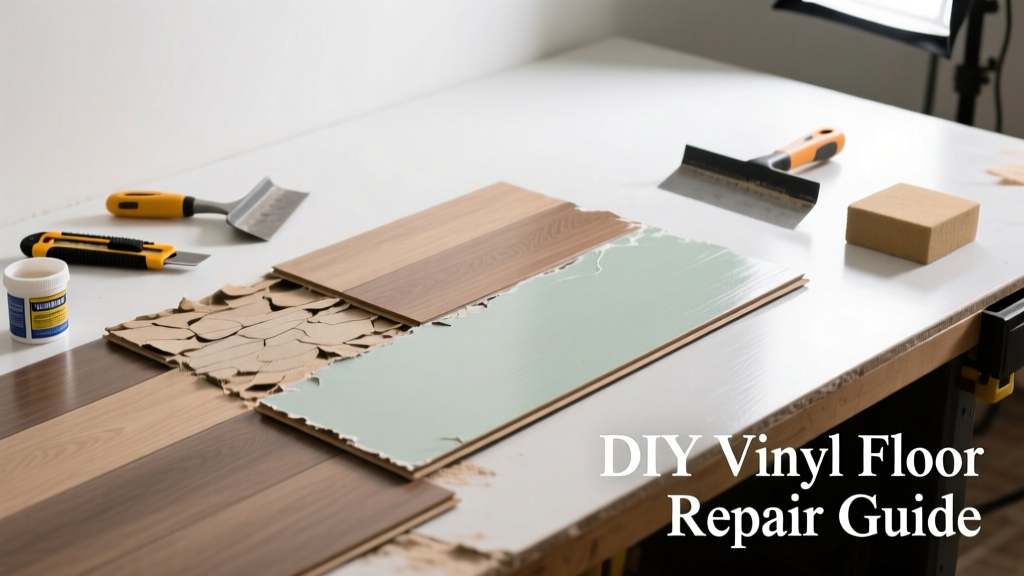
That dull yellow patch near your kitchen sink—plus the hollow 'pop' every time you step on it—isn’t just unsightly; it’s a red flag. Discoloration combined with noise usually means moisture intrusion, subfloor damage, or adhesive failure beneath your vinyl. Ignoring it risks mold growth, structural compromise, or full-floor replacement.
Quick Diagnosis
Start by identifying which of these is most likely causing both the stain and sound:
- Water leak from plumbing, appliance drip pan, or poor grouting around tub/shower
- Subfloor warping or rot (especially in bathrooms or basements)
- Failed adhesive bond between vinyl and underlayment or subfloor
- Moisture trapped under sheet vinyl or luxury vinyl tile (LVT) due to improper vapor barrier
- Expansion/contraction gaps caused by temperature swings or inadequate acclimation before installation
Tools & Materials Needed
| Item | Purpose | Estimated Cost |
|---|---|---|
| Moisture meter (pin-type) | Measures subfloor moisture content—critical before repair | $45–$85 |
| Utility knife with fresh blades | Cutting damaged vinyl cleanly without tearing surrounding material | $8–$15 |
| 3M 90 Spray Adhesive or Bostik Best® | High-bond, moisture-resistant adhesive for vinyl reattachment | $12–$22 |
| Roller (J-roller or 100-lb weighted) | Presses vinyl firmly into adhesive and eliminates air pockets | $18–$35 |
| Dehumidifier (50-pint capacity) | Dries subfloor after moisture source is fixed—required for lasting repair | $160–$240 |
Step-by-Step Fix
These methods address root causes—not just symptoms. Always confirm moisture levels are below 12% MC (per ASTM F2170) before proceeding.
- Shut off water sources and dry the area: Turn off supply lines, mop standing water, then run a dehumidifier for 48–72 hours. Use a pin-type moisture meter to verify subfloor reads ≤12% MC.
- Cut and lift the discolored section: Score along grout lines or seams with a utility knife. Lift gently—don’t tear adjacent planks. Peel back only the affected area (e.g., 2 ft × 2 ft).
- Inspect and repair the subfloor: Sand minor swelling; replace rotted OSB or plywood. Fill low spots with self-leveling compound rated for vinyl. Let cure per manufacturer instructions.
- Re-adhere or replace: For LVT, apply Bostik Best® to clean, dry subfloor and press planks down with a J-roller. For sheet vinyl, use 3M 90 spray adhesive in a well-ventilated space and roll thoroughly.
- Seal edges: Apply clear silicone caulk (e.g., GE Advanced Silicone II) along perimeter seams and transitions to prevent future moisture ingress.
When to Call a Pro
DIY isn’t safe or effective when:
- You detect musty odors or visible mold on subfloor or joists—this requires EPA-certified remediation
- Moisture readings exceed 19% MC across >10 sq ft, indicating possible hidden plumbing leaks behind walls or under slabs
- The noise occurs over concrete slab with no access point—slab leaks need acoustic leak detection equipment
- Your home was built before 1980 and asbestos-containing vinyl or mastic may be present (testing required before removal)
Prevention Tips
Long-term success hinges on moisture control and proper maintenance:
- Install a vapor barrier (6-mil poly) under new vinyl on concrete slabs—even if the product claims to be "moisture-resistant"
- Check dishwasher and refrigerator drip pans quarterly; replace cracked pans immediately
- Maintain indoor humidity between 30–50% year-round using a hygrometer and HVAC controls
- Use felt pads under furniture legs and avoid dragging heavy items across vinyl
- Wipe up spills within 5 minutes—vinyl’s wear layer doesn’t stop prolonged moisture migration
Can I use bleach on this?
No. Bleach breaks down vinyl’s plasticizers and accelerates yellowing—especially in older or UV-exposed flooring. Instead, use a solution of 1 cup white vinegar + 1 gallon warm water, applied with a microfiber mop. Rinse thoroughly. For stubborn organic stains, try hydrogen peroxide gel left for 10 minutes before wiping.
Will replacing just one plank fix the noise?
Only if the noise is isolated and the subfloor is intact. But discoloration almost always signals underlying moisture that’s affected adjacent areas. Test moisture 12 inches beyond the stained zone—if readings are elevated, expand your repair footprint or risk recurrence.
Is this a sign of foundation problems?
Rarely—but possible. If you also notice diagonal drywall cracks, sticking doors, or uneven floors elsewhere, get a structural engineer evaluation. According to the American Society of Civil Engineers’ 2022 Infrastructure Report Card, 42% of U.S. homes built before 1970 have undocumented settlement issues that manifest first in flooring anomalies.
How long does the repair last?
Properly dried, repaired, and sealed vinyl lasts 8–12 years in high-traffic zones—if moisture stays below 12% MC. The U.S. Department of Housing and Urban Development estimates that 68% of premature vinyl failures stem from ignored early-stage discoloration/noise combos.
Can I paint over the discolored spot?
Temporarily, yes—but it won’t stop noise or moisture. Use a vinyl-specific primer (e.g., Rust-Oleum Specialty Vinyl Spray Primer), then acrylic enamel. However, painting masks the symptom while the real issue—adhesive failure or subfloor decay—continues. It’s a bandage, not a fix.
Do I need to remove baseboards?
Not always—but highly recommended for full access and proper expansion gap management. Removing them lets you inspect wall-to-floor seams for hidden leaks and ensures new adhesive bonds to clean subfloor edges. Use a pry bar with a wood block to avoid gouging drywall.
"Vinyl floor noise paired with discoloration is rarely surface-deep—it’s your floor’s way of shouting about what’s happening underneath." — Sarah Lin, Certified Flooring Inspector, National Wood Flooring Association (NWFA), 2023
A noisy, stained vinyl floor isn’t just an eyesore—it’s a warning system your home installed for free. Tackle the moisture first, validate the subfloor, and re-adhere with purpose. Most repairs take one weekend and cost under $150 in materials. And once it’s quiet and color-consistent again, you’ll walk across it knowing exactly what’s holding it all together—no guesswork, no surprises.