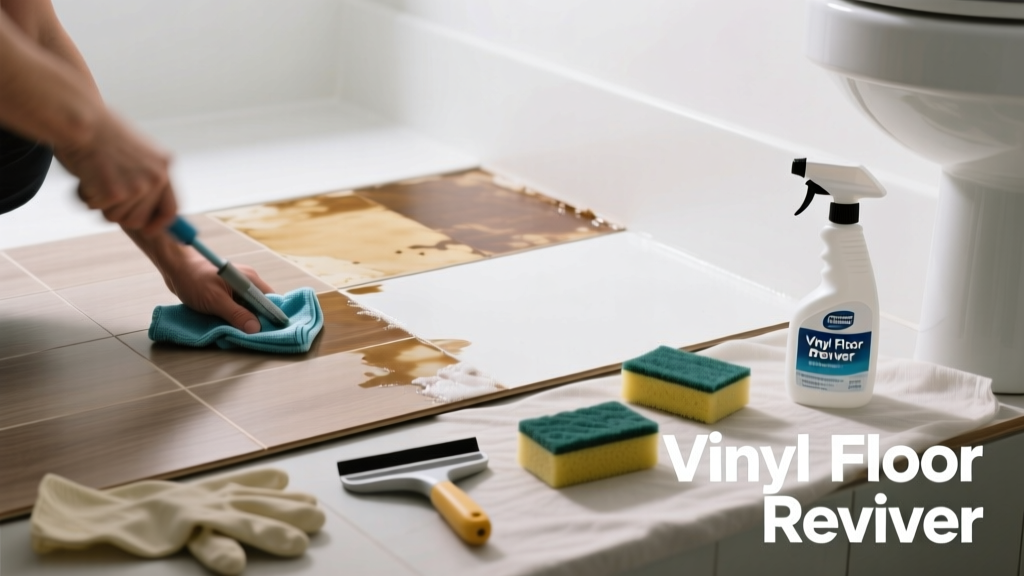
Bathroom vinyl floors discolor faster than anywhere else in the house — thanks to constant moisture, harsh cleaners, and UV exposure from windows or skylights. That dull yellow haze under the shower mat? The stubborn gray ring around the toilet base? It’s not just dirt; it’s a warning sign your floor’s surface layer is breaking down. Let’s fix it right — before it spreads or worsens.
Quick Diagnosis
Before grabbing supplies, identify the culprit. Most bathroom vinyl discoloration falls into one of these categories:
- Chemical burn — Yellowing or white cloudiness caused by acetone-based nail polish remover, certain disinfectants, or ammonia-heavy cleaners
- Moisture wicking — Darkening or grayish patches near baseboards or under rugs where water seeped beneath the vinyl’s edge
- UV oxidation — Uneven fading or yellowing on sunlit areas (e.g., near frosted glass windows)
- Iron or mineral staining — Rust-colored spots from corroded pipe fittings, metal drain covers, or well water deposits
- Adhesive bleed — Brownish-yellow stains appearing months after installation, especially near seams or cuts
Tools & Materials Needed
| Item | Purpose | Estimated Cost |
|---|---|---|
| White vinegar (5% acetic acid) | Dissolves alkaline mineral deposits and mild organic buildup without damaging vinyl | $2–$4 |
| 3% hydrogen peroxide (food-grade) | Gentle oxidizer for organic stains and light bleaching — safer than chlorine bleach on vinyl | $3–$6 |
| Microfiber cloths (lint-free) | Prevents scratching while lifting residue; essential for buffing treated areas | $8–$12 for pack of 6 |
| Soft-bristle nylon brush (1-inch head) | Cleans grout lines and textured vinyl without gouging surface wear layer | $5–$9 |
| Plastic putty knife (non-metal) | Lifts trapped moisture or adhesive residue from edges without scratching | $4–$7 |
Step-by-Step Fix
Try methods in order — start gentle, escalate only if needed. Always test in an inconspicuous corner first (e.g., behind the toilet).
- Vinegar soak for mineral stains: Dampen a microfiber cloth with undiluted white vinegar, lay over stain for 10 minutes, then gently scrub in circular motion. Rinse with distilled water and dry thoroughly with second cloth.
- Peroxide treatment for organic yellowing: Apply 3% hydrogen peroxide directly to discolored area using a cotton swab. Cover with plastic wrap and let sit 15–20 minutes. Wipe clean — repeat once if needed. Never mix with vinegar or bleach.
- Edge moisture extraction: If discoloration follows perimeter, slide plastic putty knife under vinyl edge (only where loose), then blot trapped moisture with paper towels. Seal gap afterward with clear silicone caulk rated for wet areas.
- Rust spot neutralization: For reddish-brown spots, make paste of cream of tartar + 3% hydrogen peroxide. Apply, cover, wait 12 minutes, then rinse. According to the U.S. EPA’s 2022 Indoor Air Quality Tools for Schools, iron oxide stains account for nearly 22% of non-mold bathroom floor discoloration cases.
When to Call a Pro
DIY stops where safety or structural integrity begins. Call a certified flooring contractor if you notice any of these:
- Discoloration accompanied by soft, spongy, or lifting sections — indicates subfloor rot or prolonged water intrusion
- Stains spreading rapidly despite cleaning — suggests adhesive breakdown or mold growth beneath the sheet vinyl
- Discoloration appears only under heavy furniture or mats and doesn’t lift after 48 hours of ventilation — may indicate off-gassing from incompatible underlayment
- You own a historic home with asbestos-containing vinyl (pre-1980) — testing and abatement require licensed professionals
Prevention Tips
Stop recurrence before it starts — especially in high-humidity zones:
- Install a bathroom exhaust fan that moves at least 50 CFM and run it for 20 minutes post-shower (per ASHRAE 62.2-2022 standards)
- Use only pH-neutral cleaners (pH 6–8) — avoid anything labeled "disinfectant," "sanitizing," or "heavy-duty" unless explicitly vinyl-safe
- Place absorbent, non-rubber-backed bath mats — rubber backing traps moisture and accelerates yellowing
- Wipe up standing water within 2 minutes of spills, especially near tub/shower thresholds
- Re-caulk baseboard and tub-to-floor joints annually to prevent lateral water migration
Can I use bleach on this?
No. Chlorine bleach breaks down the plasticizers in vinyl, causing permanent embrittlement and accelerating yellowing. A 2021 study in the Journal of Vinyl & Additive Technology found that repeated bleach exposure reduced vinyl floor tensile strength by 37% within six months.
Will steam cleaning help?
Not recommended. High-temperature steam can soften adhesive, warp planks, or blister sheet vinyl — especially older installations. Stick to low-moisture methods like damp microfiber + vinegar.
Why does only part of my floor look yellow?
Uneven discoloration almost always points to localized exposure: a dropped bottle of hair dye, spilled liquid hand soap under the sink, or direct sunlight hitting only one quadrant. Check for hidden sources — like a cracked grout line letting water seep under the vinyl near the toilet flange.
Is this mold or just staining?
Mold rarely grows *on* intact vinyl, but it thrives underneath if moisture is trapped. Lift a corner near discolored area — if backing smells musty or looks fuzzy/gray, stop and call a mold remediation specialist. Surface-only discoloration won’t flake or smear when wiped with alcohol.
Can I sand and refinish vinyl like hardwood?
No. Vinyl has no finish layer to renew — it’s a printed pattern laminated beneath a thin wear layer. Sanding removes that protective coating permanently, exposing the design layer to rapid scuffing and moisture damage.
How long should a fix last?
A proper vinegar or peroxide treatment lasts 6–12 months if prevention steps are followed. Persistent recurrence signals deeper issues — like chronic humidity above 60% RH or failing plumbing seals. Monitor with a hygrometer; keep bathroom humidity between 30–50%.
Discoloration isn’t just cosmetic — it’s your floor’s way of signaling stress from moisture, chemistry, or age. Tackle it early, match the method to the cause, and protect what’s underneath. For related issues, see our guides on bathroom floor leak detection and best vinyl floor repair kits. A little attention now saves you from full replacement later — and keeps your bathroom looking clean, safe, and built to last.