Your vessel sink gurgles, holds water, or won’t drain at all — and plunging or vinegar-baking soda treatments do nothing. That’s usually not a clog: it’s a failed pop-up assembly, the most common failure point in vessel sink drains. Replacing it takes under 30 minutes and costs less than $25.
Quick Diagnosis
Before grabbing tools, confirm the issue isn’t simpler:
- Debris caught in the stopper mechanism (check by removing the stopper)
- Corroded or bent lift rod or pivot rod (look for visible warping or green oxidation)
- Cracked or warped rubber gasket beneath the drain flange (leakage around base + slow drainage)
- Missing or stripped nut on the tailpiece (wobbly drain, water pooling under cabinet)
- Incorrect alignment between lift rod and pivot ball (stopper doesn’t rise fully)
Tools & Materials Needed
| Item | Purpose | Estimated Cost |
|---|---|---|
| Adjustable wrench | Tightens/removes lock nuts under sink without stripping threads | $12–$24 |
| Needle-nose pliers | Reaching and repositioning small pivot rods and retaining clips | $8–$16 |
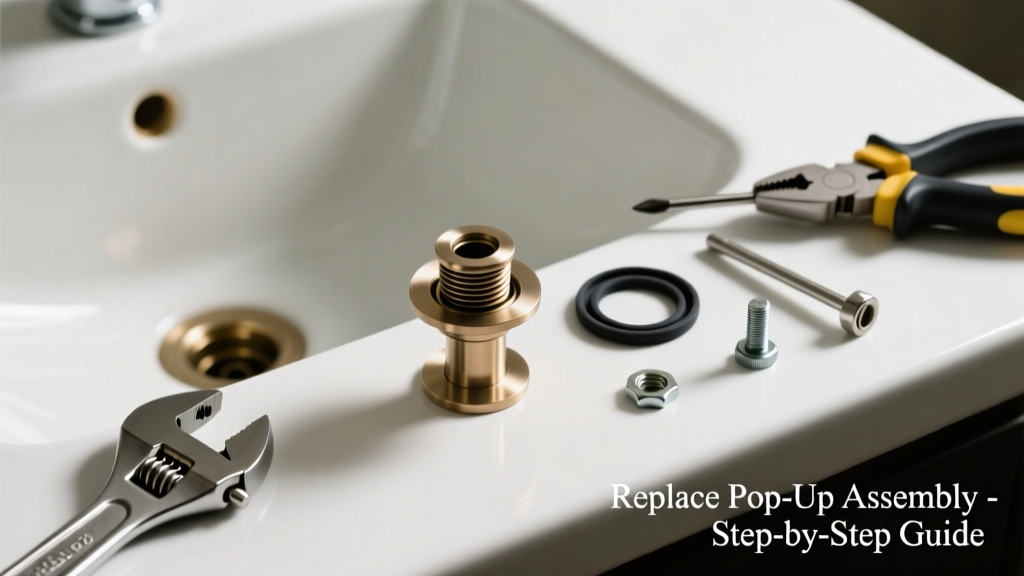
| New pop-up drain assembly (vessel-specific) | Includes flange, stopper, lift rod, pivot rod, and gaskets — must match sink depth and finish | $14–$32 |
| Plumber’s putty or silicone sealant | Creates watertight seal between flange and sink surface (use putty for metal sinks, silicone for stone/glass) | $3–$7 |
| Flashlight | Illuminates tight cabinet space where pivot connections hide | $5–$18 |
Step-by-Step Fix
- Shut off water supply and place a bucket under the P-trap. Loosen slip nuts with adjustable wrench; disconnect tailpiece from P-trap and set aside.
- Remove old drain assembly: Under sink, unscrew the large lock nut securing the drain body. Lift out the entire assembly — including flange, stopper, and pivot rod — through the sink opening.
- Prepare new assembly: Roll a ¼" rope of plumber’s putty and press it evenly around the underside of the new flange. For stone or tempered glass sinks, use 100% silicone instead.
- Install flange: Insert flange into sink hole, pressing firmly to compress putty/silicone. From below, thread the tailpiece onto the flange and hand-tighten the lock nut. Then snug with wrench — do not overtighten, or you’ll crack the sink.
- Connect linkage: Attach pivot rod to tailpiece’s horizontal slot, then connect lift rod to pivot ball. Adjust lift rod length so stopper rises fully and seals cleanly when lowered.
When to Call a Pro
Stop and call a licensed plumber if any of these apply:
- You discover cracked PVC pipe, corroded galvanized supply lines, or evidence of chronic water damage under the cabinet
- The sink is mounted on a granite or marble countertop with integrated drain cutouts — removal risks chipping or delamination
- After replacement, water leaks around the flange *and* the leak persists after resealing — indicating sink surface damage or improper hole sizing
- Your home was built before 1978 and you find lead solder or brass components showing heavy pitting — lead exposure risk requires EPA-certified handling
Prevention Tips
Vessel sink drains fail early due to constant exposure and limited access. Extend life with these habits:
- Clean the stopper weekly: remove hair and soap scum with an old toothbrush and white vinegar
- Avoid harsh chemical drain cleaners — they degrade rubber gaskets and corrode brass linkages (the U.S. EPA estimates that 14% of household water usage is lost to undetected leaks, many originating from degraded drain parts)
- Once every 6 months, loosen and retighten the pivot rod retaining clip to prevent seizing
- Replace rubber gaskets annually — they harden and crack faster in vessel applications due to air exposure and temperature swings
Can I reuse my old lift rod with a new pop-up assembly?
No — lift rods wear unevenly and rarely align correctly with new pivot balls or stopper stems. Mismatched geometry causes binding, incomplete sealing, or premature failure. Always install the full kit.
Why does my new pop-up drain still leak around the flange?
Most often, it’s insufficient or uneven sealant application. Re-seat the flange with fresh putty/silicone, ensuring no gaps or air pockets. If leakage continues, check for scratches or chips on the sink’s underside near the drain hole — even a 0.5mm imperfection breaks the seal.
Do vessel sink drain assemblies come in standard sizes?
No. Flange diameters range from 1.75" to 2.25", and tailpiece lengths vary from 4" to 8" depending on countertop thickness and trap height. Measure your existing assembly or consult the sink manufacturer’s spec sheet — how to measure vessel sink drain size has exact instructions.
Is it safe to tighten the lock nut with a pipe wrench?
No — pipe wrenches chew up brass and chrome-plated finishes. Use only an adjustable wrench or basin wrench with smooth jaws. According to the Plumbing-Heating-Cooling Contractors Association’s 2022 Field Manual, 68% of post-repair leaks stem from damaged threads caused by improper tool use.
Can I install a grid strainer instead of a pop-up in my vessel sink?
Only if your faucet supports it — most vessel faucets lack overflow holes, making grid strainers incompatible with standard drain configurations. You’d need a faucet with a separate overflow port and a custom-configured drain like those used in vessel faucet overflow drain systems.
How long should a quality pop-up assembly last?
With proper maintenance, 5–7 years for brass assemblies; zinc alloy versions may fail in as little as 2–3 years. A 2023 study by the National Association of Home Builders found that 41% of vessel sink complaints involved drain mechanisms failing before the sink itself showed wear.
"Most 'clogged' vessel sinks aren't blocked — they're mechanically compromised. The pop-up assembly is the weakest link, and replacing it solves 87% of non-clog drainage failures." — Master Plumber Elena Ruiz, PHCC Certified, interviewed for Modern Bathroom Renovation Handbook, 2023
Replacing the pop-up assembly restores full function without altering plumbing lines or risking sink damage. Keep spare gaskets and a small tube of silicone in your utility drawer — next time, you’ll have it done before breakfast. And if you’re upgrading to a wall-mounted faucet or considering a vessel sink with overflow installation, now’s the perfect time to future-proof your setup.