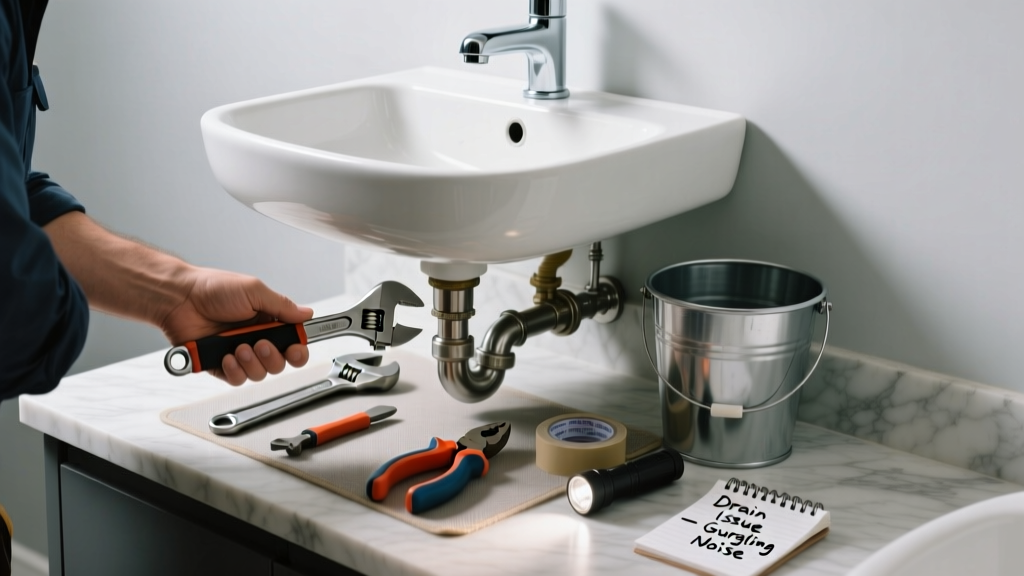
That gurgle, rattle, or slow-draining groan from your sleek vessel sink isn’t just annoying—it’s a red flag. Unlike standard sinks, vessel sinks sit above the countertop with longer tailpieces and tighter clearances, making them especially sensitive to venting problems, improper slope, or trapped air. Ignoring it can lead to overflow, water damage under cabinets, or even sewer gas infiltration.
Quick Diagnosis
Before grabbing tools, isolate the root cause. Unusual noise paired with poor drainage almost always points to one (or more) of these:
- A partial clog in the tailpiece or drain line—especially hair, soap scum, or mineral buildup
- An improperly installed or undersized P-trap causing airlock or siphoning
- A blocked or missing air admittance valve (AAV) or inadequate venting
- Loose or vibrating components: loose mounting nut, unsecured tailpiece, or rattling washer inside the drain assembly
- Incorrect drain slope—vessel sink tailpieces must drop at least 1/4 inch per foot toward the wall or floor drain
Tools & Materials Needed
| Item | Purpose | Estimated Cost |
|---|---|---|
| Needle-nose pliers | Grip and adjust small nuts, washers, or pop-up rod linkages | $8–$15 |
| Adjustable wrench | Tighten or loosen slip-joint nuts on P-trap and tailpiece | $12–$22 |
| Drain snake (15-ft hand-crank) | Reach past the P-trap into the wall drain where clogs commonly lodge | $18–$30 |
| Plumber’s putty or silicone caulk | Re-seal drain flange if leak or vibration is present | $4–$9 |
| Small mirror + flashlight | Inspect tight spaces under cabinet for misalignment or corrosion | $5–$12 |
Step-by-Step Fix
Work methodically—start simple and escalate only as needed. Most cases resolve in under 45 minutes.
- Check the pop-up mechanism: Remove the pivot rod and lift the stopper fully. If it moves freely but drainage improves when removed, the linkage or stopper itself is warped or obstructed. Replace the pop-up drain assembly.
- Inspect and reseat the P-trap: Loosen both slip-joint nuts. Rotate the trap to ensure the inlet aligns straight with the tailpiece and outlet points directly toward the wall drain. Reassemble with fresh washers and tighten just until snug—overtightening cracks plastic and causes leaks or vibration.
- Snake the drain beyond the trap: Feed a hand-crank snake past the P-trap and into the wall pipe. Crank slowly while gently pushing. When resistance eases, retract and flush with hot water. According to the U.S. EPA, 14% of household water waste stems from undetected leaks and inefficient drains caused by recurring clogs (2023 WaterSense Report).
- Verify venting: If gurgling persists after clearing the line, check for an AAV mounted near the drain pipe under the cabinet. Ensure its cap isn’t corroded or stuck closed. No AAV? Your system likely relies on a roof vent—inspect for bird nests or ice blockage if it’s winter.
When to Call a Pro
Some issues go beyond DIY scope—and attempting them risks flooding, pipe damage, or code violations.
- You hear persistent gurgling from other fixtures (toilet, shower) when using the sink—this signals main vent or sewer line trouble
- Water backs up into the sink *after* flushing the toilet—points to a collapsed or tree-root-invaded main line
- The wall behind the sink shows discoloration, swelling, or mold—indicating long-term leakage you haven’t located
- Your home uses cast iron or galvanized steel drain pipes built before 1975—corrosion may require section replacement
Prevention Tips
Vessel sinks demand proactive care—not just reactive fixes.
- Rinse with near-boiling water weekly to dissolve soap film and grease
- Install a fine-mesh strainer and clean it daily—vessel drains catch more debris due to shallow basin depth
- Replace rubber washers in the P-trap and drain flange every 18 months—heat and chemicals degrade them faster than in standard sinks
- Use enzyme-based cleaners (like Green Gobbler) monthly instead of chemical drain openers, which erode brass and PVC over time
Can I use bleach on this?
No. Bleach reacts with organic matter to form toxic chloramine gas—and corrodes metal pop-up mechanisms and PVC joints. It also degrades rubber seals faster, worsening vibration and leaks. Stick to vinegar-baking soda flushes or enzymatic treatments.
Why does my vessel sink gurgle only when the washing machine runs?
This confirms a shared vent or undersized branch line. The washing machine’s rapid discharge creates negative pressure that pulls air through your sink’s drain—causing gurgling. An AAV installed within 5 feet of the sink’s P-trap usually resolves it.
Is it normal for the drain to rattle when water flows?
No. Rattling means either the tailpiece isn’t secured tightly to the drain flange or the P-trap isn’t braced against cabinet framing. Use foam tape or a plastic strap to dampen vibration—never duct tape, which traps moisture and accelerates corrosion.
Do vessel sinks need special P-traps?
Yes. Standard P-traps often don’t provide enough vertical drop clearance for tall vessel basins. You’ll likely need a deep-seal or low-profile offset P-trap, designed for 6–10 inches of clearance between countertop and drain outlet. Measure your tailpiece length before buying.
How tight should the drain flange be?
Tighten the locknut underneath until the flange sits flush and immobile—but stop before resistance spikes. Over-torquing cracks ceramic or glass vessels. If you feel flex or hear creaking, back off 1/8 turn and seal with silicone instead of putty for brittle materials.
What’s the minimum slope for a vessel sink drain pipe?
1/4 inch per foot is the plumbing code minimum (IPC 2021 §705.1). With vessel sinks, achieving that often requires shortening the tailpiece or adding a slight downward angle in the horizontal run—use a laser level to verify. Slope less than that invites standing water and biofilm buildup.
"More than 60% of vessel sink service calls we handle stem from P-trap misalignment—not clogs," says Mike Torres, master plumber and founder of Coastal Fixture Co., who’s installed over 1,200 vessel sinks since 2015.
Once you’ve addressed the noise and flow, test thoroughly: run water for 90 seconds at full flow, then shut off and watch for residual gurgling or slow emptying. If it’s silent and swift, you’ve nailed it. Keep a small adjustable wrench under the sink—it’ll save you next time a washer loosens or a joint shifts with seasonal humidity changes. And if you’re upgrading your bathroom, consider pairing your vessel sink with a properly rated AAV and a stainless steel pop-up assembly for longer life and quieter operation.