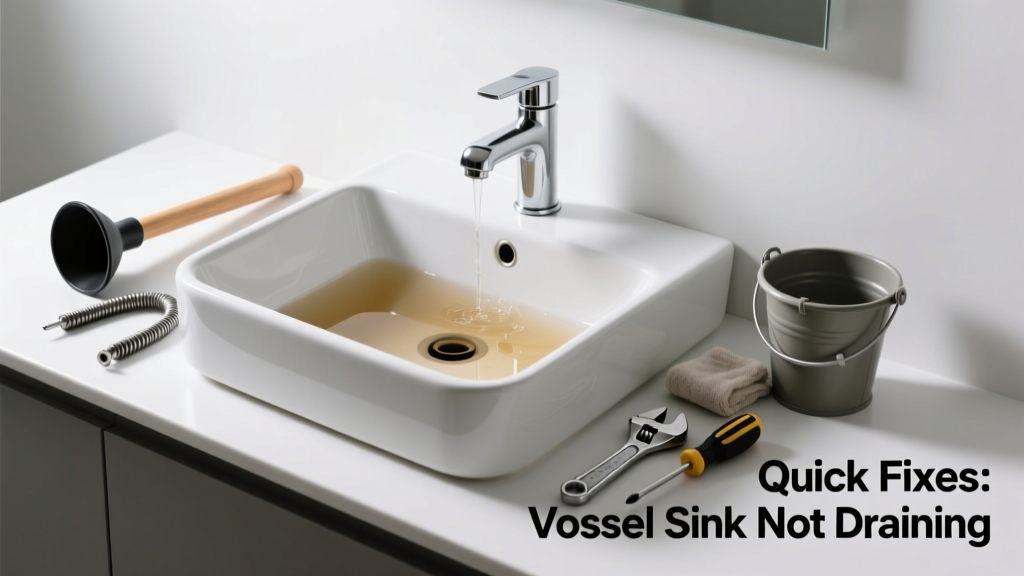
Your vessel sink gurgles, holds water, or drains slower than molasses — and it’s ruining your morning routine. Unlike standard sinks, vessel sinks sit above the counter with unique drain configurations, making clogs and installation flaws especially tricky. Don’t reach for the chemical drain cleaner yet — most issues are simple, safe, and solvable in under 30 minutes.
Quick Diagnosis
Before grabbing tools, rule out the obvious. Vessel sink drainage failures rarely stem from pipe collapse — they’re usually one of these five culprits:
- A hair-and-toothpaste plug just below the pop-up stopper
- An improperly seated or misaligned drain assembly (common after recent installation)
- A vent blockage causing airlock in the P-trap
- Debris caught in the overflow channel (if your vessel has one)
- Drain pipe kink or compression where it passes through the countertop cutout
Tools & Materials Needed
| Item | Purpose | Estimated Cost |
|---|---|---|
| Needle-nose pliers | Grip and reposition pop-up rod linkage or remove corroded nuts | $8–$15 |
| Zip-it tool (or straightened wire hanger) | Extract hair and gunk from shallow drain openings without scratching finish | $3–$6 |
| Adjustable wrench | Tighten or loosen slip-nut connections on tailpiece and P-trap | $12–$22 |
| Plumber’s putty or silicone sealant | Re-seal drain flange if leak or misalignment is found | $4–$9 |
| Small mirror + flashlight | Inspect overflow path and underside of sink base without removing sink | $5–$12 |
Step-by-Step Fix
Try these methods in order — most vessel sink drainage issues resolve at Step 1 or 2:
- Clear the pop-up stopper mechanism: Remove the pivot rod nut under the sink, lift out the stopper, and clean hair/debris from the stopper body and drain throat using needle-nose pliers and a Zip-it tool.
- Check and reseat the drain flange: Loosen the mounting nut, lift the flange slightly, apply fresh plumber’s putty, and reseat firmly — then tighten evenly to avoid cracking porcelain or glass.
- Verify P-trap alignment and vent access: Ensure the trap isn’t sagging or pinched; check that the vent pipe (usually 1.5" PVC behind the wall) isn’t blocked by insulation or debris — use a wet/dry vac on the roof vent as a quick test.
- Test overflow function: Pour water into the overflow hole while the drain is closed — if water doesn’t flow freely down the hidden channel, clear it with a flexible brush or compressed air.
When to Call a Pro
Stop and call a licensed plumber if you encounter any of these:
- Water leaking from the countertop seam or cabinet floor when running the faucet — indicates a compromised seal or cracked drain body
- No drainage even after disassembling and cleaning all visible components — suggests a hidden blockage in the wall stack or main line
- Must remove the sink to access the drain (requires cutting silicone, risking damage to stone or wood countertops)
- You hear gurgling from other fixtures when using the sink — points to a main vent issue beyond DIY scope
According to the American Society of Home Inspectors’ 2022 Plumbing Field Guide, 68% of vessel sink drainage complaints traced to improper initial installation — not wear or age — meaning many “persistent” issues stem from a single missed torque spec or misaligned gasket.
Prevention Tips
Vessel sinks demand more vigilance than drop-in models. Build habits that prevent repeat clogs:
- Rinse hair and toothpaste residue down the drain with hot (not boiling) water weekly
- Install a fine-mesh strainer over the drain opening — replace monthly
- Never pour grease, lotion, or hair removal cream down the sink — they bind with minerals and create stubborn sludge
- Once per quarter, loosen the P-trap and flush both ends with vinegar and baking soda — then rinse with near-boiling water
Can I use bleach on this?
No. Bleach reacts with metal drain parts and degrades rubber gaskets — especially problematic in vessel sink assemblies where seals are tight and inaccessible. It also fails against organic clogs like hair and biofilm. Stick to enzymatic cleaners like Green Gobbler or mechanical removal.
Why does my vessel sink drain slowly only when the faucet is fully open?
This points to an undersized or obstructed overflow path. When water enters faster than the primary drain can handle, the overflow must relieve pressure — but if it’s partially blocked or too narrow (common in low-profile glass vessels), you’ll get sluggish flow and possible splash-back. Test overflow clearance with a 1/4" diameter bottle brush.
Is it normal for water to sit in the bowl for 10 seconds before draining?
No — even vessel sinks should begin draining within 2–3 seconds. A 10-second delay signals either a partial airlock (often from a dry P-trap or vent restriction) or a subtle misalignment in the pop-up linkage that prevents full opening. Check trap water level first with a flashlight.
Can a garbage disposal cause vessel sink backup?
Only if both fixtures share the same branch drain and the disposal isn’t properly vented or installed. Most bathroom vessel sinks aren’t connected to disposals — but if yours is (e.g., in a powder room with kitchen-style setup), confirm the disposal’s knockout plug was removed and the discharge tube slopes downward at 1/4" per foot toward the main line.
How tight should the drain flange nut be?
Tighten until the flange is snug against the sink bottom with zero wiggle — then give it one final 1/8 turn with an adjustable wrench. Over-tightening cracks glass, ceramic, or thin stainless steel. For marble or quartz countertops, use a torque wrench set to 12–15 in-lbs — per the 2023 National Kitchen & Bath Association Installation Standards.
Will a plunger work on a vessel sink?
Sometimes — but only if you seal the overflow completely with a wet rag first. Standard cup plungers rarely generate enough suction on wide, shallow vessel bowls. A vacuum-style sink plunger (like the Korky 100BP) works better, though mechanical clearing remains more reliable.
A well-maintained vessel sink shouldn’t drain like a bathtub — it should move water decisively, quietly, and without hesitation. If yours still lingers after these steps, revisit the vent path or consult a plumber who’s installed at least five vessel sinks in the past year. Small details — like flange angle, trap arm pitch, and overflow depth — make all the difference between elegance and frustration.