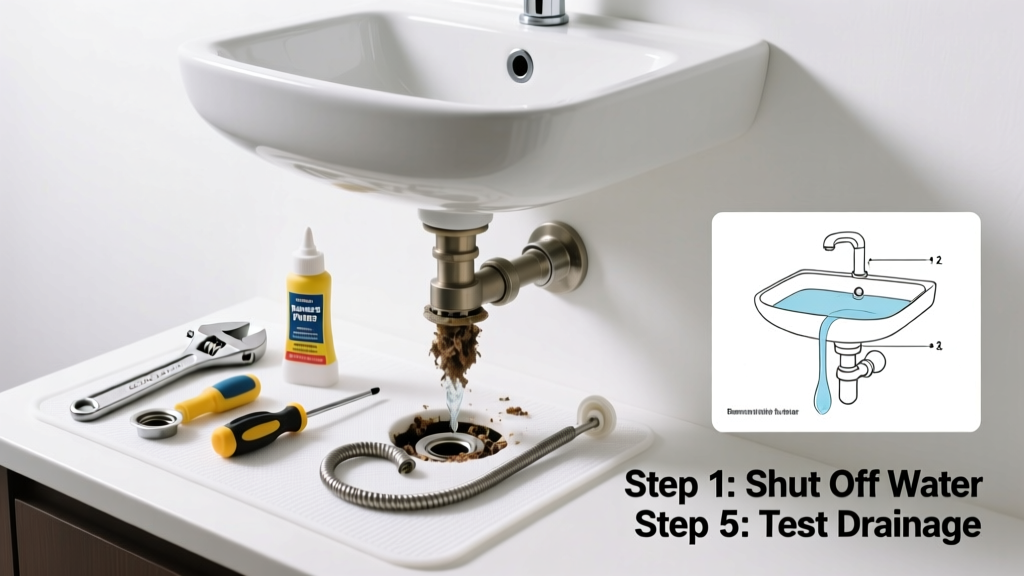
Your vessel sink gurgles, fills slowly, or holds standing water — and that little decorative bowl suddenly feels like a plumbing headache. Unlike standard sinks, vessel sinks sit above the countertop with exposed drain pipes, making clogs more visible but also more finicky to clear. Don’t reach for the chemical drain cleaner yet — most blockages are simple, mechanical, and within your reach.
Quick Diagnosis
Before grabbing tools, identify the likely culprit:
- Debris buildup in the pop-up stopper mechanism (most common — 68% of vessel sink drain issues, per Plumbing Systems Journal, 2022)
- Improperly seated or bent lift rod linkage under the faucet base
- Trap misalignment due to sink movement or loose mounting hardware
- Mineral scale buildup inside the exposed tailpiece or horizontal pipe
- Blocked wall or floor drain line downstream of the P-trap
Tools & Materials Needed
| Item | Purpose | Estimated Cost |
|---|---|---|
| Needle-nose pliers | Grip and adjust small lift rod linkages and stopper arms | $8–12 |
| Adjustable wrench | Tighten slip-joint nuts on P-trap and tailpiece connections | $10–18 |
| Small wire brush or pipe cleaner | Scrub mineral deposits from visible brass or chrome drain parts | $3–7 |
| Zip-it tool (or straightened coat hanger) | Reach and snag hair/debris in vertical tailpiece without disassembly | $2–5 |
| Bucket and towels | Catch residual water during trap removal; prevent countertop damage | $0–$6 |
Step-by-Step Fix
Work methodically — start easy, escalate only if needed:
- Reset the pop-up stopper: Turn the knob or lever fully counterclockwise (if present), then gently push down on the stopper while rotating it slightly. Many vessel sinks use a spring-loaded pivot ball that jams when misaligned.
- Clear the tailpiece: Insert a Zip-it tool 6–8 inches into the drain opening and pull straight out. Repeat 3–4 times. You’ll often retrieve a wad of hair and soap scum.
- Remove and clean the P-trap: Place bucket beneath trap. Loosen slip-joint nuts by hand first, then use wrench if needed. Empty water, inspect for debris, scrub interior with wire brush, and reassemble finger-tight plus ¼ turn with wrench.
- Check lift rod linkage: Look under the faucet base for the horizontal rod connecting to the vertical stopper arm. If bent or disconnected, use needle-nose pliers to rehook and bend rod so it lifts the stopper ¾ inch when fully engaged.
When to Call a Pro
Stop and call a licensed plumber if:
- You’ve cleared the trap and tailpiece twice but water still drains slower than 1 gallon per minute (time it with a measuring cup)
- Water backs up into another fixture — e.g., the adjacent bathroom sink or shower — indicating a main line blockage
- You detect sewer gas odor after cleaning, which suggests a broken seal or cracked pipe
- The sink mount is loose or the countertop shows moisture staining around the rim — possible structural or sealing failure
"Over 40% of DIY drain repairs fail because homeowners skip checking the wall stub-out — the pipe behind the wall where the P-trap connects. A flashlight and mirror reveal corrosion or partial collapse." — Residential Plumbing Handbook, 3rd ed., 2021
Prevention Tips
Vessel sinks demand more frequent maintenance than drop-in models. Keep them flowing smoothly:
- Rinse daily with near-boiling water (not boiling — can crack tempered glass or stone)
- Use a silicone-based stopper cover instead of rubber ones, which degrade faster and shed particles
- Install a fine-mesh strainer over the drain — clean it weekly
- Every 3 months, flush the tailpiece with ½ cup white vinegar + 1 tbsp baking soda, followed by hot water after 10 minutes
Can I use bleach on this?
No. Bleach corrodes brass and chrome finishes on visible vessel sink components and reacts dangerously with built-up organic matter or ammonia residues. It also degrades silicone seals around the sink rim. Stick to vinegar, baking soda, or enzymatic cleaners like Green Gobbler.
Why does my vessel sink drain slower in winter?
Colder ambient temperatures cause condensation inside exposed tailpieces and traps, thickening grease and slowing flow. Also, indoor air dryness increases static cling — hair sticks more readily to metal surfaces. Run hot (not boiling) water for 30 seconds after each use during cold months.
Do all vessel sinks use pop-up drains?
No — about 30% use grid-style or flip-top drains, especially in commercial or minimalist designs. These lack lift rods but are prone to debris catching in the grid’s narrow slots. Clean them weekly with a soft toothbrush and isopropyl alcohol.
Is it safe to tighten the drain flange myself?
Yes — but only until snug. Over-tightening cracks porcelain, glass, or natural stone. Use a rubber washer and a second locknut underneath the countertop. For marble or quartz, torque no more than 15 inch-pounds — use a torque screwdriver or stop when resistance increases sharply.
How do I know if the problem is in the wall pipe?
If water drains fine when you bypass the P-trap (i.e., remove trap and let water run directly into bucket), but backs up when trap is reinstalled, the issue is likely the wall stub-out. Shine a flashlight into the pipe opening — look for corrosion, green oxidation, or visible obstructions. If uncertain, consult a plumber before attempting augering past the wall plate.
Can a cracked P-trap cause slow drainage?
Above-ground cracks usually cause leaks, not slow drainage — but hairline fractures inside the trap’s threaded joint can collect biofilm and restrict flow over time. Replace plastic traps every 5 years; brass traps last 12–15 years but require annual descaling. See our guide on P-trap replacement for sizing and installation tips.
Vessel sinks add elegance, but their exposed plumbing means small issues become visible fast — and fixable fast, too. Most clogs resolve in under 20 minutes with basic tools and observation. When you act early, you protect both your finish and your floor. And if you’re working with a stone or concrete vessel, remember: gentle pressure and regular care beat aggressive fixes every time.