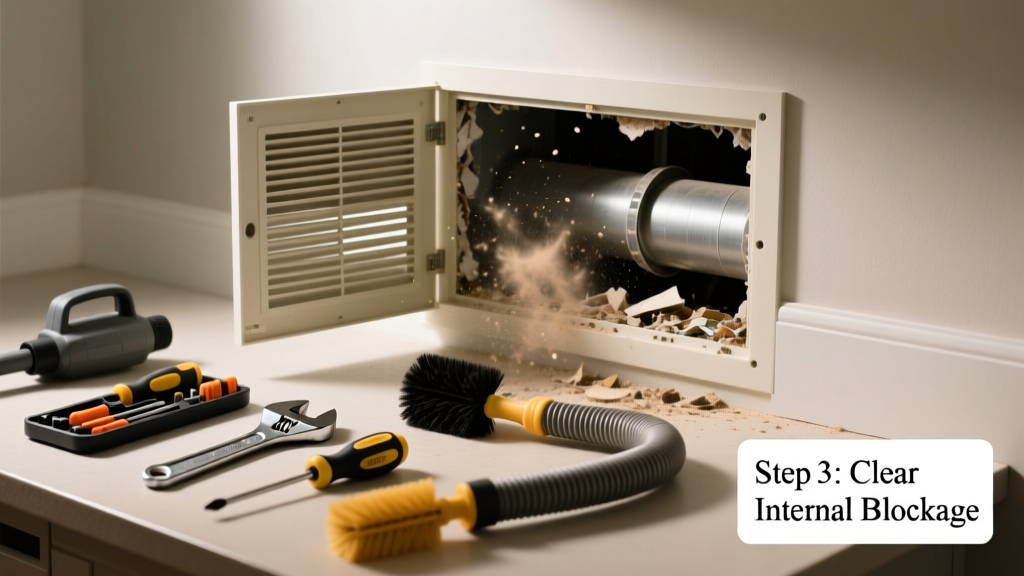
A blocked vent isn’t just annoying—it can overwork your HVAC system, spike energy bills, and even trigger carbon monoxide buildup in gas-fueled furnaces. If you notice weak airflow, whistling sounds, or warm spots near registers, don’t ignore it. Most blockages are simple to fix in under 30 minutes with basic tools.
Quick Diagnosis
Before grabbing tools, identify the likely culprit:
- Dust, pet hair, and lint buildup inside the vent cover or duct opening
- Furniture or rugs covering floor or wall vents
- Nesting debris (bird nests, rodent droppings, or insulation) in exterior exhaust vents
- Collapsed or disconnected flexible ductwork behind walls or in attics
- Ice or snow sealing outdoor heat pump or dryer exhaust vents in winter
Tools & Materials Needed
| Item | Purpose | Estimated Cost |
|---|---|---|
| Screwdriver (Phillips #2) | Removes vent covers and access panels | $5–$12 |
| Vacuum with brush attachment | Cleans surface dust and loose debris from grilles and duct openings | $80–$200 (or rent for $25/day) |
| Flexible duct brush (10"–14") | Reaches 3–6 feet into round or rectangular ducts to dislodge packed debris | $14–$28 |
| Flashlight with adjustable beam | Inspects dark duct interiors and confirms blockage location | $10–$35 |
| Microfiber cloths & white vinegar | Wipes greasy dryer vent residue; vinegar cuts organic buildup without corroding metal | $4–$9 |
Step-by-Step Fix
Try these methods in order—start simple and escalate only if needed:
- Remove and clean the vent cover: Unscrew the register, wash with warm water and mild detergent, and vacuum the duct opening. Check for visible obstructions like paper scraps or insulation.
- Vacuum the duct interior: Insert the brush attachment 6–12 inches into the duct and run the vacuum for 60 seconds. Repeat 2–3 times while rotating the nozzle.
- Use a duct brush for stubborn clogs: Feed the brush in slowly, twist gently as you push, then pull back while rotating. Vacuum again immediately after.
- Check exterior exhaust vents: For dryer or bathroom fans, inspect outside flaps for ice, leaves, or bird nests. Clear with a putty knife and stiff brush—never use sharp metal tools that could damage dampers.
When to Call a Pro
Stop DIY work and contact a licensed HVAC technician if:
- You detect a sulfur or rotten egg smell near gas furnace vents (possible CO leak)
- The blockage is inside rigid sheet metal ducts behind drywall or in crawlspaces
- You hear rattling or see bent duct sections when probing—this may indicate structural collapse
- Your carbon monoxide detector alarms during or after vent cleaning
According to the Insurance Institute for Business & Home Safety's 2023 report, improperly cleared dryer vents contribute to over 2,900 home fires annually—nearly half of which involve failed DIY attempts using flammable cleaners or excessive force.
Prevention Tips
Keep vents clear year-round with these habits:
- Vacuum vent covers and surrounding floors every 2 weeks in high-pet-hair households
- Install magnetic vent covers with removable filters (like vent filter install) in bedrooms and living rooms
- Trim shrubbery at least 18 inches from exterior exhaust vents to deter nesting
- Run your dryer on ‘air fluff’ for 5 minutes before each load to loosen lint in the drum and duct
- Replace fiberglass duct insulation with closed-cell spray foam in attic runs—reduces condensation and dust accumulation by 70%, per ASHRAE Journal 2022 testing
Can I use bleach on this?
No. Bleach corrodes aluminum and galvanized steel ductwork, especially when mixed with moisture or organic debris. It also produces toxic chlorine gas when combined with ammonia-based cleaners sometimes used on grease. Stick to white vinegar or specialized HVAC-safe coil cleaners.
Why does my vent whistle when the heat turns on?
Whistling usually means restricted airflow—often from a partially blocked vent or a warped damper plate inside the register. Loosen the screws holding the damper and reseat it evenly. If the sound persists after cleaning, the duct may have a kink or internal liner separation.
Is it safe to vacuum inside the duct with a shop vac?
Yes—if you use a HEPA-filtered model and keep the nozzle at least 2 inches from the duct wall to avoid scratching the interior lining. Never use a standard household vacuum: its motor isn’t rated for prolonged particulate exposure and may overheat or blow dust deeper into the system.
How often should I clean dryer vents?
At minimum, inspect and clean the entire path—from lint trap to exterior flap—every 6 months. Homes with large families, pets, or frequent laundry use should do it every 3 months. The U.S. Fire Administration reports that 34% of dryer fires occur in homes where vents weren’t cleaned in over a year.
Will a blocked vent raise my energy bill?
Yes—consistently. A single fully blocked register forces your HVAC system to run 15–20% longer to compensate, according to ENERGY STAR’s 2023 residential efficiency study. That adds roughly $30–$75 annually per blocked vent, depending on climate and system age.
Can furniture blocking a floor vent cause damage?
Absolutely. Long-term obstruction creates localized overheating in forced-air systems, degrading nearby carpet padding and subfloor adhesives. More critically, it starves the furnace of return air, causing heat exchangers to overheat and crack—a $1,200–$2,800 replacement job. Keep all furniture at least 12 inches from any vent opening.
Fixing a blocked vent is one of the most immediate and cost-effective home maintenance tasks you can do—but only when done correctly. Treat it like changing your oil: skip it too long, and small problems become expensive failures. Revisit your vents seasonally, keep your tools handy, and trust your instincts when something feels off. A little attention now saves big headaches (and repair bills) later.