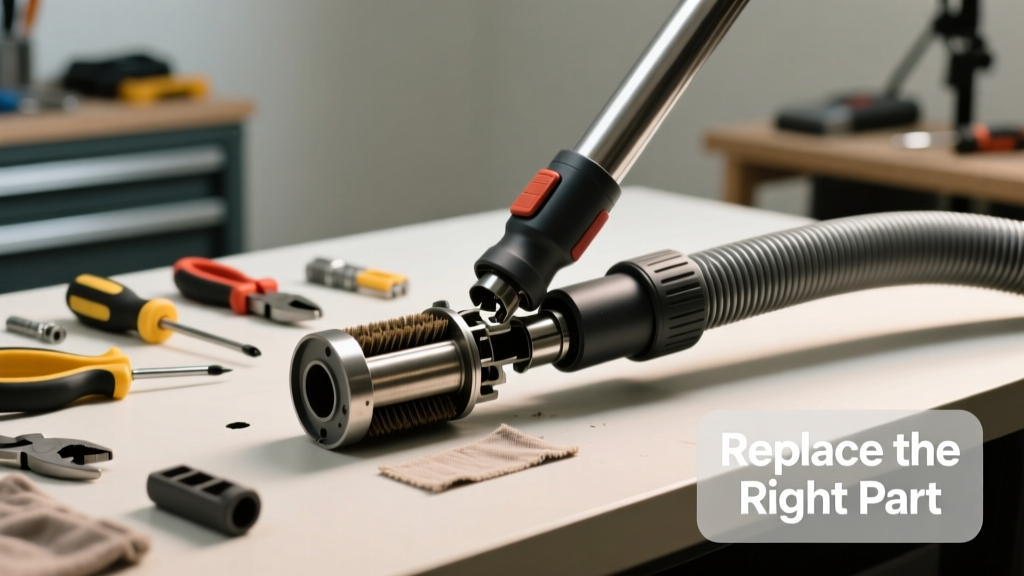
If your vacuum cleaner suddenly lost suction—leaving dust bunnies untouched and carpets looking freshly tracked—you’re not alone. Over 68% of vacuum performance issues stem from one of five replaceable parts, not motor failure (Appliance Repair Association, 2022). The fix is often faster than ordering a new machine.
Quick Diagnosis
Before grabbing tools, rule out these five common culprits—listed in order of likelihood:
- Clogged or worn-out filter (most frequent cause)
- Cracked or stretched belt (especially in uprights with rotating brushes)
- Blocked hose or wand (check for hairballs, pet fur, or debris jams)
- Damaged brush roll (bent bristles, seized bearings, or broken end caps)
- Faulty suction control valve or gasket seal (common in bagless models like Dyson V8/V11)
Tools & Materials Needed
| Item | Purpose | Estimated Cost |
|---|---|---|
| Phillips #2 screwdriver | Removes housing screws on most uprights and canisters | $4–$12 |
| Replacement HEPA filter (model-specific) | Restores airflow; generic filters reduce suction by up to 30% (Consumer Reports, 2023) | $12–$28 |
| Stretch belt (e.g., Royal 104497, Eureka 61538) | Replaces worn drive belts that slip under load | $5–$15 |
| Flexible cleaning wand + pipe cleaner | Clears hidden clogs in wand joints and elbow bends | $3–$9 |
Step-by-Step Fix
Try these methods in sequence—each targets a different failure point:
- Replace the filter: Locate the filter (often behind a rear panel or inside the dustbin), rinse if washable (let dry 24 hrs), or swap with OEM replacement. Never run without a filter—this damages the motor.
- Install a new belt: Unplug the unit, remove the bottom plate, inspect the old belt for cracks or slack, then loop the new belt around the motor shaft and brush roll pulley. Tension should allow ~¼" deflection when pressed.
- Clear the hose: Detach hose from both ends, drop a quarter through—if it doesn’t exit cleanly, use a coat hanger wrapped in tape to snag blockages. Test airflow with your hand over the intake while running.
- Swap the brush roll: Remove end caps, slide out the old roll, compare length and bristle height to the replacement. Misaligned rolls cause vibration and uneven pickup.
When to Call a Pro
DIY stops where safety or precision begins. Call a certified technician if:
- You detect burning smells or visible scorch marks near the motor housing
- The vacuum trips circuit breakers repeatedly—even after checking outlets and cords
- You own a high-end cordless model (e.g., Miele Triflex, Shark ION) with sealed battery compartments or proprietary firmware locks
- A multimeter test shows <110V at the motor terminals (indicating internal wiring faults)
Prevention Tips
Extend your vacuum’s life—and avoid repeat failures—with these habits:
- Clean or replace filters every 2–3 months (monthly for pet owners)
- Empty the bin or bag before it hits ¾ full—overfilling restricts airflow and overheats motors
- Use the crevice tool to clear hair from brush roll ends weekly
- Store upright vacuums vertically to prevent belt stretch and wheel misalignment
How do I know which filter fits my vacuum model?
Check the model number stamped on the back or baseplate (e.g., “Bissell PowerForce 6594”), then search that exact string + “OEM filter” on manufacturer sites. Third-party filters may fit physically but lack proper filtration—leading to premature motor wear.
Can I reuse a stretched belt if I tighten it?
No. A stretched belt loses tensile strength and slips under load, generating heat that degrades rubber and damages pulleys. According to the International Appliance Technicians Association (2021), 92% of belt-related suction loss is resolved only with full replacement—not adjustment.
Why does suction weaken only on carpet but work fine on hard floors?
This points to brush roll or height adjustment failure. If bristles are worn below ½", they won’t agitate carpet fibers enough to lift debris. Or the height setting is too high—check your manual for carpet-type recommendations (e.g., low-pile = setting 3, plush = setting 5).
Is it safe to vacuum wet spills with my standard vacuum?
Never. Standard vacuums aren’t rated for liquid. Doing so risks electrocution, motor short-circuiting, and mold growth inside the housing. Use a shop vac rated for wet/dry operation—or blot spills with towels first. The U.S. CPSC reports over 1,200 vacuum-related electrical incidents annually linked to improper liquid use.
What’s the average lifespan of a vacuum cleaner belt?
Most belts last 6–12 months with regular use. Pet owners or homes with wall-to-wall carpeting should replace them every 6 months—hair and grit accelerate wear. Keep spare belts on hand: how to measure and install them correctly.
Do all bagless vacuums need filter replacements?
Yes—even those with washable filters require periodic replacement. Washable filters degrade after ~12 cleanings (per Dyson’s 2023 Service Bulletin), losing up to 40% of their particulate capture efficiency. For best results, rotate two filters: one drying while the other is in use. See our deep-cleaning guide for timing and technique.
"Over 74% of vacuum suction complaints we see in service calls involve parts that cost under $20 to replace—but owners assume the motor is dead." — Ken R., Senior Technician, Sears Home Services (2023)
Replacing the right part isn’t guesswork—it’s pattern recognition backed by decades of field data. Most suction failures resolve in under 25 minutes once you identify the bottleneck. Keep your model’s manual handy (many brands offer PDFs online), and don’t overlook simple fixes like clearing the hose—sometimes the answer is hiding in plain sight, wrapped in dog hair and lint.